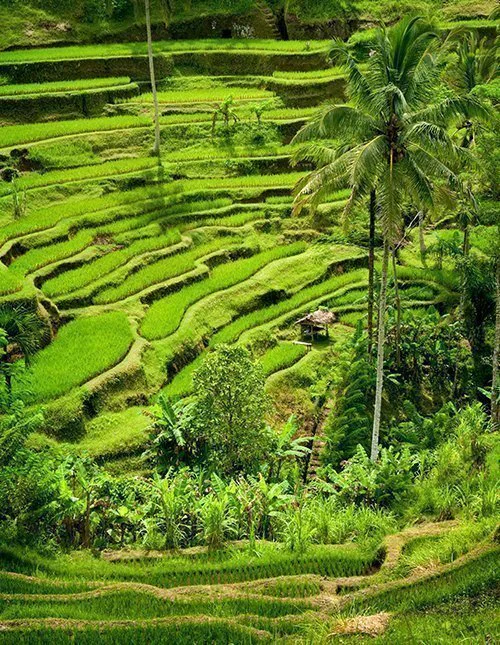
A Bali tour offers enchanting beaches, fascinating temples and scenic rice terraces.
But when is the best time to visit Bali?
Below, you can read more about Bali’s weather and climate, and find out when the best time is for you to visit this popular vacation island.
Please note: The guide below is for general guidance only.
Bali’s climate

Bali is a year-round destination and can be visited in all 12 months of the year.
Bali is close to the equator and lies in the tropical climate belt.
The island doesn’t have seasons as we know them in Canada, but rather two main seasons: a rainy season and a dry season.
- The dry season is from April to September.
- The rainy season is from October to March.
Since Bali lies in the tropical zone, you can expect high temperatures of between 22 degrees (average lowest temperature) and 31 degrees (average highest temperature) year-round.
The higher you go, the cooler it gets, and the mountainous regions (e.g., Ubud, Munduk and Sidemen) are generally cooler and receive more rain than low-lying and coastal areas (e.g., Sanur, Lovina and Amed).
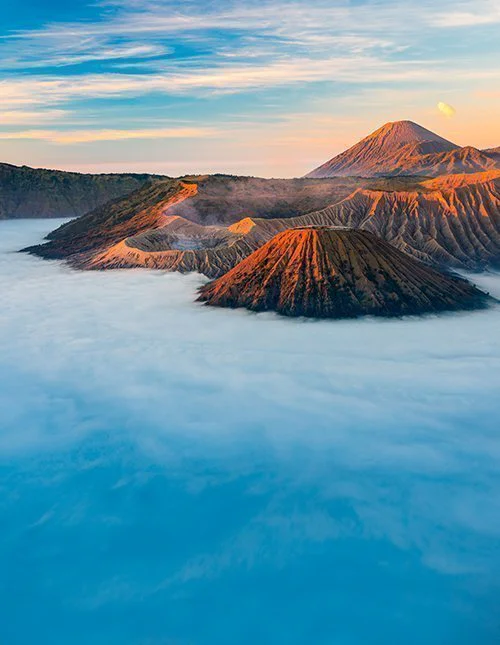
Central Bali isn't just cooler and rainier — a large part of it is also covered by a number of active volcanoes. Bali sits in an active belt where there are volcanoes and where earthquakes may occur. This belt is known as the Pacific Ring of Fire. In the fall of 2017, for example, Mount Agung erupted. Standing 3,142 m, it is the highest volcano in Bali.
Bali’s dry season
Bali’s dry season is from April to September.
The dry season is typically characterized by long sunny stretches and occasional rain, but not much of it.
Temperatures are generally cooler than in the rainy season, and the humidity is lower, making it a pleasant time to visit the island.
The dry-season months are the most popular with visitors to Bali, but the Christmas holidays also make December and early January a popular time to visit the island.
Outdoor activities are amazing during parts of this season, thanks to clear weather and clear water. If you want to go snorkelling, these are also the best months to do it.
Bali’s rainy season
Bali’s rainy season runs from October to March.
Although the weather is more changeable during the rainy season than in the dry season, it’s important to point out that Bali is a vacation destination with nice weather year-round.
The rainy season is characterized by periods of rain, but also plenty of sunshine. It often rains at night and is sunny during the day. If it does rain during the day, the sun generally comes out again after a couple of hours.
This period also brings hot weather and high humidity, along with more wind on the coast than in the dry season. However, thanks to the westerly winds, surfing conditions on the east coast are ideal around December.
Even though it’s the rainy season, many activities are still possible. As a rule, however, you can’t trek in the highlands or climb volcanoes during the rainy season.
Bali’s weather month by month

January
The first month of the year is wet, humid and hot. Bali gets an average of 300 mm of rain in January, making it the wettest month of the year.
The coasts get less rain than the central part of the island and the mountainous areas, so the weather varies a lot from region to region. Remember to check the forecast, as some areas may be sunny while others are getting rain.
February
In many ways, February is a continuation of January, but usually with less rain.
It's hot and humid. Even though February is drier than January, an average of around 250 mm of rain falls during the month. But you can still expect plenty of sunshine.
March
As spring arrives back home in Canada, the rain begins to ease off in Bali. It may still be cloudy, but the sun breaks through the clouds more and more often.
Temperatures are pleasant, but the humidity is still high and can feel a little intense. In the mountain areas, temperatures are somewhat lower and it can get chilly in the evening/at night, so remember to pack clothes you can layer. March is the last month of the rainy season and is therefore known as the month of change.
April
The first month of the dry season is a quiet time in Bali, with fewer visitors than usual.
Humidity is around 65%. The days are getting clearer, temperatures are high and April is one of the sunniest months of the year. The wind also begins to die down along the coast, making the water ideal for scuba diving and snorkelling. Far less rain falls than in the previous months, and thanks to the weather and the smaller crowds, April is a wonderful time to visit the island.
May
In May, Bali offers low humidity and typically the hottest weather of the year, a pleasant combination for most people.
Look forward to sunny weather and clear waters, which are ideal for snorkelling, and fewer visitors than in high season.
June
Humidity is at its lowest from June to October, and some days it feels as if the sun is shining from a cloudless sky from morning to night, with hot weather throughout.
June is usually a very dry month, but there is always a chance of rain, especially in mountainous areas. High season hasn’t started yet, so you can expect fewer visitors than in the months ahead.
July
July is the month of blue skies, with the sun shining down from a cloudless sky most of the time. It’s the perfect month for a variety of exciting outdoor activities. Dive into the beautiful water, go for a bike ride, climb in the highlands or enjoy a cocktail on the beach in the evening.
July is right in the middle of Bali’s high season. July is peak summer vacation season in North America and Europe, making it a popular month with lots of visitors.
August
August is one of the driest and sunniest months of the year, with only around 50 mm of rainfall on average.
This month is also perfect for outdoor activities, so there’s really nothing holding you back! There is very little rain — or none at all. The hot days give way to a much-needed breeze in the evening. Like July, August is also a popular time to visit.
September
In September, we’re still in the dry season, and you can expect sunshine, warm temperatures and very little rain, which typically falls in the afternoon or evening.
The month is perfect for long days on the beach. The high season is winding down, and there are fewer visitors than in the previous months.
October
In October, the rainy season begins again. It is still warm with beautiful blue skies, though these can give way to short, heavy showers.
Humidity rises over the course of the month, and the chance of rain increases. It is still warm.
November
November is one of the months with the fewest visitors. This may be because the weather in November is so changeable.
It is now clearly the rainy season. Showers come and go, but fortunately they are relatively short. Humidity reaches 80% this month and temperatures are at the high end.
Although there is a fair amount of rain, there are still plenty of opportunities to soak up the sun.
December
December brings short but intense showers, but you may also be lucky enough to enjoy longer stretches without rain, with lots of sunshine and very hot temperatures.
It is extremely muggy, with 85% humidity, hot weather and cloudy skies. Due to the torrential rainfall, minor flooding may occur. Despite being one of the wettest months, December and early January are popular times to visit thanks to Christmas and New Year's.
Dreaming of a trip to Bali?

Want to visit Bali?




Please note: The above guide to Bali’s climate is meant as a general guideline only. Always check the weather forecast before your tour, and if you have any doubts about when to travel, contact our travel specialists.
TourCompass – From tourist to traveller