On a tour to Australia, you’ll experience unique and outstanding landscapes with scenic coastlines, magnificent natural phenomena and exciting towns and cities.
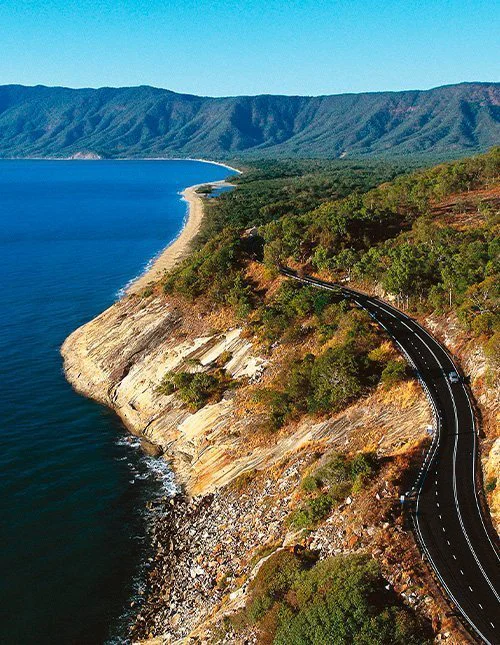
An excellent way to explore this magnificent country is to do the driving yourself — in other words, to head out on a road trip! The drive itself is a great experience.
Have you thought about getting behind the wheel and discovering the gems of Oceania?
In this blog post, we share our best advice on self-drive travel in Australia.
Frequently asked questions about driving in Australia
Australia has to be one of the most popular countries for self-drive fans, and it’s a great way to explore a country’s culture and exciting sights.
But driving in a country you’ve never visited before, where you’re not familiar with the local laws and regulations, can also feel overwhelming.
Here, we’ve tried to answer some of the questions our guests ask us most often
What is the advantage of self-drive?

One of the biggest advantages of self-drive in Australia is the freedom.
When you’re behind the wheel, you decide when to hit the road in the morning, and you have more freedom to stop at the sights you want to see.
The drive itself is also packed with unique experiences. You’ll take in spectacular landscapes through the car windows as you drive from A to B. The time spent travelling becomes part of the travel experience itself, so you make the most of every moment you have.
Can you drive in Australia with a Canadian driver’s licence?
Yes, you can drive in Australia with your Canadian driver’s licence, as long as it’s in English. If your licence is in French only, for example a licence issued in Quebec, you must also carry an international driving permit.
What side of the road do they drive on in Australia?

How old do you have to be to drive in Australia?
You have to be 17–18 years old to drive a car in Australia, depending on where you are in the country.
However, in most parts of Australia, you have to be between 21 and 25 to rent a car, depending on the model. You must also have held a driver’s licence for at least 1 year to be able to rent a car.
In some places, special insurance rules and higher rental rates will apply if you’re under 25 when you rent a car.
What are the roads like in Australia?

The roads in Australia are generally good.
Visitors and locals often drive long distances, so there are good, large highways connecting the cities. However, a self-drive tour will often also include excursions or travel days when you’ll be driving on less travelled roads, where you (also) need to pay attention to your speed and the road conditions.
However, if you keep these things in mind, driving in Australia is no problem.
Do I need a GPS?
A GPS can be your best friend when you’re on a self-drive tour in Australia. In addition to helping you find the best routes to your destination, a GPS can also help you locate gas stations, restaurants, etc.
Please note that GPS is not included in the car rental for our self-drive tours in Australia. We therefore recommend purchasing an eSIM before you arrive in Australia or picking up an Australian SIM card when you land. This lets you use navigation services such as Google Maps while you're on the road. You can also download maps ahead of time so you can use them even in areas with poor coverage.
Are there other rules I should be aware of?
Speed limits may vary between states, so be sure to check the local regulations. Generally, however, unless otherwise posted, you can expect a speed limit of 50 km/h in cities and 100 km/h outside city limits. In some places, you're allowed to drive at 110 km/h on highways.
Tolls must be paid in many places in Australia, e.g., on highways near major cities such as Sydney, Melbourne and Brisbane. These can be paid electronically with what's known as an E-tag. With most rental companies, you register your credit card when you pick up the car, and the amount is then automatically charged through the E-tag in the car whenever you drive through a toll zone.
In Australia, you yield to the right. This means that you have to yield to vehicles approaching from the right at unmarked intersections or when entering a roundabout, which you have to enter from the left, the opposite of what you're used to at home.
Please also note that special local traffic rules may apply in various major cities. For example, in Melbourne, you should be aware of the unique “hook turn.” Here, right turns are made from the left-hand side of the intersection to make room for the city’s streetcars. At those intersections, simply watch for the signs marked “Right turn from left only.”
Where can I fill up my car in Australia?
There are service stations, or servos, along most major roads in Australia.
However, there may sometimes be long stretches where it’s not possible to fill up your car. So we recommend that you head out with a full tank and make sure you have water and snacks with you if you know you have a long drive ahead of you.
Most gas stations are self-serve, so you can fill up your car around the clock. However, you will often have to pay inside the gas station rather than at the pump itself.
You can check websites like FuelCheck for up-to-date gas prices in Australia. Our two self-drive tours in Australia cover approximately 600 km (The best of Australia with a self-drive on the Great Ocean Road) and nearly 2,000 km (Self-drive on Australia’s east coast). Please note that this is the direct route as described in the itinerary. The distance increases if you choose alternative routes along the way.
How do I park in Australia?

Watch for road signs that tell you whether you can park in a given spot.
You must always park your car facing the direction of traffic, i.e., on the left side of the road in Australia, so it is illegal to park on the side of oncoming traffic.
There are usually parking signs nearby that tell you how long you can park. For example, 2P means you can park there for two hours, 3P means 3 hours and so on.
Are there animals on the roads?

In Australia, just like here at home, there can be animals on the roads, so you need to stay alert when you’re out driving.
You'll often see signs warning you about stretches of road where there's a greater risk of kangaroos or wallabies, for example.
The risk of animals on the roads is higher around sunrise and sunset. That's why we recommend driving in daylight and avoiding driving at night, especially on smaller roads where most wildlife is found. If you have to drive, slow down, keep a safe distance and watch for signs warning you about animals in the area.
Want to self-drive in Australia?
When you choose one of our road trips in Australia, you can opt for a tour where the route is set, but where you can add or remove experiences based on what you'd like to do.
Ready to get behind the wheel and set off on an adventure?

TourCompass – From tourist to traveller!