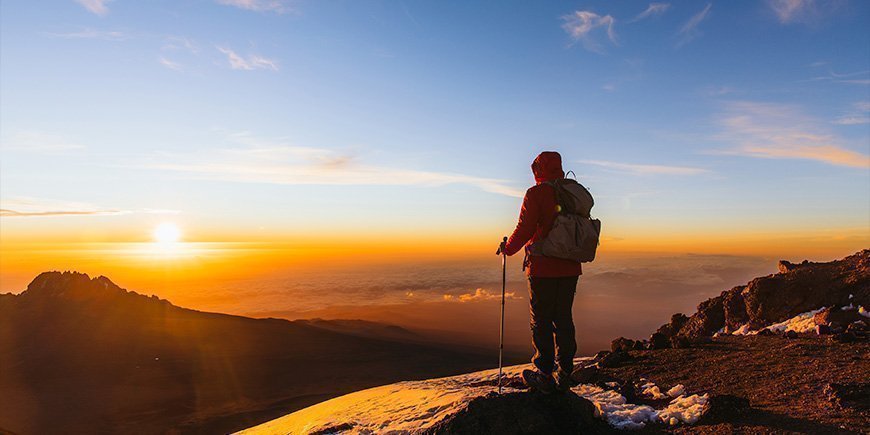
A tour to Kilimanjaro is so much more than just a hike.
It’s an expedition to the top of Africa and a personal challenge of the highest calibre.
To make sure your tour is a success, it’s essential to be prepared and pack smart.
We’ve answered all the questions our guests often ask about what’s important to pack, and we’ve put together a packing list with everything you’re likely to need when climbing Kilimanjaro.
FAQs about what to pack for Kilimanjaro
A lot of questions can pop into your head when you're packing for the adventure of a lifetime.
Here, we've tried to answer some of the questions our guests ask us most often
Who will carry my gear?
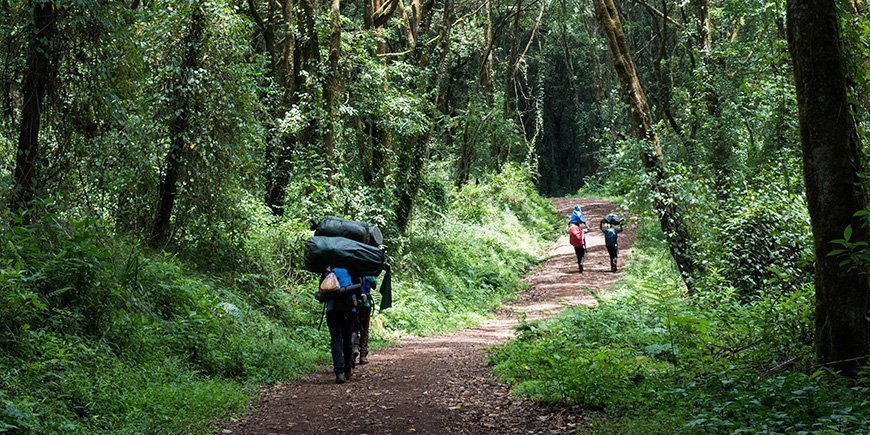
When you climb Kilimanjaro, porters (or a porter) will transport your personal luggage to the next camp along the route during the climb itself.
Your bag should be packed so that the porter can carry it on his head — in a backpack, a soft bag or something similar, for example. You will not have access to this luggage during the day.
The bag should weigh no more than 15 kg. If it weighs more than this, you'll be charged 10 US dollars extra per bag per day.
How much will I have to carry myself?
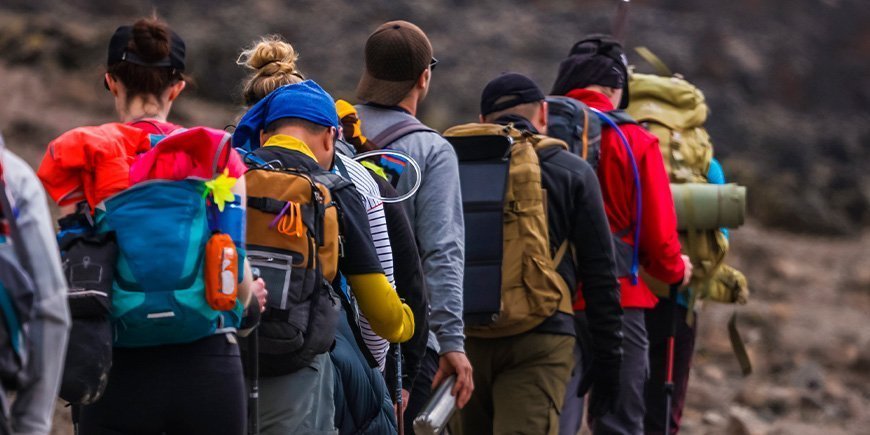
You'll have to carry your own daypack, which should contain everything you'll need during the day on the actual ascent, i.e., everything you'll need until you reach camp in the evening.
What you pack in your daypack will vary from person to person, but at a minimum we recommend bringing a bottle of water, snacks, a small first aid kit, sunscreen, a camera, rain gear, gloves, a toque, a sun hat and some extra warm clothes.
How big a backpack should I bring?
We recommend a backpack with a capacity of around 30 litres, a hip belt and a rain cover. It’s important to choose a light, durable backpack.
Remember to pack your belongings in waterproof bags (i.e., dry bags) to protect them from dust and rain. Please note that all use, import and production of disposable plastic bags is prohibited in Tanzania.
What sleeping bag should I bring?
When you climb Kilimanjaro, you pass through several climate zones, and it gets cold at night, especially as you get higher up the mountain. That’s why you should choose a sleeping bag that takes this into account.
When shopping for a sleeping bag, look at the comfort temperature. This is the lowest temperature at which you can lie in a relaxed position in the sleeping bag and still feel comfortable. It varies depending on your size, gender and how well you tolerate the cold.
We recommend choosing a sleeping bag with a comfort temperature rating of at least -10 degrees, and preferably lower if you tend to get cold easily.
Make sure the sleeping bag is light and compressible so it takes up as little space as possible and is easy to transport.
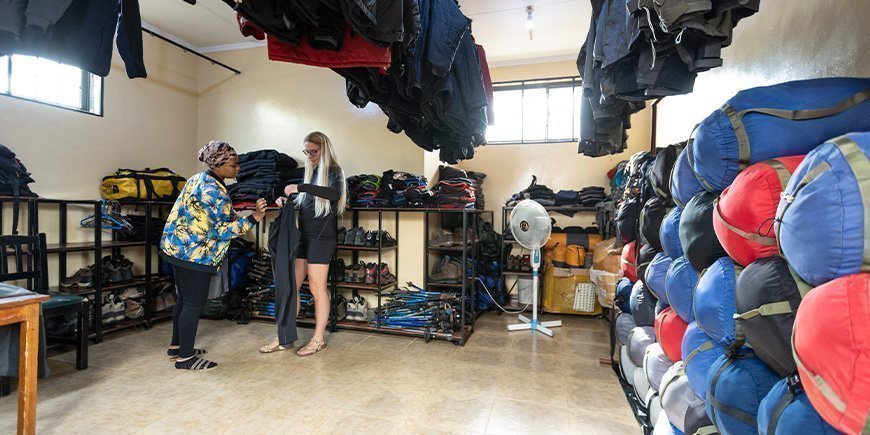
If you don’t own a sleeping bag or would rather not buy one, you can rent one at the hotel. In addition to your own or rented sleeping bag, you may want to bring a sleeping bag liner for extra warmth.
Do I need to bring a sleeping pad?
On the Machame, Shira, Rongai and Lemosho routes, there are foam mattresses in the tents.
You may want to bring your own sleeping pad for extra comfort — preferably one that insulates against cold temperatures. If you choose a self-inflating sleeping pad, we recommend one that is between 5 and 7 centimetres thick so you can sleep comfortably.
An insulated sleeping pad is essential to keep the cold from seeping up from the ground and to make sure you stay warm at night. For added convenience, choose a lightweight sleeping pad that folds away easily.
What should I wear?
When deciding what clothes to bring to Kilimanjaro, it’s important to think in layers.
The temperature can vary, and you may encounter both rain and snow, so bring light, moisture-wicking fabrics that dry quickly. Avoid cotton, as it retains moisture.
Bring both long pants and shorts, and be sure to pack a lightweight vest or jacket with multiple pockets to store essentials such as sunscreen, insect repellent and a camera.
What hiking boots should I choose?
When choosing hiking boots for the trek, there are some important things to consider.
Make sure you bring hiking boots that are neither too light nor too heavy. Comfort is everything, as you’ll be hiking across several different types of terrain. The boots must be water-resistant, they should support your ankles and they must keep your feet warm during the hike. It’s also important to break in your hiking boots before the climb.
You might also want to bring a pair of comfortable shoes or sandals for relaxing in the evening.
Along with a good pair of shoes, good hiking socks are also essential for preventing blisters and staying comfortable.
Packing list including PDF
Download our recommended packing list for climbing Kilimanjaro as a PDF.
Below is our recommended (comprehensive) packing list for your Kilimanjaro climb. Please note that this list applies only to the climb itself and not to the tour to Zanzibar or the safari in Tanzania if either is part of your tour.
Before you start packing, we recommend checking the weather forecast for Kilimanjaro and packing accordingly.
Be sure to keep the most essential items in your carry-on. If the worst happens and your luggage is delayed, it's important to have the things you can't do without close at hand. Also, be aware of items that MUST go in your carry-on, including some electronics. Check the specific rules with your airline.
Clothes & shoes:
- Underwear
- Hiking socks/moisture-wicking socks
- Long-sleeved thermal tops and long underwear*
- Pants
- T-shirts/short-sleeved shirts
- Long-sleeved shirts or blouses for hiking and relaxing in the evening
- Fleece sweater or wool sweater*
- Fleece pants*
- Insulated jacket or ski jacket*
- Rain gear (both pants and jacket) for the rainforest and cold snow*
- Gloves/mittens (waterproof)*
- Sun hat/cap to protect you from the sun
- Warm hat that covers as much of the head, cheeks and neck as possible — preferably a balaclava*
- Hand and foot warmers (chemically activated)
- Hiking boots*
- Running shoes or sandals for relaxing in the evening
- Gaiters for the lower leg. We recommend ones that can be fastened to your hiking boots
- Sunglasses
Food and drink:
- Reusable water bottle such as a CamelBak. These will be filled with clean, boiled water every morning. If you want to further purify the drinking water, you can bring your own water filter or purification tablets
- Energy bars and drinks, snacks, chocolate and the like
Other equipment:
- Daypack*
- Hiking poles*
- Sleeping bag*
- Sleeping pad
- Headlamp or flashlight
- Batteries. Remember to bring at least one extra set for anything that uses batteries, as the cold weather shortens battery life
- Travel adapter (Canadian plugs don’t fit outlets in Tanzania)
- Power bank
Toiletries:
- Toothbrush and toothpaste
- Contact lenses/glasses
- Toilet paper and a bag for used toilet paper (e.g., dry bag or zip-top bag) — you must take all your waste with you
- Quick-drying towel + soap
- Sunscreen
- Lip balm with SPF
- Hand sanitizer
- First-aid kit (including blister bandages)
- Prescription medications
- Insect repellent
- Sleep mask/earplugs
- Diamox to prevent altitude sickness. Consult your doctor
Miscellaneous:
- Passport
- Visa
- Vaccination card
- Credit card
- Money
- Insurance documents
- Travel documents
*Available to rent (used) at Springlands Hotel. See prices on our Practical information page.
Please note that all use, import and production of plastic bags, such as the ones you get at the grocery store (i.e., disposable plastic bags), is prohibited in Tanzania. We therefore recommend that you avoid using plastic bags when packing your luggage. Use fabric bags instead, or bags made of a waterproof material other than plastic.
Get ready for an exciting tour and take the first step toward Kilimanjaro’s majestic peak!
TourCompass – From tourist to traveller