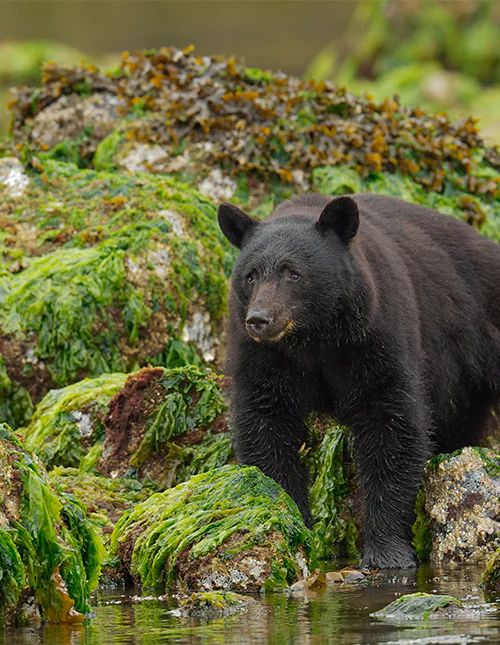
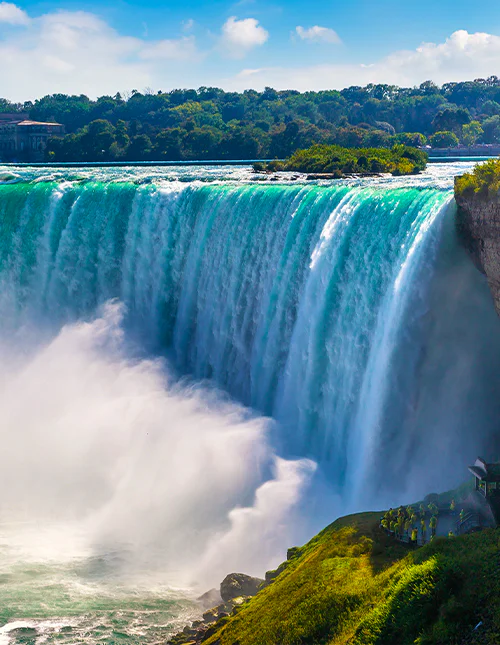
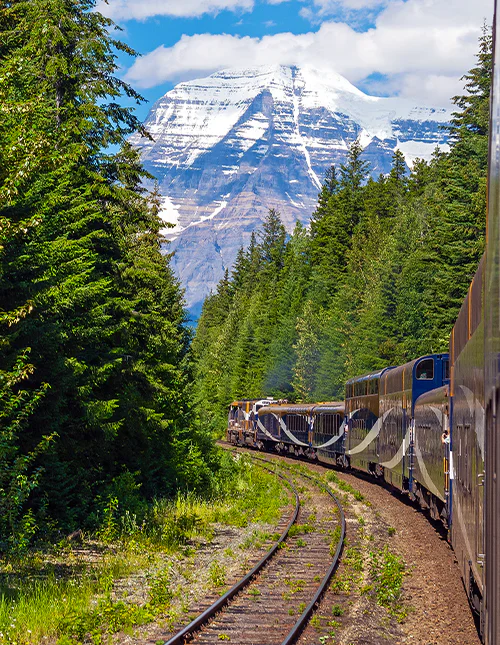
Do you dream of immersing yourself in the grandeur of nature, surrounded by endless forests, majestic mountains and an impressive array of wildlife, from moose and bears to whales and spectacular birds of prey like eagles?
If so, it’s time to discover more of your own country!
But when is the ideal time to explore Canada?
In this blog post, you’ll find our handy guide to navigating the weather across this vast and magnificent country.
What is Canada’s climate like?

Canada is the second-largest country in the world, with a vast area of 9.98 million km². Stretching generously from the Pacific Ocean in the west to the Atlantic Ocean in the east, it’s no surprise that the weather across Canada varies greatly depending on where you are.
Coastal regions generally enjoy a more stable climate, with milder winters and cooler summers, while inland areas see more extreme temperature swings, including colder winters and hotter summers than the coasts. In addition, the West Coast tends to be warmer than the East Coast, which is influenced by cold ocean currents.
The northernmost part of the country, much of which lies within the Arctic Circle, is known for its cold and sometimes inhospitable climate. This is one of the reasons why most of Canada’s population chooses to live farther south, where the climate is generally milder and more welcoming.
What time of year should you visit Canada?

Many travellers choose to visit Canada between May and October, when the weather is at its best, with pleasantly mild temperatures and longer, brighter days — perfect for setting out on new adventures.
Canada truly is a year-round destination, so the best month for your tour depends entirely on what you’d like to experience. Read on to learn about Canada’s seasons and find the ideal time for your trip.
Note: We only offer departure dates between May and October, as our rail tours can’t run outside this period due to snow.
What are Canada’s seasons like?
With the exception of the northern regions, the country — including the areas you will explore on a tour with TourCompass — generally enjoys four distinct seasons:
- Spring: March to May
- Summer: June to August
- Fall: September to November
- Winter: December to February
The timing and length of these seasons can vary considerably from region to region.
Spring (March to May): Mild temperatures and blooming nature

As spring arrives, Canada begins to shake off winter's icy grip. Temperatures slowly start to climb and the snow melts away. While March and April can still bring unpredictable weather and lingering cold, it's in May that the gentle warmth of spring truly takes hold.
May's milder weather brings the Canadian landscapes to life in vibrant colours, making the country's already spectacular scenery even more stunning. Conditions are ideal for hiking in the many breathtaking national parks, which, at this time of year, are still blissfully quiet and uncrowded. Bears are also emerging from their winter dens during these months, so you might be lucky enough to spot them ambling along with their newborn cubs.
3 advantages of travelling in the spring:
- Fewer visitors than in the busy summer season that follows
- Nature bursts into life, and you might even spot newborn bear cubs
- Temperatures gradually become milder and more pleasant
Summer (June to August): Warm days and the peak season for adventure

Summer is the season that draws the most visitors to Canada.
This time of year brings wonderful weather, with warm temperatures and plenty of sunshine. July and August are especially popular, as they're the warmest months of the year. Because Canada is so far north, the summer heat stays pleasant, with average temperatures rarely climbing above 25 degrees Celsius.
Summer is the perfect time to discover Canada’s wild and stunning landscapes, whether you’re hiking in the national parks or taking in the Canadian scenery by train, where you’ll find everything from crystal-clear lakes and lush forests to awe-inspiring glaciers. Plus, the summer months bring a host of cultural events, such as Canada Day — the country’s national celebration — on July 1.
3 advantages of travelling during the summer months:
- The warmest temperatures of the year
- Excellent conditions for outdoor activities, e.g., hiking, cycling, rafting and horseback riding
- The chance to celebrate Canada Day
Fall (September to November): Cooler weather and golden hues

Fall in Canada brings a refreshing transition from the warmth of summer to cooler, yet still pleasant, temperatures.
The milder weather in September and October offers ideal opportunities to explore Canada’s rich flora and fauna — for example, spotting the many majestic birds of prey in British Columbia or the mesmerizing northern lights in Banff National Park. During this period, the forests are transformed by warm shades of red, orange and yellow, reaching their most spectacular display in October.
In November, as winter starts to make itself felt, temperatures drop noticeably. By now, the trees have shed their last leaves, and the weather tends to be cold and rainy — and in some regions, the first snowfall may already have arrived.
3 benefits of travelling during the fall months:
- Enchanting landscapes awash with golden hues
- The chance to spot magnificent birds of prey and witness the northern lights
- Cooler yet comfortably mild weather
Winter (December to February): Bitter cold and snow-covered landscapes

Canadian winters are harsh and frigid, with daytime temperatures plunging as low as -15°C and dropping to -35°C on the coldest nights. Much of the country is blanketed in snow due to the persistent frost, and snowstorms are common.
If you dream of experiencing snowy landscapes or the northern lights, the winter months are ideal. Fewer people travel to Canada at this time, so you can enjoy the attractions in a more peaceful setting. However, it’s important to note that some experiences aren’t possible during these months. For example, driving can be challenging. The cold temperatures often make for difficult and occasionally hazardous conditions, as roads and railways can become icy, affecting both car and train travel. For this reason, we don’t offer tours in Canada during the winter.
3 advantages of travelling during the winter months:
- Fewer visitors
- The landscapes are covered in a beautiful blanket of snow
- A chance to see the northern lights dance across the night sky
For those looking for something special
Is there something in particular you’d like to experience on your tour?
Below, you’ll find an overview of some of Canada’s most popular experiences, along with the best times of year to enjoy them.
When is the best time to see bears in Canada?

The best time to experience Canada’s bears is from May to October. During these months, the bears emerge from their winter hibernation — some even accompanied by newborn cubs — and set off in search of food. With a bit of luck, you might spot these furry creatures in Banff National Park or Jasper National Park, both famous for their large populations of black bears and grizzlies.
From August to October, bears are especially easy to find along the rivers, particularly in British Columbia, where they're busy fattening up for winter by feasting on large quantities of salmon.
When is the best time to see whales in Canada?

The prime time for whale watching in Canada is between April and October, which marks whale season in the country.
However, since different species visit Canadian waters at different times, the ideal period depends on which whales you’re hoping to see.
For example, if you join a whale-watching tour off the coast of Victoria on Vancouver Island, your best chance of seeing humpback whales and orcas is between May and September, while grey whales are most commonly spotted in the area from March to April.
When can you have Canada all to yourself?

If you’re dreaming of exploring Canada without the crowds, consider travelling outside the peak season in July and August.
Visiting outside these busy months doesn’t just mean more space to yourself — you’ll often find the prices are more appealing too.
When is the best time to go hiking in Canada?

The ideal time for hiking in Canada is from July to mid-September, when the weather is at its warmest and the trails are at their driest.
That said, hiking in the spring or fall has its advantages too: there are fewer people around, and nature shows a different side of itself. At these times of year, it’s important to dress appropriately, as the weather is usually cooler and more changeable.
When can you see the northern lights in Canada?

The best time to see the northern lights in Canada is from late August to April, when the nights grow longer and the colder weather brings clearer skies.
If you’re lucky, you might catch this mesmerizing phenomenon while exploring the national parks of the Canadian Rockies during these months, such as Jasper National Park or Banff National Park.
Do you know when to travel?
Exploring Canada is an unforgettable experience, no matter when you decide to travel. Given the vast size of the country, you’ll find considerable contrasts in both the weather and the sights and activities available on your tour.
Dreaming of the warmest weather? Want to have the attractions all to yourself? Hoping to spot some wildlife?
Our experienced travel specialists are ready to help you find the perfect time for your adventure.
TourCompass – From tourist to traveller