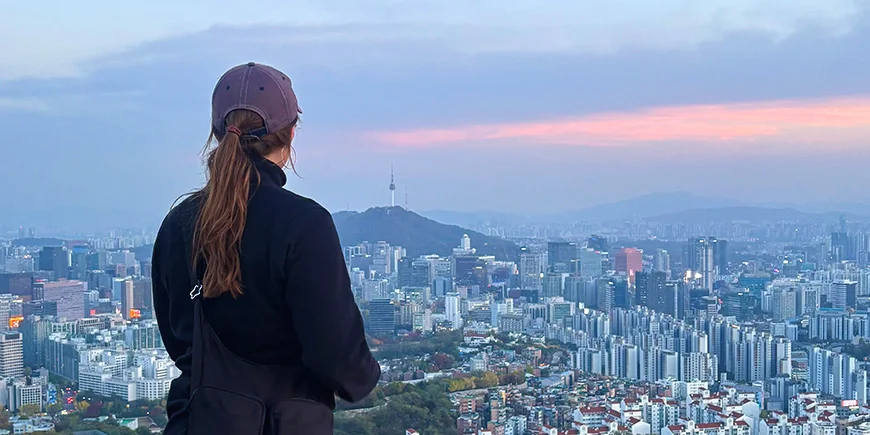
South Korea’s capital, Seoul, is a city that makes room for both tradition and new trends.
It’s a city where skyscrapers, green spaces, royal palaces and traditional hanok neighbourhoods come together to set the stage for a truly unique experience as you explore Seoul.
In this blog post, we’re heading to the South Korean capital to take you through 10 attractions that are sure to show you Seoul’s many beautiful sides.
What is Seoul known for?
Seoul is the place to experience everything Korean trends have to offer — whether it’s K-beauty, K-drama, K-food or the musical phenomenon known as K-pop, which is now popular around the world. It’s a city where, at one end, you can practically bask in the neon glow of Myeongdong’s countless signs, while at the other, you can visit iconic attractions such as the magnificent Gyeongbokgung Palace.
The city is also home to approximately 9.5 million people and has been inhabited for thousands of years, dating back to the Neolithic period. So it's no coincidence that South Korea's capital is as diverse and rich in tradition as it is.
And that's what Seoul is especially known for: being a city that brings tradition and modernity together. At the same time, it's a surprisingly manageable metropolis, with many of its biggest attractions within easy walking distance of one another.
Read our 10 suggestions for things to do in Seoul.
1) Bukchon Hanok Village
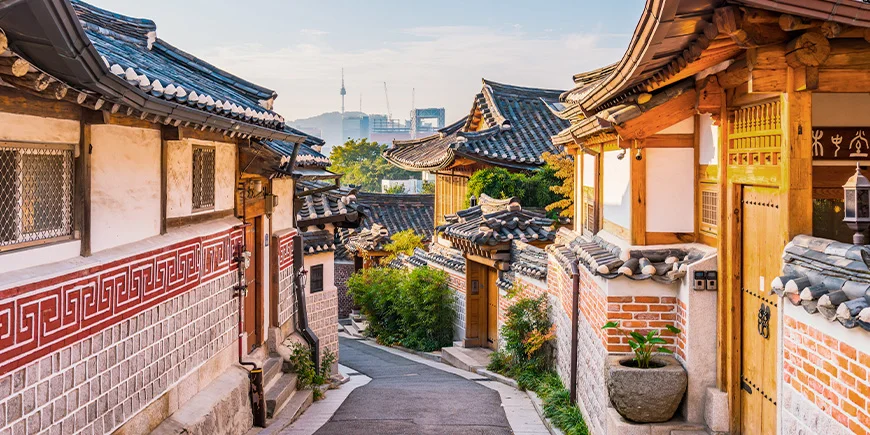
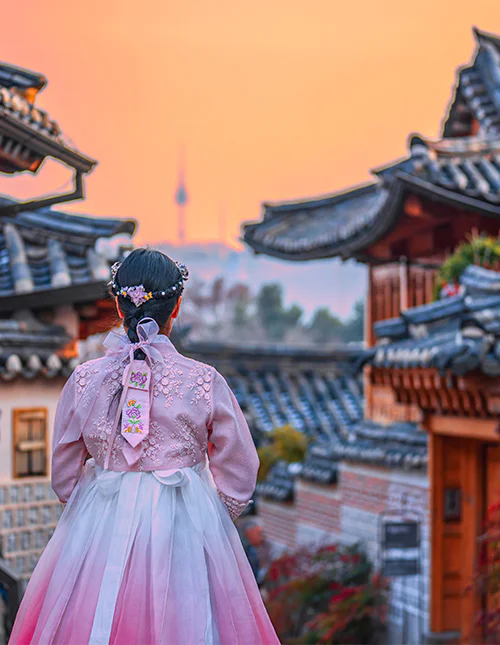
The first attraction on our list is Bukchon Hanok Village, one of the most photographed areas in Seoul — and for good reason. This picture-perfect neighbourhood is packed with traditional houses known as hanok, which almost make you forget that you're in the 21st century. While some hanok houses are private homes, many have been converted into restaurants, teahouses and cultural centres.
Bukchon is an absolute must-see when you’re in Seoul, so be sure to explore the area and let it take you back to Seoul’s traditional past.
P.S. Since local residents live in the area, it’s important to be respectful when you visit.
2) Gyeongbokgung Palace
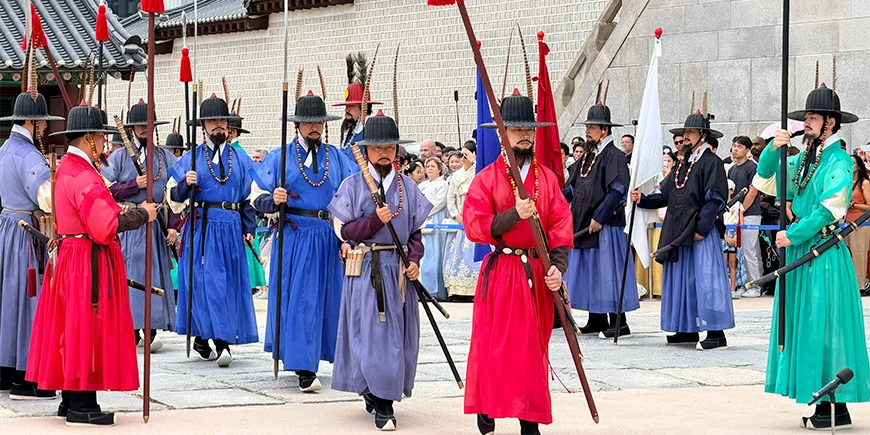
Many would call the next attraction on the list Seoul’s greatest: Gyeongbokgung Palace.
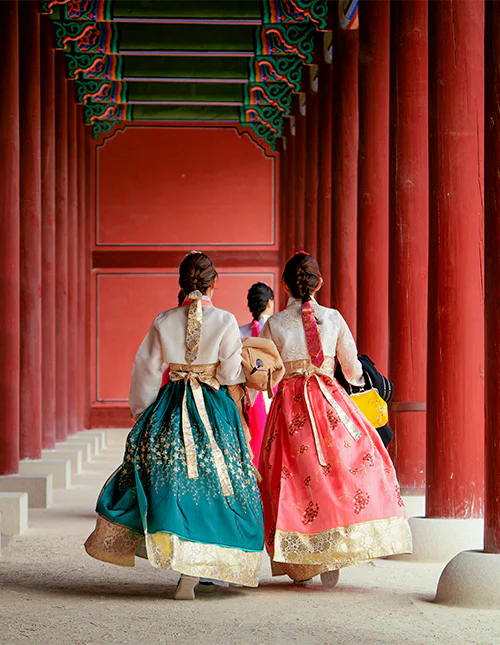
Gyeongbokgung Palace, also known as the Northern Palace because it is located north of the city’s other palaces, was the first and largest palace built during the Joseon dynasty. Built in 1395, it went on to become the dynasty’s main palace. It was later destroyed, but has since been reconstructed to reflect the original palace.
The palace is decorated with painted ceilings and features large, beautiful courtyards. If you can, plan your visit around the changing of the guards, which takes place daily at 10 a.m. and 2 p.m. (except on Tuesdays, when the palace is closed). Soldiers in traditional dress perform a historic ceremony that brings the past to life. Times are subject to change, and the ceremony may be cancelled in bad weather, so check the current times before your visit.
Although most people come here for the palace, the grounds offer plenty more to do, and you can easily spend an entire afternoon taking in the beautiful architecture and strolling the pleasant, wide paths surrounded by trees and green spaces.
3) Namsan Park and N Seoul Tower
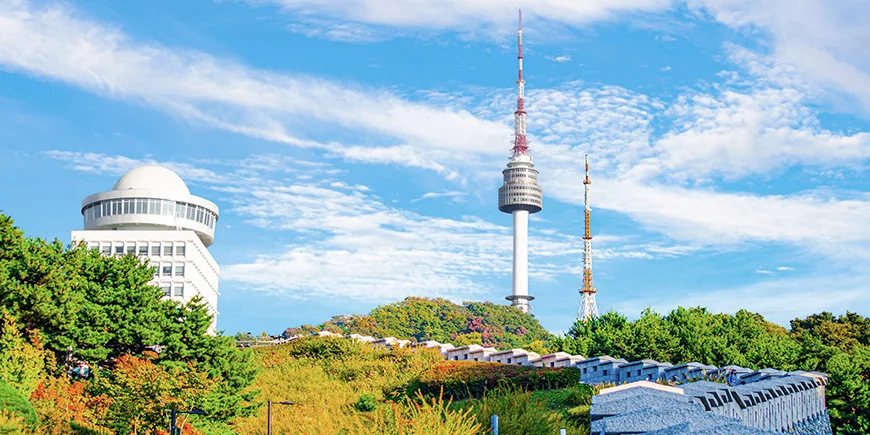
Namsan Park and N Seoul Tower have, of course, also made our top 10 list of things to see in Seoul.
Namsan Park is Seoul’s largest urban park, with plenty of opportunities to enjoy a stroll among the trees and green spaces. You can also take a ride on the cable car or visit the Ahn Jung-geun Memorial Hall, which is located in the park — or, if you’re travelling with children, stop by its outdoor playground.
But the biggest attraction is the iconic 236-metre-high N Seoul Tower, which rises above the city skyline and, thanks to its panoramic views, offers one of the very best opportunities to see Seoul from above. Be sure to visit the terraces at the foot of the tower, where you’ll find the Love Lock area. Here, thousands of couples and friends have attached padlocks to fences and love trees as a symbol of their everlasting love.
4) Myeongdong with a focus on city life, street food and shopping
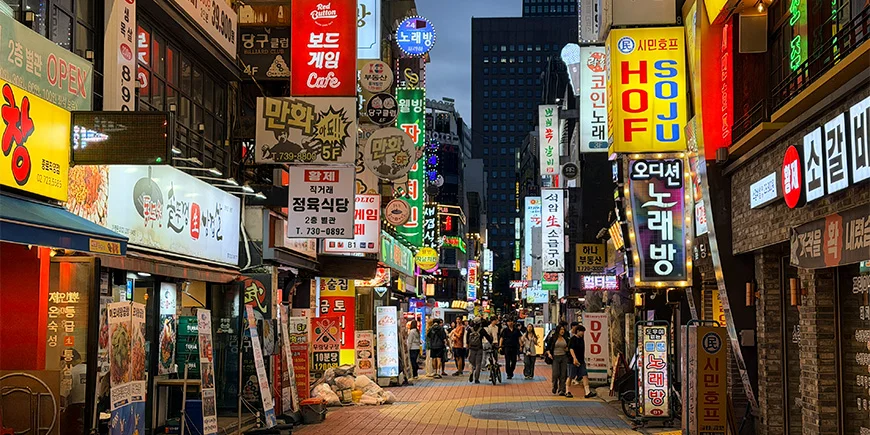
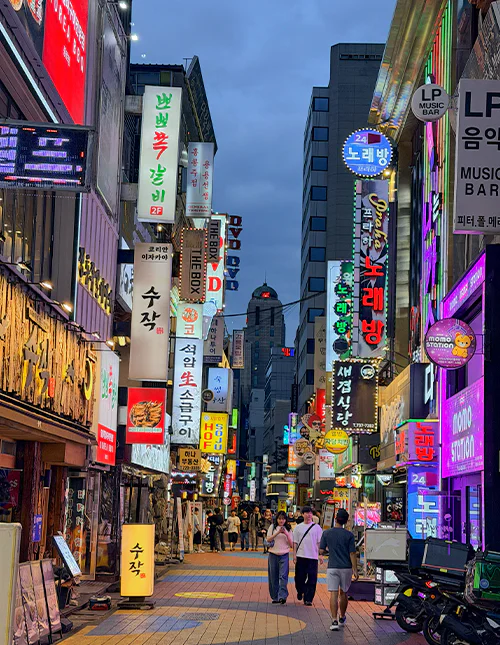
Myeongdong is probably Seoul’s most famous district and the place to truly experience the city’s modern side.
The area is ablaze with neon lights and packed with countless shops, giving you the perfect glimpse into contemporary Seoul. Here, you can shop for clothes, K-beauty products and much more in the almost endless array of stores and shopping centres. Right next to Myeongdong Cathedral, you can even get a so-called “colour analysis,” a Korean assessment of which colours suit you best — something that is very much on trend right now.
Along with the many shopping opportunities, you’ll find countless street food stalls along Myeongdong’s main street, inviting you to try everything from deep-fried tomatoes and 10 won bread (bread shaped like a South Korean 10-won coin) to various types of skewers, pancakes (crêpes) and fruit.
5) Insadong
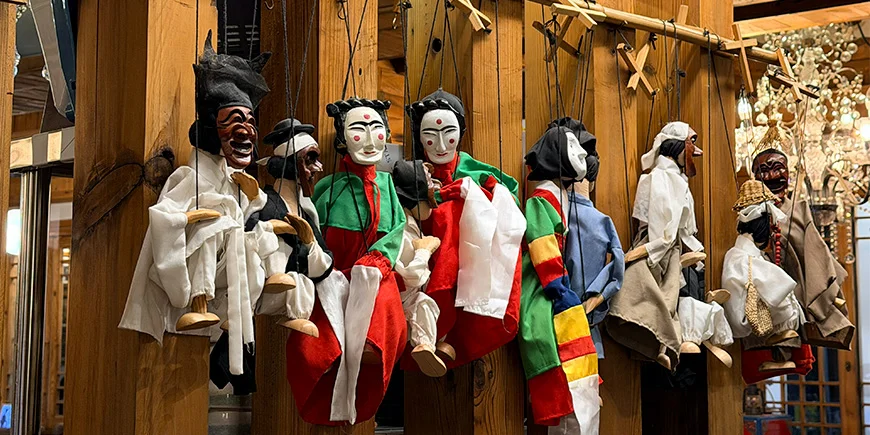
While Myeongdong is the modern centre of Seoul, Insadong is more the city’s cultural and historical heart — and the place to visit if you want to bring home a traditional souvenir.
Located right in the heart of Seoul, Insadong is packed with shops selling traditional handicrafts, while the area’s maze-like streets are steeped in Korean traditions and culture. Explore the neighbourhood and discover everything from calligraphy tools to high-quality brassware.
For decades, Insadong has attracted artists and writers drawn to the neighbourhood’s galleries, tea houses and antique shops — a legacy you can still feel today, with art, history and culture around every corner. In Insadong, you’ll also find cozy cafés and acclaimed restaurants serving Korean classics such as bibimbap.
So when you visit Insadong, you can indulge in both culture and Korean cuisine.
6) Ikseon-dong
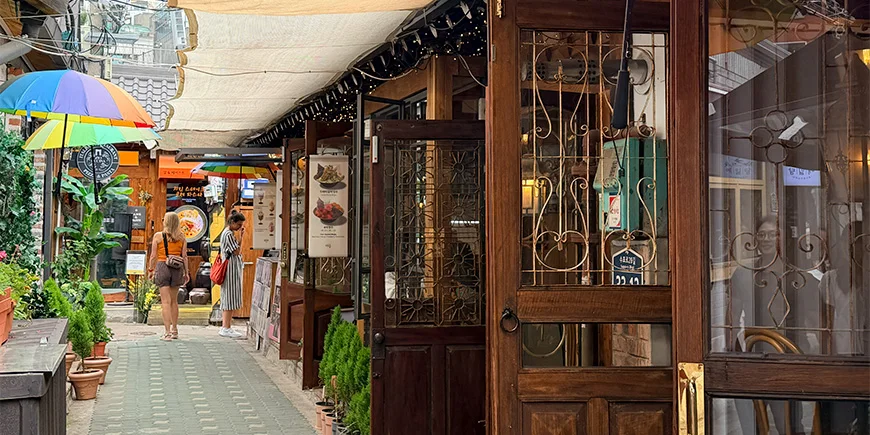
In Ikseon-dong, old meets new. Located close to Insadong, the neighbourhood is Seoul’s oldest hanok quarter, where traditional houses have been transformed into trendy cafés and restaurants.
The neighbourhood is known for offering a modern glimpse of Korea, so take a stroll through its decorated narrow passageways and see how this particular quarter has managed to bring new trends to the table alongside tradition. Here, there’s no doubt that Seoul is a city developing at a tremendous pace without forgetting its traditions.
Unlike Bukchon, which mainly showcases beautiful traditional hanok houses, Ikseon-dong is more of a place to visit if you want to sit down and enjoy a bite to eat or a glass of makgeolli (traditional rice wine) inside a hanok.
7) Gwangjang Market
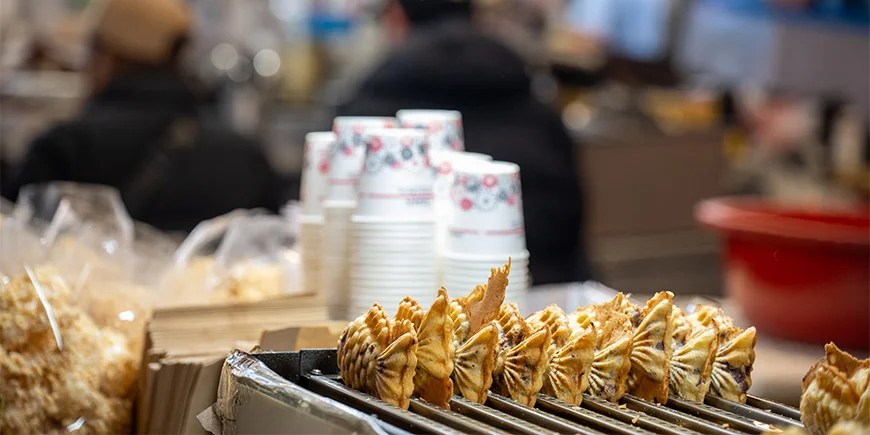
Seoul is home to several markets that invite you to discover South Korean culture.
Just a short walk from Jongno 5-ga Metro Station, you’ll find the traditional Gwangjang Market, which has been selling traditional goods, silk and all kinds of produce for decades. You can also sample a wide range of Korean dishes — for example, try the Korean snack gimbap or eomuk, a type of fish cake. It’s also said that if you’re looking for the best jeon — Korean pancakes — this is the place to go.
You can also buy clothes at the market. Among other things, you’ll find hanbok shops selling traditional clothing — and according to Visit Korea these generally cost 30% less than the average price elsewhere.
8) DMZ
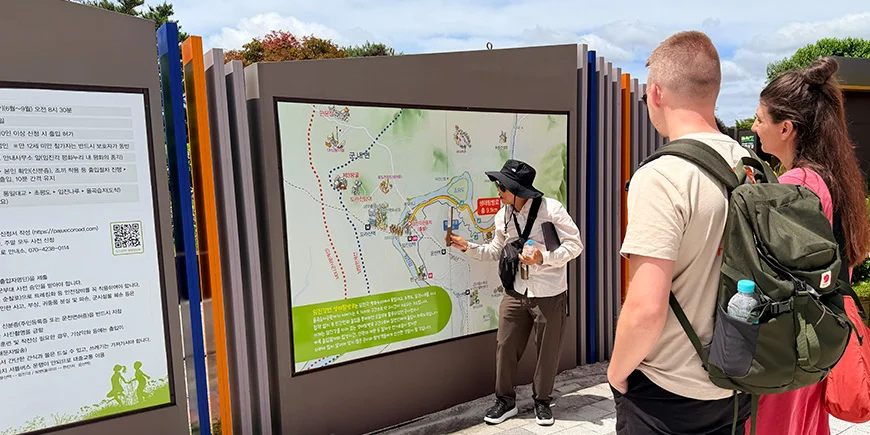
Although this attraction isn't technically located in Seoul, the trip of just under 60 km north is well worth it. A visit to the Demilitarized Zone — better known as the DMZ — along the border with North Korea lets you see the aftermath of the Korean War first-hand and gives you real insight into the relationship between North and South Korea.
When you visit the DMZ with TourCompass, you'll explore the Third Infiltration Tunnel, built by North Korea and later discovered by South Korea. Heading down into the tunnel gives you a tangible sense of the tense history that continues to shape the peninsula. Afterward, films and exhibits about the division of Korea at the DMZ Exhibition Hall help put the experience into perspective.
The tour continues to the Dora Observatory, where you can look out over the North Korean landscape. From here, you can catch glimpses of small villages, fields and buildings in North Korea. The landscape seems almost peaceful, with farmland and low hills rolling toward the horizon.
9) Cheonggyecheon
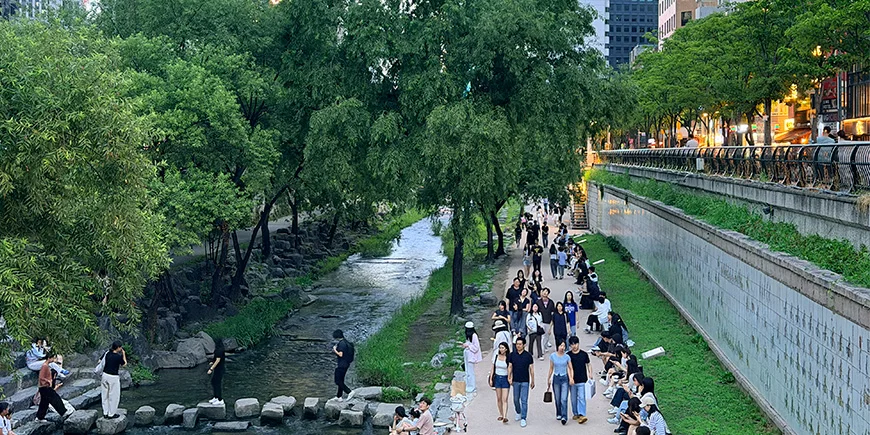
If you feel like a pleasant walk in the city, we recommend strolling along Cheonggyecheon, the 11-kilometre-long stream that runs through downtown Seoul. There are wide walkways on both sides of the stream, as well as small bridges and seating areas where you can sit with your feet right at the water’s edge.
The stream first served a strategic purpose during the Joseon Dynasty, when it formed part of the city’s drainage system. However, in the mid-20th century, it had to make way for a highway intended to help drive economic development after the Korean War. In 2003, work began to remove the highway and restore the stream, which reopened in 2005.
Today, the long stream is a beautiful haven amid the vibrant energy of Seoul, and as you stroll along its banks, it’s hard not to feel glad that space was made for it once again.
10) Yongsan District and Han River
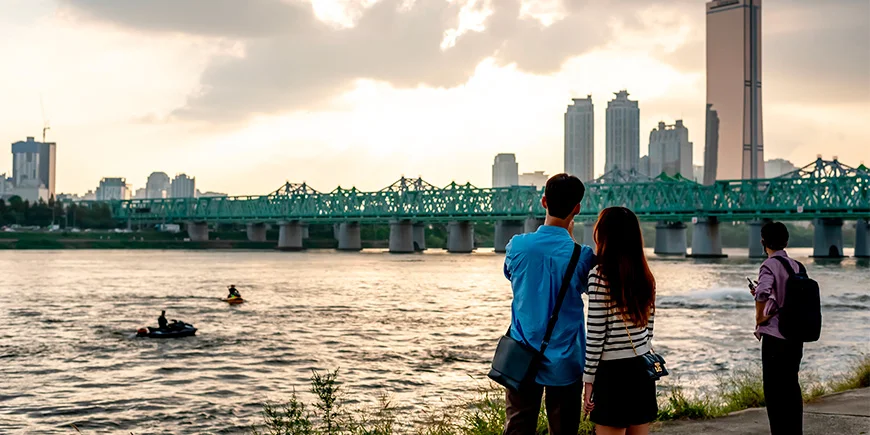
The last entry on our list may not be an obvious pick for a top 10 of things to see in Seoul, but we still highly recommend a visit to Yongsan District.
Located in the heart of Seoul, north of the Han River, the area is a true cultural district packed with museums, skyscrapers and green spaces such as Namsan Park, mentioned earlier, as well as plenty of cafés and restaurants.
Here, you can see the city’s development up close. It isn’t quite as polished as Myeongdong or Bukchon, but if you want to gain a deeper understanding of Seoul’s many layers, a visit to Yongsan is an excellent choice.
Since Yongsan District borders the iconic Han River, it is also home to one of the best spots for taking in spectacular sunsets over the water. In the southern part of Yongsan, you’ll find Ichon Hangang Park, where the riverside promenade is a wonderful place for a truly beautiful sunset walk.
Seoul awaits — are you ready?
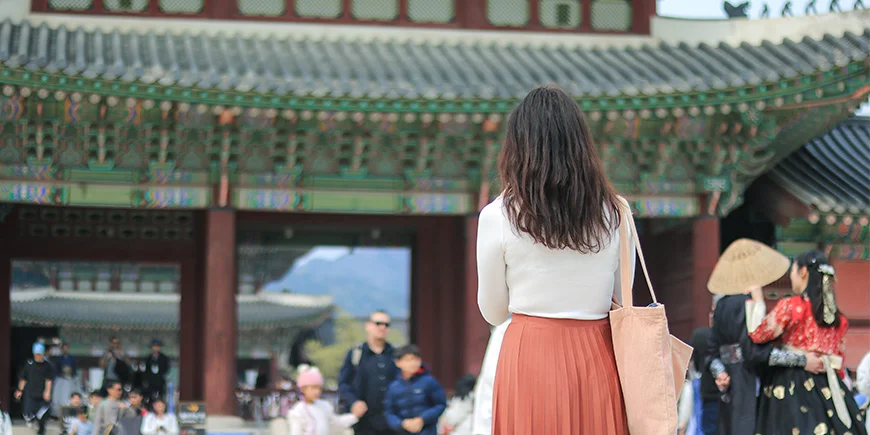
When you visit Seoul, you’ll discover a city that truly holds tradition in one hand and modern life in the other.
From the neon-lit streets of Myeongdong, packed with street food, to the traditional architecture of Gyeongbokgung Palace, Seoul blends timeless tradition with the energy of a modern metropolis. And because many of the city’s top attractions are within walking distance of one another, you can experience much of it on foot.
Ready to experience Seoul for yourself?
Contact our travel specialists today, and together we can find the tour to South Korea that will set you on your way to the adventure awaiting you in the South Korean capital.
TourCompass – From tourist to traveller