Looking for unique safari experiences that also happen to be some of Africa’s most exclusive? In areas of natural beauty such as the Okavango Delta and Chobe National Park in Botswana, that’s exactly what you’ll find.
But when is the best time to visit Botswana?
Read on to learn more about the climate in Botswana and the experiences that await you in each season.
Please note: The guide below is intended as a general guideline only
The climate in Botswana
Botswana offers phenomenal experiences year-round. But depending on what you would like to experience, it’s a good idea to plan the timing of your visit.
Botswana is a landlocked country in southern Africa with a semi-arid climate.
Although Botswana is dry most of the year, it also has periods of rain, so the seasons can be divided into a dry season and a rainy season. The rainfall during the rainy season contributes to the country’s immense biodiversity, and you will find great variety in its landscapes.
The weather varies very little across the different regions of the country, and the seasons are more or less as described below. However, there may be local variations, such as in Chobe National Park and the Okavango Delta.
When is the rainy season in Botswana?

The rainy season in Botswana runs from November through March.
This period is also known as Botswana’s summer and is characterized by a combination of very high temperatures — 40+ degrees on some days — and a risk of thunderstorms and rain, though the rain mainly falls in the afternoon. January and February see the most rain, when the showers can last for longer periods.
The rainy season is perhaps the most photogenic time of year, offering a lush, green landscape and a dramatic play of color in the sky.
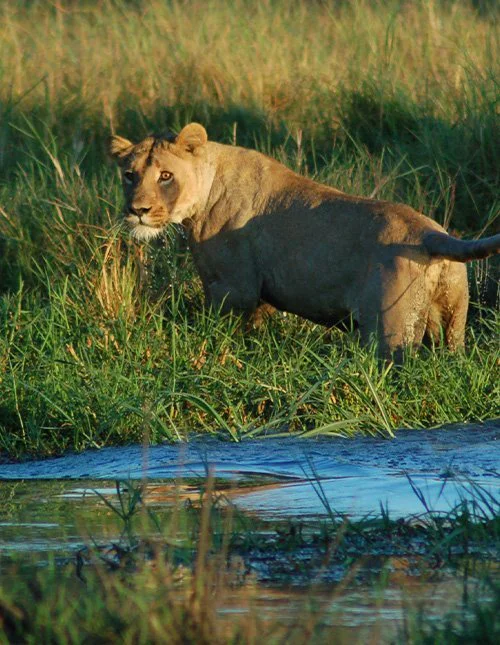
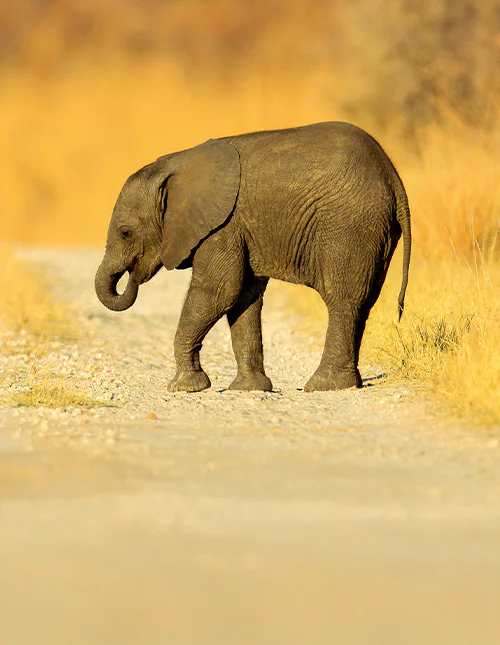
The animals find it easier to hide during this period, but this is also when many baby animals are born, attracting predators such as lions, leopards, and hyenas looking for easy prey.
If you’re a bird lover, you should travel to Botswana during the rainy season. During these months, there are plenty of opportunities to see both resident and migratory birds, which also breed during this period.
When is the dry season in Botswana?

The dry season in Botswana runs from April through October.
This period is also known as Botswana’s winter and is generally characterized by cloudless blue skies and virtually no rain. At the start of the season, daytime temperatures are still very hot, then drop to a more comfortable level before climbing again as the rainy season approaches. Evenings and mornings can be chilly, so it’s a good idea to pack warm clothing if you’re going on a morning or night safari.
The colors of the landscape begin to fade, the trees lose their leaves, and the animals find it harder to hide in the bush, which is no longer as lush. Water becomes increasingly scarce, and many animals gather at water holes and rivers during the dry season, making them easier to spot.
The weather in the Okavango Delta

Set in the middle of the otherwise arid Kalahari Desert is the lush Okavango Delta, one of the most beautiful places in Africa. The 14,000 km2 area is made up of a complex network of rivers that flood every year.
What can you experience in Okavango’s rainy season?
Oddly enough, the rainy season (November through March) is when there is the least water in the delta.
The animals stay close to water, so you’ll find them in the heart of the delta, where there is water year-round.
You can generally expect:
- Fewer animals than in the dry season, gathered in the heart of the delta
- Baby animals that attract predators
- Lots of birds, both resident and migratory
- Very hot weather and afternoon rain
- Parts of the delta may become inaccessible
What can you experience in Okavango’s dry season?
During the dry season (April through October), the water level in the Okavango Delta is at its highest. The rain that fell in the Angolan highlands six months earlier fills the Okavango River with so much water that the river overflows its banks, flooding the delta during the dry season.
The dry season is generally considered one of the best times to visit the delta, as the animals flock here, especially from June on, when the delta is nearing its maximum water level. Thousands of Botswana’s 130,000 elephants, for example, migrate here to drink at the permanent watering holes.
The increased amount of water in the delta also makes it possible to glide through the delta’s shallow waters in a “mokoro” (traditional canoe).
You can generally expect:
- The water level is at its highest
- Milder, drier weather, as well as fewer mosquitoes
- A great time to glide through the waterways in a mokoro
- Migrating animals searching for water
- Peak season, which can make the tour more expensive
The weather in Chobe National Park

Thanks to the Chobe River and the park’s many different ecosystems, Chobe National Park offers wonderfully varied scenery.
The wildlife is abundant and diverse, and you’ll have plenty of opportunities to get up close to the animals on both a traditional safari and a water safari.
What can you experience in Chobe’s rainy season?
The rainy season in Chobe National Park closely follows the seasons of Botswana as a whole. The otherwise arid landscape turns green and lush, and there are generally fewer visitors than during the dry season. This time of year is especially good if you want to see birds and baby animals.
You can generally expect:
- Lots of birds
- Wildlife that is more spread out because water is easier to find
- Very hot weather and a risk of rain
- Low season = fewer visitors
What can you experience in Chobe’s dry season?
During the dry season, water becomes harder to find as the watering holes in various parts of Botswana dry up. This drives the animals to the banks of the Chobe River, which becomes a mecca for huge numbers of thirsty wildlife.
During the dry season, for example, you can see a great many of Botswana’s 130,000 elephants — sometimes as many as 50,000 gather at the riverbank to make the most of the river’s water. In fact, during this period, the Chobe River has one of the largest concentrations of elephants in the world — if not the largest.
For many people, the dry season is the best time to visit Chobe, since there is less rain and the animals are easier to spot. On the other hand, the area also draws more visitors, so prices may be higher than usual.
You can generally expect:
- Better weather (less rain) than during the rainy season
- Dry, dusty landscapes
- Beautiful sunsets by the river
- Peak season = more visitors, especially between July and October
In Botswana, you can enjoy amazing experiences year-round.
If you're not sure when to travel, please contact our travel consultants, who are standing by to help you.
Please note: The guide above is for general guidance only, and recommendations may change. Always check the weather forecast for your destination before you leave.
TourCompass – From tourist to traveler