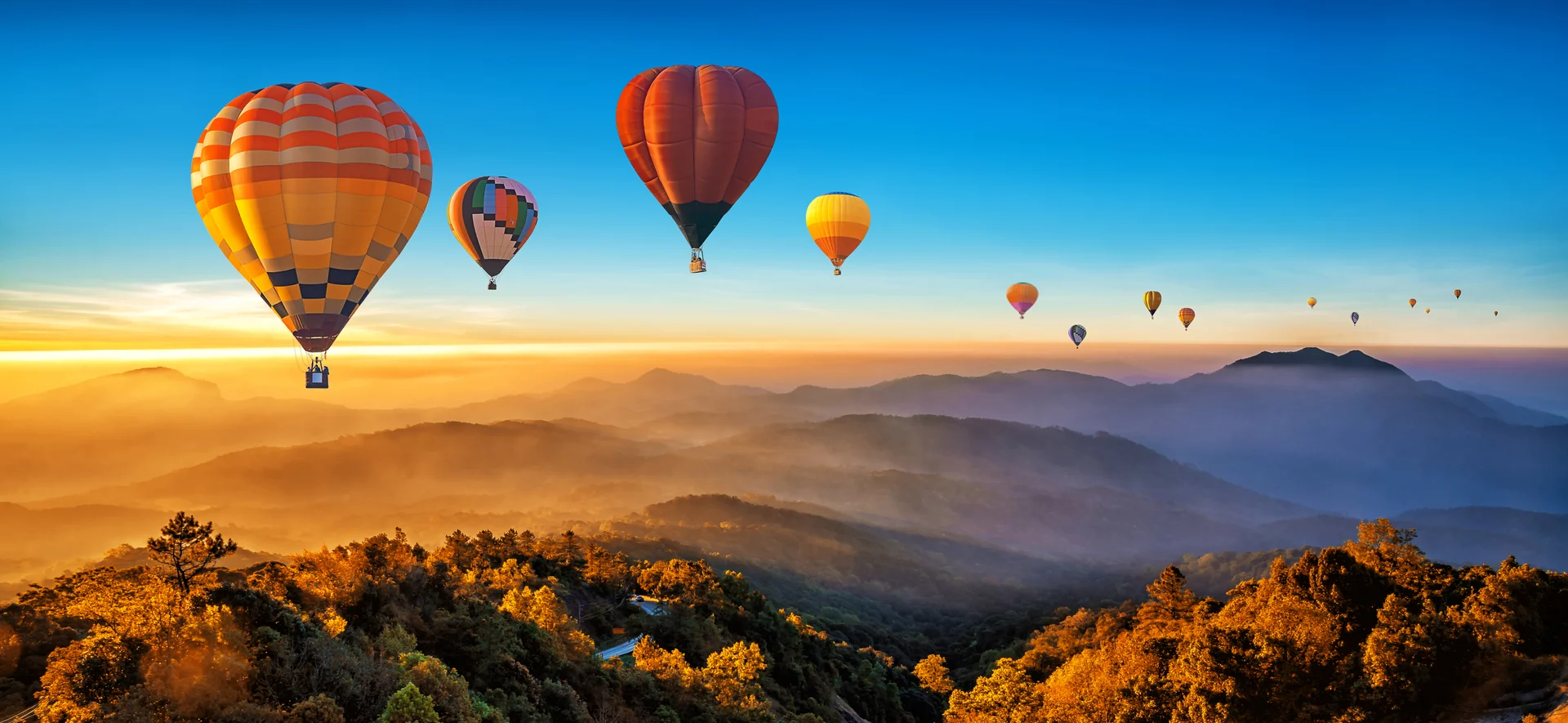
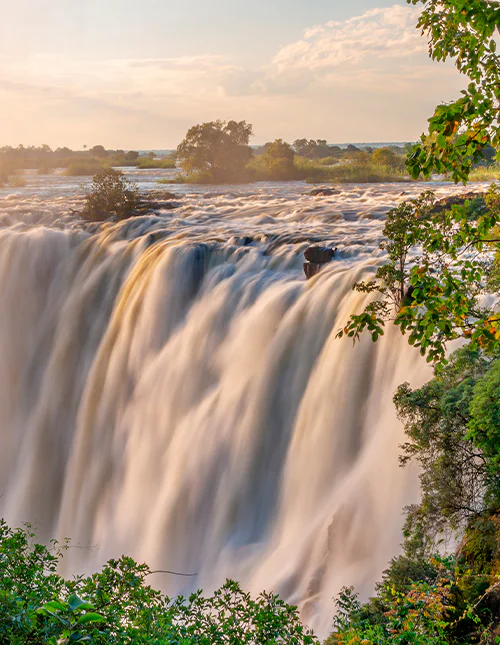
The spectacular Victoria Falls is truly an impressive sight.
Victoria Falls is located on the border between Zambia and Zimbabwe, and with a width of 1,700 meters and a massive drop of 108 meters, it is one of the largest waterfalls in the world. Feel the roar, experience the huge spray, and be blown away by the sheer force of nature.
Read more below about the best time to visit the dramatic Victoria Falls.
Climate
The mighty Victoria Falls offers unique experiences year-round.
However, changes in the weather affect temperatures, the flow of water over the falls, and visibility — and therefore what you can experience. That's why it's a good idea to find out when the best time for you to travel there is.
The climate at Victoria Falls is subtropical, with two main seasons: a rainy season and a dry season.
- The rainy season runs from mid-November through March.
- The dry season runs from April through mid-November.
The seasons are fairly clearly defined in terms of temperatures and rainfall; however, the flow of water at the waterfall changes with the seasons.
| Month | tHE FLOW OF WATER AT THE WATERFALL |
| JAN | Slow |
| FEB | The water flow increases |
| MAR | Good |
| APR | Perfect |
| MAY | Highest |
| JUN | Highest |
| JUL | Good |
| AUG | Normal |
| SEP | The water flow drops |
| OCT | Medium |
| NOV | Slow |
| DEC | Slow |
Rainy season

The rainy season at Victoria Falls runs from around mid-November through March.
This is the time of year when the most rain falls, but paradoxically, it is also when the flow of water over the falls is at its lowest.
At the beginning of this period, the waterfall is still affected by the lack of rain in the previous months, so the flow of water will be slow. When the water level of the Zambezi River is low, it's the ideal time to visit Livingstone Island, where you can stand on the edge of the waterfall and swim in the natural "Devil's Pool." These experiences aren't possible when the water level — and thus the flow of water at the waterfall — is high.
The increased rainfall during the rainy season gradually causes the water level at Victoria Falls to rise, and the later in the rainy season you visit, the stronger the flow will be. The more rain that falls, the more water there is and the heavier the flow at Victoria Falls.
When the flow of water is at its peak, you'll experience constant spray and mist rising from the huge waterfall. The spray created by Victoria Falls also helps produce the most wonderful, colorful rainbows, which can often be seen at the waterfall.
Just because it’s the rainy season doesn’t mean it rains all the time — but when the skies do open, it’s usually in the form of heavy showers or thunderstorms. Temperatures are also at their highest during this period, and it can get very hot and humid. If you’re interested in birds, the rainy season is also the absolute best time to visit the area.
Dry season

The dry season at Victoria Falls runs roughly from April to mid-November.
This period is characterized by mostly dry, sunny weather, with very little or no rain at all. Because there’s so little rain, the water level at Victoria Falls drops as the months go by.
If you visit at the start of the dry season, you’ll see the waterfall at full strength, but the further into the dry season you go, the weaker the flow becomes.
If the dry season is drier than usual, there may be even less water in Victoria Falls, but the waterfall never dries up completely. During particularly dry periods, however, parts of the waterfall — which, let’s not forget, is 1,700 meters wide — may dry up. But when this happens, you have the chance to walk on some of the rocks where the waterfall otherwise thunders down the rest of the year. Not only is this an amazing experience, but few people can say they have done it!
In the months when the water flow is lower, visibility is excellent, with less spray and less mist — perfect conditions for taking beautiful, clear photos.
Temperatures are milder and the air is clearer than during the rainy season, and in the coolest months of the period from May through August, nights can feel chilly.
TourCompass – From tourist to traveler