
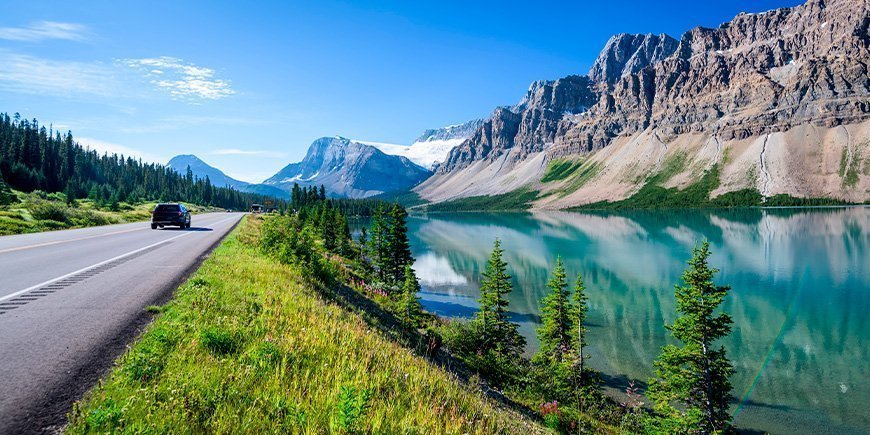
Picture yourself cruising through wide-open landscapes with snow-capped mountains rising majestically on the horizon, as the scent of pine trees drifts in through the open window.
On a self-drive vacation in Canada, the journey itself becomes part of the adventure, with each bend in the road revealing fresh vistas and breathtaking natural beauty.
Want to experience Canada’s scenic roads? Here you’ll find our top tips, so you’re fully prepared for your adventure through this spectacular country.
Benefits of exploring Canada on your own
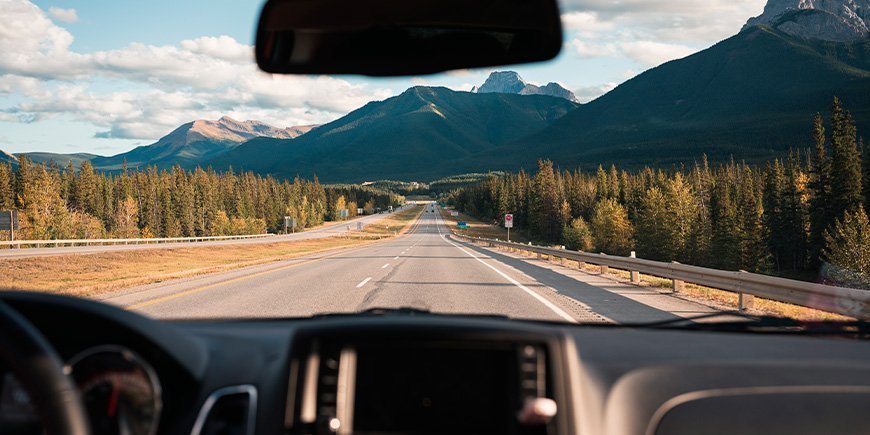
The greatest advantage of exploring Canada on your own is undoubtedly the freedom it gives you.
With your hands on the wheel, you set the pace and can take spontaneous detours whenever you like. Stop to soak up the breathtaking scenery, snap a photo, or duck into a cozy café for a warm cup of coffee — it’s entirely up to you.
The journey itself is an adventure, with captivating routes that take you past shimmering glaciers, glassy lakes, and deep green forests.
Frequently asked questions about driving in Canada
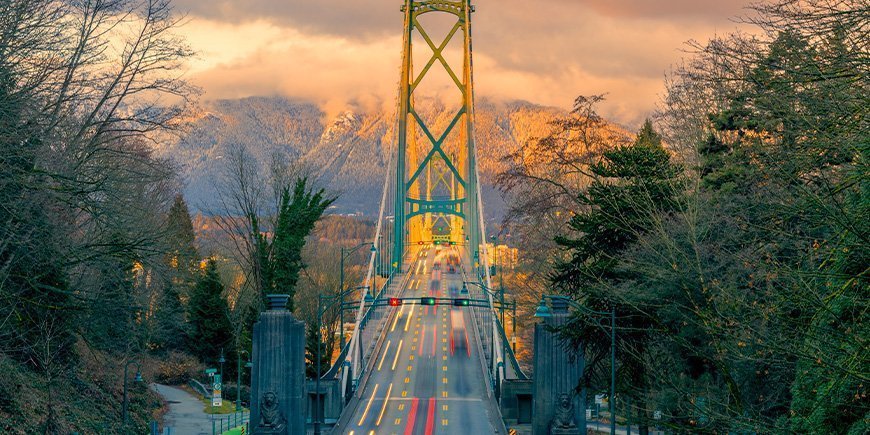
Canada is the perfect destination for a self-drive adventure.
We’ve put together answers to the most common questions about driving in Canada.
Is it safe to drive in Canada?
Yes, driving in Canada is safe.
That said, harsh winters can make certain routes challenging, such as those through the Rocky Mountains. However, our tours take place between May and October, so our itineraries avoid any issues with winter weather.
Can you drive in Canada with a US driver's license?
Yes, you can drive in Canada with your valid US driver’s license as a visitor – you don’t need an International Driving Permit. How long you can use it varies by province, but it easily covers the length of our tours. Just remember to bring your physical driver’s license with you.
Which side of the road do you drive on in Canada?
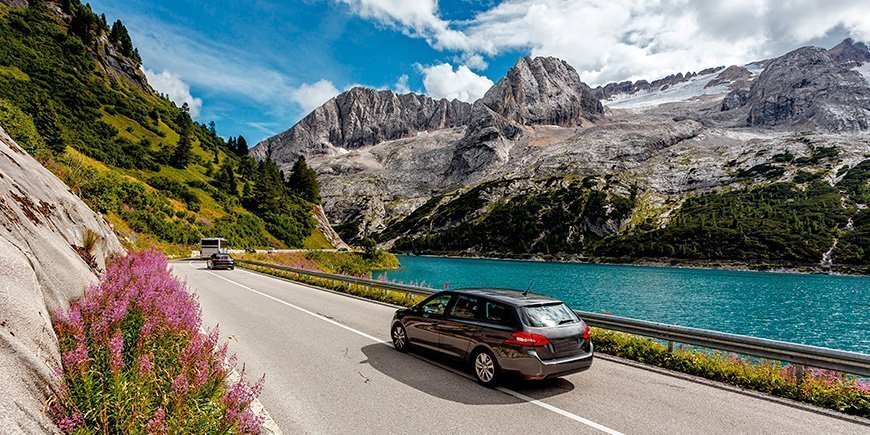
In Canada, drivers use the right-hand side of the road, just like back home in the United States.
In fact, driving in Canada will feel very familiar – the road signs, traffic rules, and cars are much like what you’re used to at home. The biggest differences are that distances and speed limits are in kilometers and gas is sold by the liter. All our rental cars have automatic transmissions, so you can focus entirely on the road and the scenery.
How old do you have to be to drive in Canada?
Generally, you need to be at least 21 years old to rent a car in Canada, and you must have held your driver's license for at least one year. Keep in mind, however, that certain categories of rental cars require drivers to be at least 25 years old.
What are the speed limits in Canada?
Canada has 10 provinces and 3 territories, each with its own speed limits, so be sure to keep an eye on the road signs.
As a rule of thumb, expect speed limits of 40–50 km/h (25–30 mph) within city limits, 70–90 km/h (45–55 mph) on main roads, and 80–110 km/h (50–70 mph) on highways. Keep in mind that speed limits and distances are in kilometers, not miles – so 100 km/h is about 62 mph.
Are there any other rules I should be aware of?
Just like in most of the US, you’re allowed to turn right on a red light in Canada – with the exception of the island of Montréal in Québec.
On smaller residential streets and in neighborhoods, you may come across 3-way or 4-way stop intersections, where all drivers must stop regardless of which direction they're traveling. The first vehicle to arrive has the right of way and goes first.
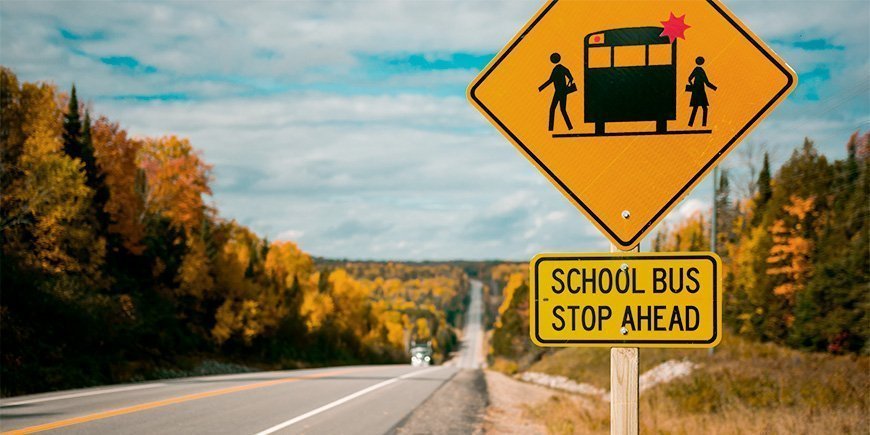
It’s also important to remember that you must not pass a stopped school bus. Doing so may result in a fine.
Are there toll roads in Canada?
Driving is free of charge in most parts of Canada, with a few exceptions where you may encounter toll roads.
In most cases, you won’t be able to pay tolls in person, as many toll roads use an electronic payment system that bills the vehicle’s owner based on its license plate number. If you’re driving a rental car, the rental company will usually pass the toll charge on to you.
Where can I refuel my car in Canada?
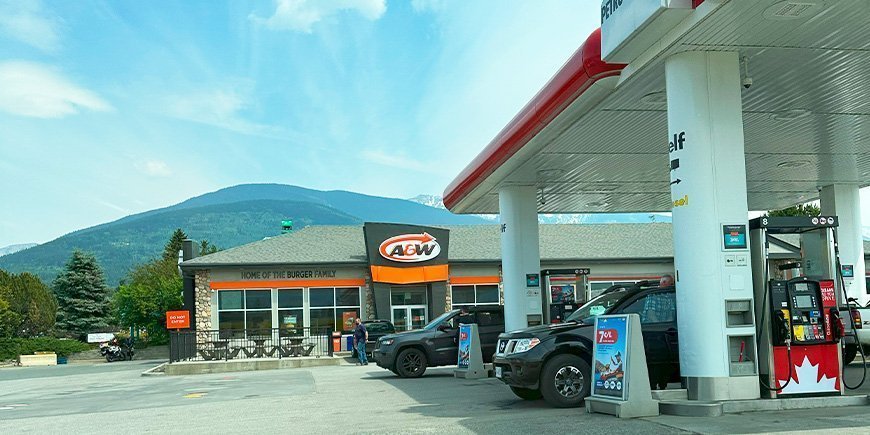
You’ll generally have no trouble finding somewhere to fill up your car in Canada, as long as you’re close to a town or city.
However, in remote areas, gas stations can be few and far between. If you plan to drive through these regions, we recommend filling up your tank ahead of time. In our daily itinerary, we’ve highlighted specific locations where you should pay particular attention to refueling. For example, it’s not possible to refuel in the town of Sun Peaks, so we recommend stopping for gas in Clearwater instead.
It’s also a good idea to plan your fuel stops ahead of time. Handy apps such as Google Maps can help you find gas stations along your route.
Where can I park my car?
Parking on main roads is prohibited in Canada.
Other parking rules vary depending on your location, but you’ll usually find signs clearly indicating where parking is allowed.
What are the road conditions like in Canada?
The roads in Canada are generally well maintained, though they can be challenging during the winter months.
Since we only offer tours from May through October, you’ll rarely run into any issues with the roads when driving in Canada on our tours.
Are there animals on the roads in Canada?
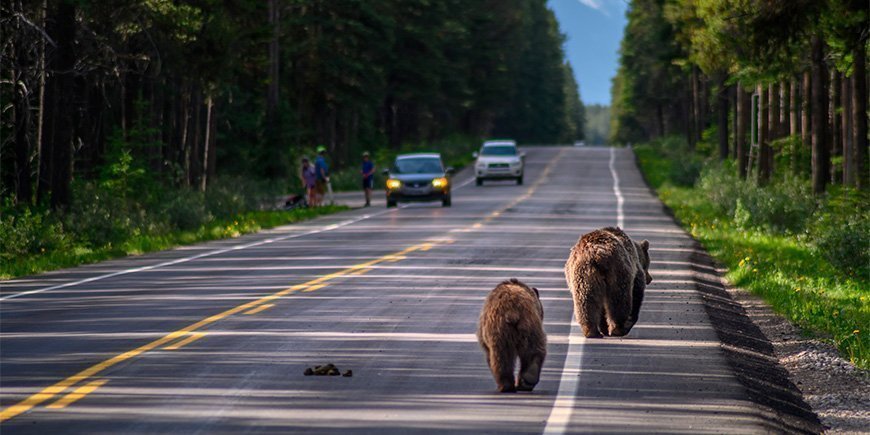
Especially when driving through forested areas or at night, you may come across animals such as deer, moose, or bears on the roads. Be sure to slow down and stay extra alert in these areas.
Do I need a GPS to drive in Canada?
Having a GPS is a huge help when driving in Canada.
If your cell phone plan includes data in Canada, or if you purchase a Canadian SIM card or an eSIM, you can easily use GPS apps such as Google Maps to navigate.
Many GPS apps also let you download your route in advance, so you can use the map offline. This is especially useful when driving in areas with poor cell coverage.
What’s included when you rent a car?
Our self-drive tours in Canada include a rental car with unlimited mileage, one-way rental, and all legally required insurance.
If you’d like to learn more about our car rentals in Canada, take a look at our practical info page or get in touch with our experienced travel specialists, who are happy to answer any questions you may have.
Why choose TourCompass?
We understand that traveling independently can feel daunting. When you book a self-drive tour with TourCompass, you get the best of both worlds: the freedom of a self-drive adventure and the peace of mind of traveling with a tour operator you can reach 24/7.
Ready to get behind the wheel in Canada?
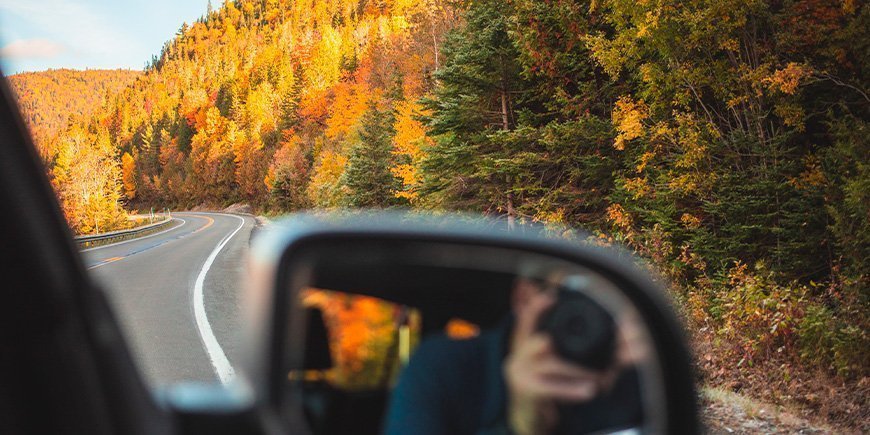
Canada is packed with unique experiences, all just waiting to be discovered at your own pace as you travel its breathtaking country roads.
Are you ready to take the wheel and set out on the adventure of a lifetime across Canada’s vast, open landscapes?
Our experienced travel specialists are here to help you find the perfect tour to Canada, tailored to you and your wishes!
TourCompass – From tourist to traveler