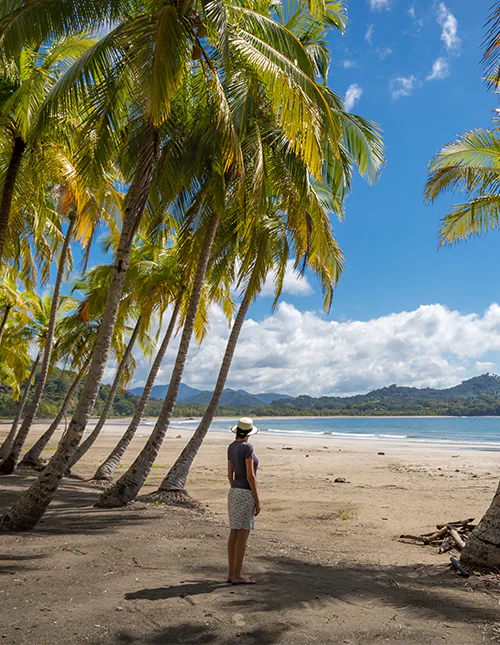
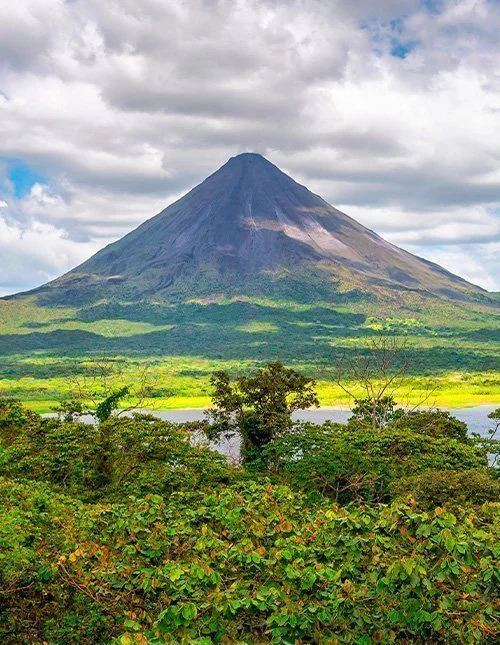
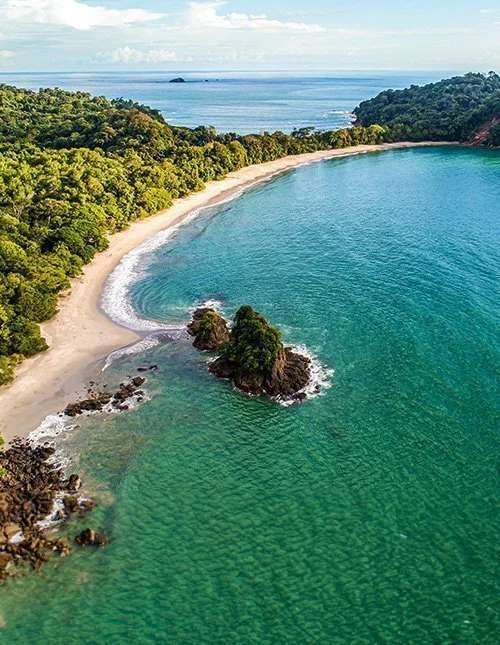
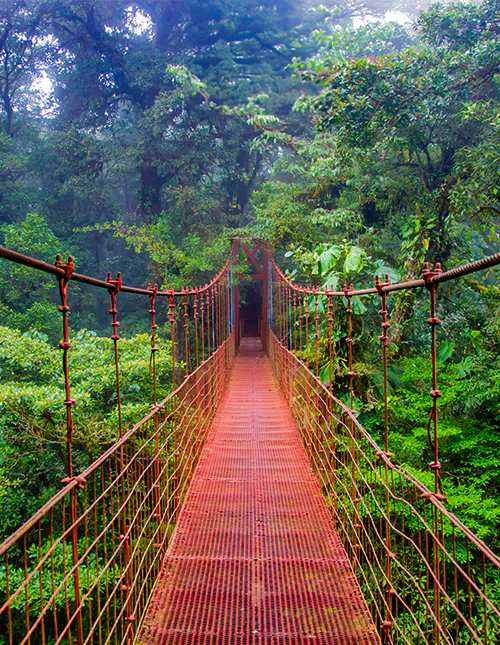
Imagine the wind in your hair as you discover Costa Rica’s lush landscapes and coastal roads at your own pace, with adventure waiting just around the next bend.
A self-drive tour in Costa Rica gives you complete freedom to explore the country’s breathtaking national parks, incredible wildlife, and exotic beaches entirely on your own terms.
Below, we answer all your questions about driving in Costa Rica.
Advantages of exploring Costa Rica by car

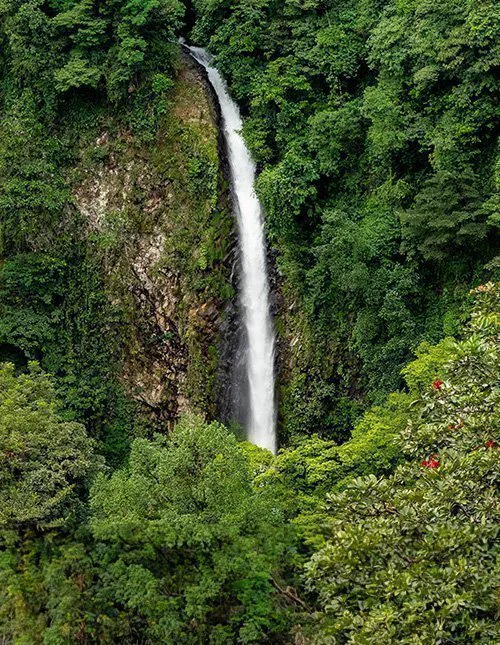
Traveling by car on one of our self-drive tours in Costa Rica gives you more flexibility to make spontaneous stops at beautiful waterfalls, seek out hidden beaches, and discover local restaurants on the way to your next destination.
With a rental car, you’ll have the chance to immerse yourself in some of Costa Rica’s extraordinary landscapes at exactly the pace you prefer.
Frequently asked questions about driving in Costa Rica

Costa Rica is a popular country for self-drive tours. All you need is your passport and a valid driver’s license.
That said, while exploring this Central American gem by car is a fantastic way to travel, hitting the road in a foreign country can naturally raise a few questions. We’re here to make sure you’re fully prepared.
Below, you’ll find answers to the questions our guests ask us most often.
Can you drive in Costa Rica with a US license?
Yes. As long as your license is written in Latin letters (such as A, B, C), you can use your US driver’s license (you’ll need the physical card, not a digital one).
If not, you’ll need to get an international driver’s license, which you can present along with your original license.
Is it safe to drive in Costa Rica?
Yes. Costa Rica is a safe country for tourists exploring at their own pace by car.
It’s important to follow local regulations and use your common sense behind the wheel — just as you would at home.
What are the roads like in Costa Rica?
Costa Rica’s roads are generally well maintained, particularly around the big cities and in the main tourist hubs.
If you take a self-drive tour in Costa Rica, however, you will come across some narrow mountain roads and gravel roads once you get out into the countryside. The rainy season can be hard on the roads and often leaves large potholes, especially outside of town. While these usually get fixed fairly quickly, be sure to keep an eye out, as not all potholes are marked.
An app like WAZE can be invaluable. Find it here.
What is the traffic like in Costa Rica?
Costa Rica is a relatively easy country for a self-drive trip. Whether the traffic seems heavy depends largely on where you're used to driving.
Traffic is heaviest heading into and out of the larger cities, such as San Jose. Other than that, the traffic is pretty predictable.
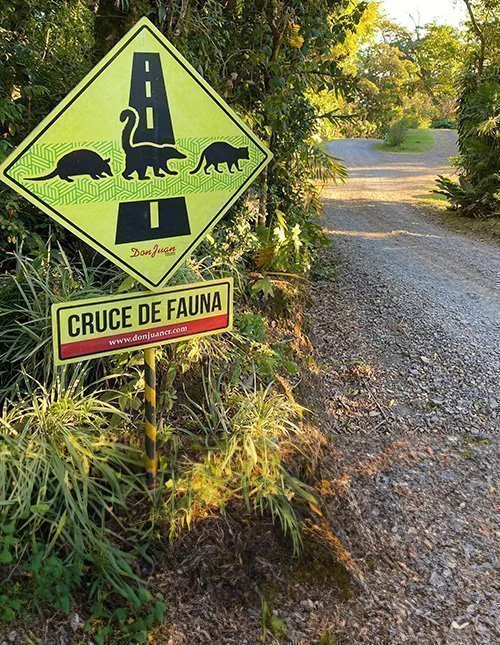
Some people may find driving in mountainous areas nerve-racking because the roads are winding and can have sharp curves. In our experience, people naturally drive slower here, partly because of the road conditions and partly because the countryside is magnificent — and every now and then, you may need to stop to let families of animals cross the road.
Throughout Costa Rica, you should watch out for both animals and pedestrians crossing the road.
Is it easy to fill up the car?
Yes. Gas stations (known locally as "bombas") are plentiful throughout Costa Rica — and the attendants will fill up your car for you.
Just make sure the attendant resets the meter before filling up the tank.
Be sure to fill up on gas before heading off into rural areas, as gas stations can be few and far between once you’re out in the countryside.
Is it easy to find parking?
At the sights you’ll visit by car on our tours, it’s usually easy to find a place to park. All hotels and many national parks offer private parking. A parking fee may apply.
In many places, people are employed to keep an eye on the cars in exchange for a small tip.
What’s included when you rent a car?
Our self-drive tours include a car rental with perks such as unlimited mileage, one-way rental, a local SIM card with data, and insurance policies including third-party liability (SLC) and zero-deductible comprehensive coverage (LDW). You can find full details of what’s included with your rental car on our practical information page.
Please note that you must be at least 21 years old to rent a car in Costa Rica.
Why choose TourCompass?
When you book a self-drive tour with TourCompass, you truly get the best of both worlds.
You can travel independently, free to make spontaneous stops along your planned route — yet you also enjoy the extra peace of mind that comes from touring with us. Throughout your trip, our team and our local partners are always just a phone call away via our 24-hour emergency hotline if you need any assistance.
This means you can feel safe and well supported every step of your self-drive adventure in Costa Rica.
10 things to keep in mind on the road

Some of the following points are very specific to Costa Rica — others could just as easily apply back home.
1) In Costa Rica, people drive on the right side of the road, just like in the United States.
2) There are fewer road signs in Costa Rica than we’re used to. You’ll find more signs in the cities than in the countryside, where they can be few and far between. That’s why it’s a good idea to use navigation apps like Google Maps or WAZE. All the signs are in Spanish, but they usually look similar to the ones we’re familiar with.
3) Costa Rica uses the metric system, and all speed limits are in kilometers per hour – 100 km/h is about 60 mph.
4) There are a lot of speed bumps in Costa Rica.
Watch out for signs that say “reductor.” It’s important to slow down here. The signs are typically found near schools and where you drive into or out of a town or city. The speed bumps aren’t always easy to see, but trust us, you’ll definitely feel them in the car if you don’t slow down!
5) Only drive during daylight hours
Streetlights are only found in towns and cities, and with Costa Rica’s rich wildlife, potholes, and the speed bumps mentioned above, we don’t recommend driving after dark. It gets dark at around 6 p.m. year-round.
6) Watch out for passing
It’s very common for locals to pass on the right or in situations that aren’t necessarily safe, e.g., when there may be oncoming traffic. Passing on the right is not legal, and we don’t recommend it! Keep a safe distance from the vehicle in front of you and obey the speed limits. In mountainous areas, it’s normal to pass slower vehicles where there are two lanes going uphill. Be aware that these passing lanes often end quite abruptly, marked by a line across the road that says “Ceda el paso.”
7) Locals often use their hazard lights or flash their headlights to signal that something is happening up ahead, e.g., road work or an accident.
8) Don’t leave valuables (or anything else) in your car, and keep the car locked, even while you’re driving.
9) Costa Rica has a zero-tolerance policy on drunk driving. The limit is 0.05% (BAC — blood alcohol percentage).
10) If you’re unlucky enough to be involved in an accident, don’t move your car until the police have arrived — even if you’re blocking the road. Call 911 and our partner/the car rental company.
Book your self-drive adventure in Costa Rica with TourCompass

Exploring Costa Rica by car at your own pace is a fantastic way to travel — it lets you discover places that might not otherwise make it onto your itinerary.
We currently offer two self-drive tours, but in fact, all our tours to Costa Rica can be arranged as self-drive trips.
Ready for your next big adventure? Contact our travel specialists today and get started on your journey to unforgettable experiences.
TourCompass – From tourist to traveler