
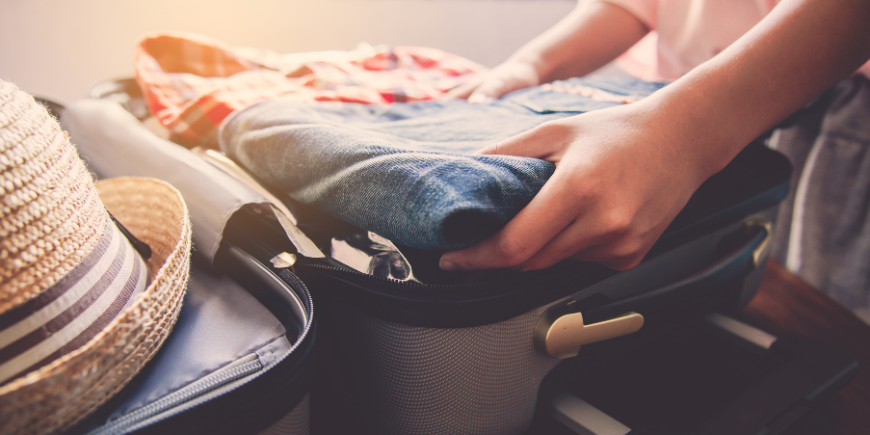
Setting out on a safari vacation is an exhilarating experience that promises thrilling wildlife encounters and breathtaking natural beauty. As you prepare for your safari adventure, it’s crucial to pack wisely so you stay comfortable and get the most out of every moment of your trip.
In this guide, we’ll walk you through an essential safari packing list, including tips on what to wear on safari.
Safari luggage and packing tips
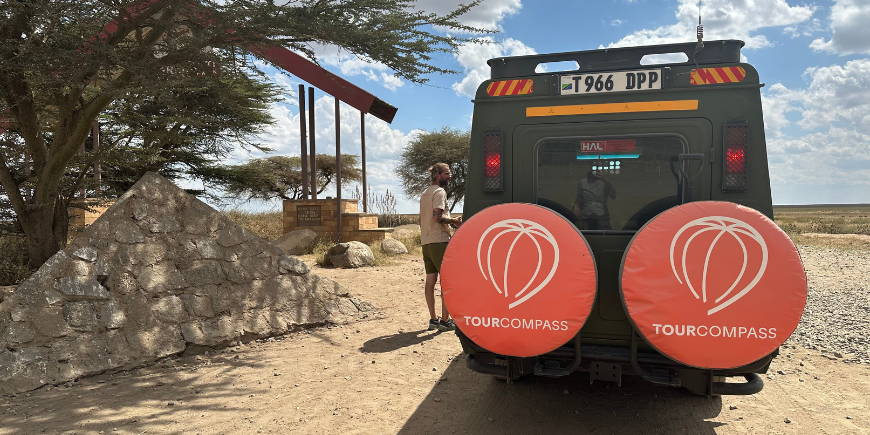
When it comes to safari luggage, travel light and choose lightweight, durable options.
3 tips for packing your safari luggage:
- Choose a soft-sided duffel bag or backpack that is easier to carry and fit in safari vehicles.
- Protect your belongings from dust and unexpected rain showers by packing a waterproof bag or protective cover.
- Keep your belongings organized and save space by using packing cubes or compression bags. These can help you make the most of the limited storage.
It’s a good idea to check your maximum baggage allowance before you start packing to avoid any extra fees. This varies from airline to airline. Also, check the baggage rules if you are taking domestic flights on your safari vacation in Africa.
If you are traveling as a couple or a group, we recommend packing so that you can still manage if one suitcase is delayed. Suitcases do sometimes get delayed, and it’s nice to have a fresh set of clothes, etc., in your travel companion’s suitcase if this happens.
What to wear on safari
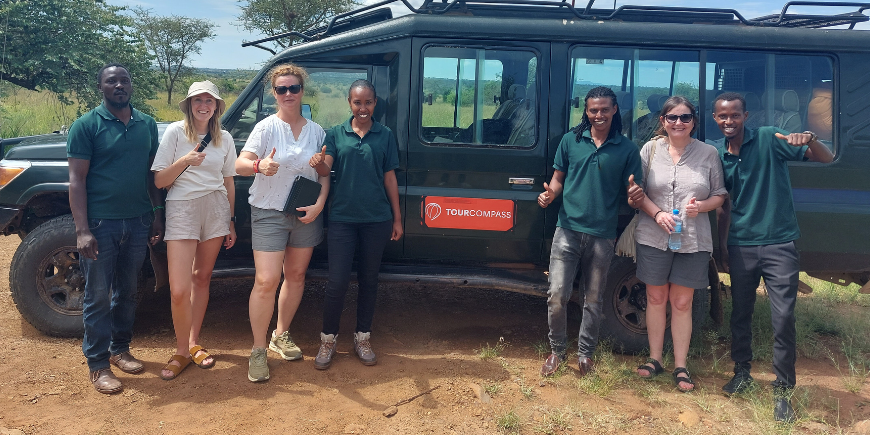
When it comes to safari outfits, striking a balance between functionality, comfort, and your personal style can be a little tricky. There is no specific safari dress code. And you don’t necessarily have to look like a guide from a National Geographic nature program.
Consider the following tips for what to wear on safari:
- Neutral-colored clothing made of lightweight, moisture-wicking fabrics. These are ideal for sun protection. Avoid bright colors that may attract insects.
- Pack a mix of long pants and shorts for versatility. Go for quick-drying materials and consider convertible pants that can transform into shorts.
- A lightweight, multi-pocketed vest or jacket. This is perfect for carrying essentials such as sunscreen, insect repellent, and a camera.
- A wide-brimmed hat and polarized sunglasses. The sun is fierce, and sunscreen alone isn’t always enough protection. So it’s important to protect yourself with a hat with a brim/sun visor and sunglasses.
- Bring comfortable shoes or sandals. Make sure your shoes are comfortable. If you're going on a bush walk, you'll need closed-toe shoes. These can also come in handy in the evening to protect you from mosquitoes.
Safari packing list
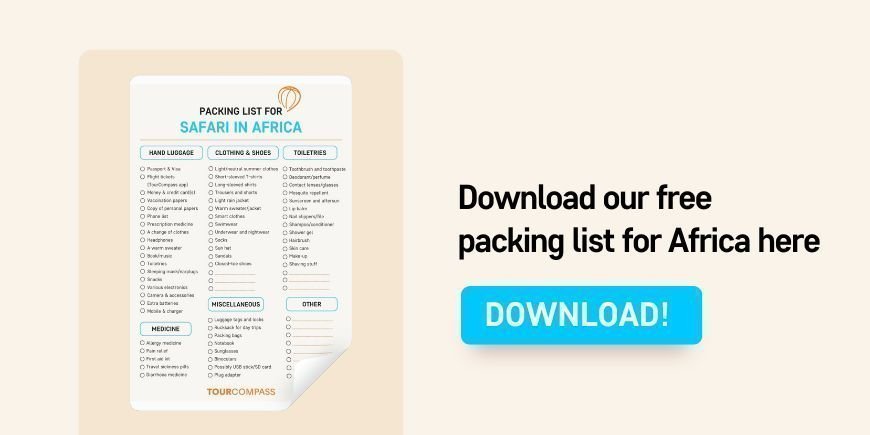
Download our free safari packing checklist here.
Use this handy packing list to check off your gear as you pack your bags for safari.
Every destination is different, so our packing list recommendations may vary. See, for example, our packing list for a safari in Tanzania and our packing list for Kilimanjaro.
Carry-on essentials
Be sure to pack the most essential items in your carry-on bag. If the worst happens and your checked luggage is delayed, it's important to have the things you can't do without close at hand. Also, be aware of items that MUST go in your carry-on, including some electronics. Check the specific rules with your airline.
- Passport (valid and with visa)
- Plane tickets (available in the TourCompass app)
- Money, credit cards, and any other valuables
- Vaccination records
- Copies of personal documents in both your own and your travel companion's suitcase
- This might include passports, visas, airline tickets, insurance documents, vaccination cards, driver's licenses, etc.
- List of phone numbers, for example, for canceling lost payment cards or contacting your insurance company
- Any essential or prescription medication
- Sleep mask/earplugs
- A change of clothes
- A warm sweater
- Toiletries, e.g., toothbrush and toothpaste if you're spending the night on the plane
- Headphones
- Book, music, or other entertainment for the flight
- Snacks
- Hand sanitizer
- Electronics, e.g., camera & memory cards, charger and possibly power bank, computer, etc.
Remember a bag and a cleaning kit to protect your camera from dust - Cell phone and charger
Clothing & footwear
Most safari lodges in Africa offer laundry service, sometimes for a small fee, so there's no need to overpack.
- Light/neutral (cotton) summer clothes for safaris
- Short/long-sleeved T-shirts, tops, shorts, and long pants
- Slightly dressier clothes for the evenings at the lodge or hotel
- Underwear
- Cotton socks
- Windbreaker or similar for chilly mornings/evenings
- Lightweight rain jacket
- Swimwear
- Wide-brimmed hat
- Bandana or light scarf
- Closed-toe walking shoes/boots
- Sandals
- Evening shoes (optional)
Toiletries
- Toothbrush and toothpaste
- Deodorant
- Contact lenses/glasses
- Mosquito repellent (preventive and anti-itch)
- Sunscreen
- Lip balm
- Nail clippers and file
- Shampoo/conditioner
- Hairbrush
- Body wash
- Skincare
- Makeup
- Shaving supplies
Medications
Keep any essential prescriptions in their original containers in your carry-on bag, and be sure to pack enough for your entire trip.
Medications could include:
- Allergy medicine
- Pain relievers
- First aid kit (bandages, disinfectant wipes, etc.)
- Motion sickness tablets
- Antidiarrheal medication, e.g., charcoal tablets
Travel essentials
- Luggage tag/luggage lock
- Daypack
- Packing cubes
- Notebook
- Sunglasses
- Binoculars
- Camera, with plenty of memory cards and possibly an extra battery
- Power adapter (US plugs generally won’t fit outlets in East and Southern Africa)
What NOT to pack
- Drones
- Camouflage clothing (in some African countries, it is illegal for civilians to wear camouflage clothing)
- Plastic bags (these are prohibited in some African countries — this includes plastic bags from "Duty Free")
TourCompass – From tourist to traveler