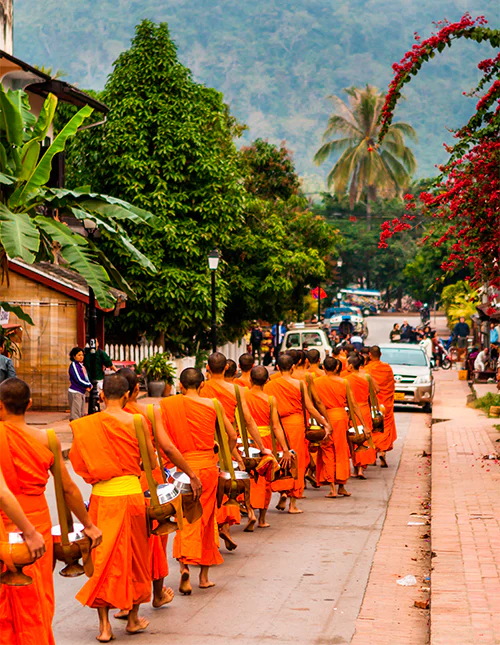
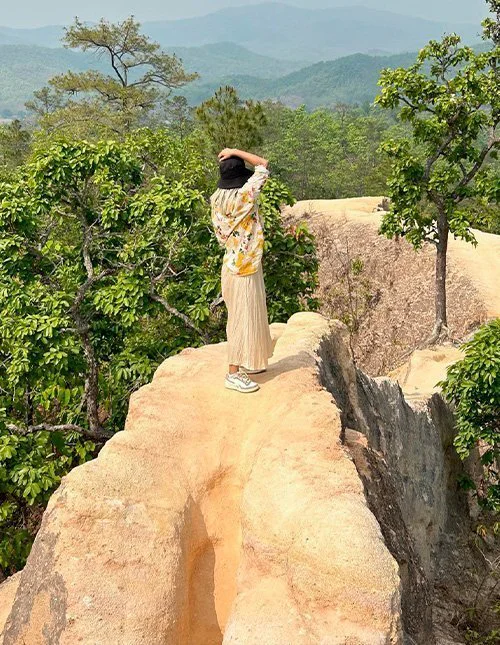
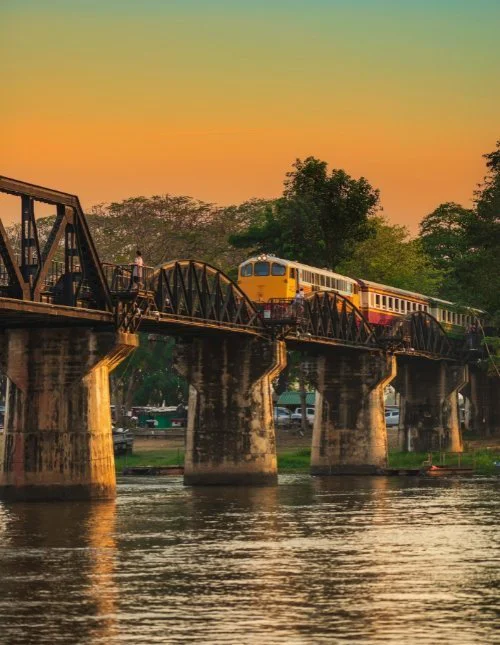
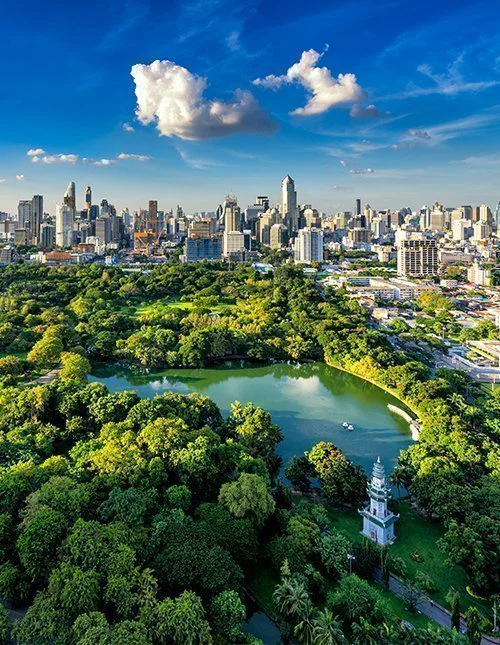
Our Thailand tours offer everything from sunny beaches and lush rainforests to colorful markets and vibrant cities.
But Thailand doesn't just offer a wide variety of experiences. The weather can also range from sunny days to heavy downpours. So what can you expect when planning your next adventure in Thailand?
In this guide to Thailand weather by month, you can learn more about the climate, the rainy season, and what to expect in each month.
Climate in Thailand
Thailand is located in Southeast Asia and has a tropical climate influenced by monsoon winds.
The Southwest Monsoon brings a warm, humid wind from the Indian Ocean, typically starting around May, which means that rainfall increases across large parts of Thailand.
Because Thailand is located in the tropical climate belt, the country sees relatively high temperatures all year round. That said, it can get chilly in the mountainous northern regions, and the farther south (and closer to the Equator) you go, the smaller the temperature variations throughout the year. The warm temperatures are also part of what makes Thailand such a popular travel destination for many North Americans.
Rainy Season and Dry Season in Thailand

Thailand’s seasons are shaped by the country’s location close to the Equator as well as by the monsoons.
Overall, Northern Thailand (e.g., Chiang Mai, Chiang Rai, and Mae Hong Son) and Central Thailand (e.g., Bangkok, Ayutthaya, Chanthaburi, Koh Kood, and Koh Chang) have three main seasons.
- The cool season: November through February
This period is characterized by pleasant (not too hot) temperatures and minimal rainfall. Even though it is called the cool season, it never really gets cold, and these months are part of Thailand’s high season. It can get chilly in the mountainous northern regions. - The hot season: March through May
The hottest weather of the year, with high humidity and a chance of showers.
- The rainy season: June through October
The Southwest Monsoon brings rain in the form of short but heavy showers. In between the showers, you can expect sunny weather, and the rain keeps the landscapes lush and green.
Southern Thailand has slightly different weather from Central and Northern Thailand due to its location farther south and the surrounding seas: the Andaman Sea (to the west) and the Gulf of Thailand (to the east). These areas are affected by two monsoons, which create two distinct seasons in both parts of Southern Thailand:
On the west coast and the Andaman Sea (e.g., Khao Sok, Phuket, Krabi, Khao Lak, and Koh Yao Yai), the rainy and dry seasons are as follows:
- Rainy season: April through November
Hot weather with a high chance of rain. On some islands, the rain may mean limited ferry service and hotel closures, especially in September and October. This applies, for example, to Koh Ngai and Koh Mook. We therefore recommend visiting some of the other islands on the west coast or the islands on the east coast during these months. - Dry season: December through March
Lovely warm weather with occasional rain. These are the best months to visit the southwest coast and the islands of the Andaman Sea.
On the east coast and the Gulf of Thailand (e.g., Koh Samui, Koh Phangan, and Koh Tao), the rainy and dry seasons are as follows:
- Rainy season: October through December
Hot and wet weather - Dry season: January through September
Generally dry weather with the possibility of occasional light rain. A popular time to visit the islands in the Gulf of Thailand.
The weather in Thailand by month
The weather in Thailand varies greatly depending on when you travel and where in the country you are traveling.
No matter when you visit Thailand, you can experience stunning scenery, impressive cultural heritage, and a relaxing tropical idyll. Below, you'll find an overview of the weather in Thailand month by month.
January in Thailand:

January in Thailand brings plenty of sunshine and very little rain, making it one of the most popular times to visit the country.
Northern and Central Thailand are in the middle of the cool season. This typically means pleasant temperatures and the possibility of cool nights, especially if you're in high-altitude areas in the northern part of Thailand, such as Mae Hong Son.
In Southern Thailand, it's the dry season. At destinations on and off the west coast, such as Krabi and Phuket, January falls in the middle of the dry season, and it rarely rains. Off the east coast, for example on Koh Samui and Koh Phangan, January is the first month of the dry season, and the area gets more rain than the west coast. In Khao Sok National Park, which is located on the mainland, the first months of the year are also among the driest.
February in Thailand:

February is still high season in Thailand, and you can expect sunshine and dry weather throughout pretty much the entire country.
In Northern and Central Thailand, most of February falls in the cool season. This means you can expect dry weather and pleasant temperatures, which make for perfect conditions to explore the attractions in Thailand’s major cities, such as Bangkok and Chiang Mai, as well as to relax on the beach on islands like Koh Samet, Koh Kood, and Koh Chang.
In Southern Thailand, February is hot and dry, and temperatures are on the rise. Along with January, it is typically one of the driest months of the year on both the western and eastern sides.
March in Thailand:

In Northern and Central Thailand, late February/March marks the start of the hot season. During these months, temperatures climb, and the heat can become intense in cities like Bangkok, Sukhothai, and Chiang Mai.
In Southern Thailand, the dry season continues and there is still very little rain, but temperatures are rising and there are plenty of hours of sunshine. The number of travelers starts to drop, so you may be lucky enough to find fewer people at the beach destinations than in, for example, January and February.
April in Thailand:

April is the hottest month of the year in Northern and Central Thailand.
In most places, average daytime temperatures can climb well above 86°F (30°C). Evenings and nights are more pleasant, with warm temperatures.
On the islands of Southern Thailand, temperatures are typically slightly lower, but they're still among the hottest of the year.
On the west coast of Southern Thailand, for example on Phuket and in Krabi and Khao Lak, the rainy season begins in April. Since the month falls at the very start of the season, though, there typically isn't as much rainfall yet as there will be in the months that follow.
Meanwhile, it's dry season on the islands along the east coast of Southern Thailand, for example on Koh Samui and Koh Phangan. The weather is hot and generally dry, although you should expect the occasional short, intense shower.
The intense heat in particular means that there are significantly fewer travelers in Thailand in April, which otherwise makes it a relatively inexpensive month to visit. On the other hand, those who do travel can experience Songkran, the Thai New Year, among other things.
May in Thailand:

In Northern and Central Thailand, the hot season continues in May, and rainfall increases in these areas as the rainy season approaches over the course of the month. Temperatures stay high, and so does the humidity, but the extra rain may have a slightly cooling effect.
On the islands off the southwest coast of Thailand, such as Phuket, Koh Lanta, and Koh Yao Yai, the rainy season continues. If you're dreaming of island hopping in Thailand in May, however, you should steer clear of Koh Ngai and Koh Mook during this period (between May and October), as the islands may be harder to reach due to rain. Instead, we recommend visiting Phuket and Koh Yao Yai, or heading over to the southeast coast of Thailand, for example to Koh Samui and Koh Phangan, where the dry season continues with dry, sunny weather until September.
June in Thailand:

June in Thailand picks up right where May left off, with high temperatures and rain across much of the country.
Rain showers become more frequent and heavier, but it rarely rains all day. That means you can still enjoy plenty of sunshine in Thailand in June.
In both Northern and Central Thailand, the rain also brings lush, green landscapes, for example, in Chiang Mai or Mae Hong Son.
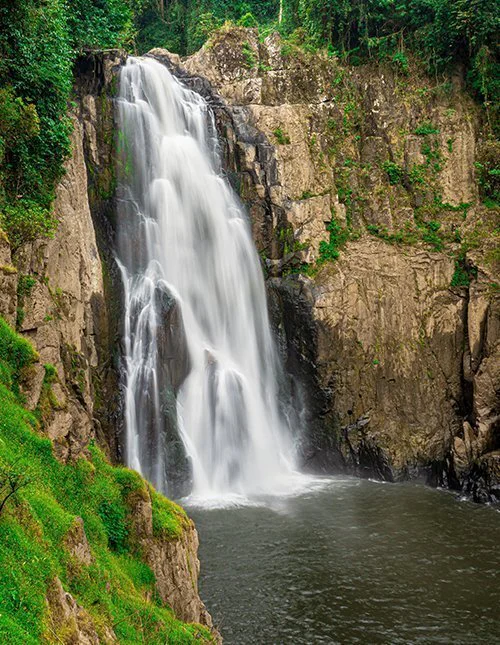
The same goes for the west coast of Southern Thailand, where June falls in the middle of the rainy season. This makes June a great time to see roaring waterfalls and lush vegetation, for example, on Phuket or in Khao Sok National Park.
If you're dreaming of sunny weather in June, the dry season continues on the east coast of Southern Thailand, for example, on Koh Samui and Koh Phangan.
July in Thailand:

In July, the monsoon is in full swing, bringing regular rain and high humidity to large parts of Thailand, though there's still a chance of plenty of sunshine.
In Northern Thailand, the landscapes benefit from the rain, and the vegetation around Chiang Rai and Chiang Mai is green and lush. Central Thailand sees a lot of rain, but there will often be opportunities to explore Thailand’s sights in dry weather, too.
On the east coast of Southern Thailand, July is still part of the dry season (which lasts until September), with only brief showers, making it a good month to experience places such as Koh Samui and Koh Phangan. The west coast of Southern Thailand, on the other hand, is right in the middle of the rainy season, so you can expect hot weather with a high chance of rain.
August in Thailand:

Except in Southern Thailand, August is one of the wettest months in Thailand. But that doesn't mean you can't visit Thailand in August. You may even be lucky enough to find great prices on tours to Thailand in both August and September, which are typically among the cheapest months of the year.
In Northern Thailand, cities such as Chiang Mai, Chiang Rai, and Mae Hong Son see the highest rainfall of the year in August. In Central Thailand, for example in Bangkok, there is plenty to do despite the rain, such as visiting temples, restaurants, or covered markets. In addition, there are fewer travelers in August, so you may be fortunate enough to have these attractions more to yourself.
In Southeastern Thailand, August is the second-to-last month of the dry season. There are still sunny days and a lower chance of rain than during the rainy season. So there are also plenty of opportunities for a beach vacation in Thailand in August, for example if you visit Koh Samui or Koh Phangan. In Southwestern Thailand, the rainy season continues, and it rains a lot in August.
September in Thailand:

The rain continues in September, bringing wet conditions to large parts of Thailand. With the exception of the east coast of Southern Thailand, it's the rainy season throughout the country. Just like in August, you can find tours at great prices in September.
September isn't generally considered the best month to travel to Thailand, but if you love experiencing nature, it can easily be a good time to visit. In Northern and Central Thailand, after many months of rainy season, you can enjoy greener, lusher landscapes than in most other months. For example, the waterfalls and rivers in Khao Yai National Park, east of Bangkok, will be full of water, making for beautiful nature experiences.
Southwestern Thailand is in the middle of the rainy season, with high temperatures and a strong chance of rain. September is the last month of the dry season in Southeastern Thailand, and as the rainy season approaches, you can expect more rain than in the previous months.
October in Thailand:

October signals that the monsoon season (the Southwest Monsoon, which began in June) is nearing its end. This means rainfall decreases in Northern and Central Thailand, and humidity also gradually drops, especially toward the end of the month.
The landscapes of Northern Thailand, Chiang Mai, and Chiang Rai are lush and green, making October a great time of year to experience the country’s breathtaking nature.
In Southeastern Thailand, the rainy season starts in October, while the rainy season in Southwestern Thailand is coming to an end. Here, rainfall will slowly begin to decrease over the course of October.
November in Thailand:

November marks the beginning of the cool season in Northern and Central Thailand. However, that doesn't mean it's cold — quite the opposite.
Temperatures are warm and pleasant with lower humidity, making the cool season (which lasts until February) the most popular time to visit Thailand for many travelers.
In Northern Thailand, the dry weather offers good conditions for hiking, for example in Doi Inthanon National Park, home to Thailand’s tallest mountain. In cities like Sukhothai or Bangkok in Central Thailand, the dry weather is ideal for exploring their rich culture and history.
November is the last month of the rainy season on the west coast of Southern Thailand, where, for example, Phuket and Krabi are located. The rain is tapering off, although it's still present. On the east coast of Southern Thailand and the islands in the Gulf of Thailand, the rainy season continues until December, and November is typically the month with the highest rainfall on islands such as Koh Phangan, Koh Samui, and Koh Tao.
December in Thailand:

December falls in the dry season across most of Thailand. Temperatures are warm and pleasant, and you can expect plenty of sunshine and generally dry, warm weather. Thanks to the great weather, many people choose to spend Christmas in Thailand, which also makes December one of the most popular months to visit the country.
In Northern and Central Thailand, December is part of the cool season, which is characterized by relatively high daytime temperatures and cooler nights. In both Chiang Mai and Chiang Rai, the weather stays ideal for outdoor activities, such as hiking in the mountains. In Bangkok, temperatures are pleasant and humidity is low, making it the perfect time to explore the city’s many charming streets, food markets, and more.
On the islands in Central Thailand, such as Koh Chang, Koh Samet, and Koh Kood, you can expect sunny, dry weather that's ideal for a beach vacation, and in Chanthaburi you can explore Thai history and culture.
In Southwestern Thailand, the dry season starts in December, and sunny days with minimal rainfall set the stage for a tropical beach vacation, for example on Phuket and Koh Yao Yai.
In Southeastern Thailand, the dry season is just around the corner. December is the last month of the rainy season, and although there is still rain on Koh Samui and Koh Phangan, for example, it will taper off and come as heavy but short showers.
Planning your trip to Thailand
The time of year you choose to visit Thailand can make a big difference to your tour. The best time to visit Thailand depends largely on the purpose of your tour.
Thailand offers opportunities to create amazing travel memories year-round.
Even though there are weather statistics and forecasts, the weather is always unpredictable, and you can never be completely sure what it will be like on your particular tour.
And no matter what the weather is like during your particular tour, Thailand promises exceptional travel experiences from start to finish.
TourCompass – From tourist to traveler