Guided city tour in Ho Chi Minh City
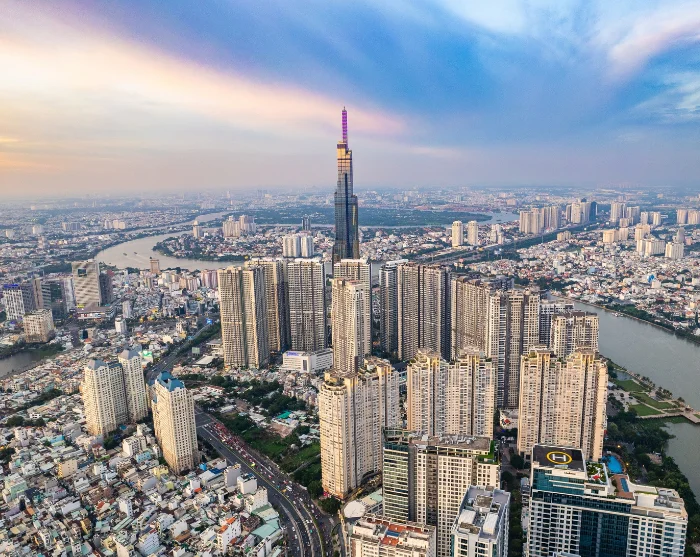
Today offers an exciting half-day tour of Ho Chi Minh City.
Your guide and driver will collect you from your hotel, and from here, you'll be taken to Dong Khoi Street, one of Saigon’s most iconic boulevards. This elegant avenue runs through the heart of the old colonial quarter, where French architecture stands shoulder to shoulder with fashionable boutiques, art galleries, and charming cafés. Brimming with atmosphere and history, Dong Khoi has played a key role in the city’s story—from its colonial splendour, through the turbulence of war, to the bustling metropolis it is today. It’s also where Graham Greene set important scenes in his classic novel, The Quiet American.
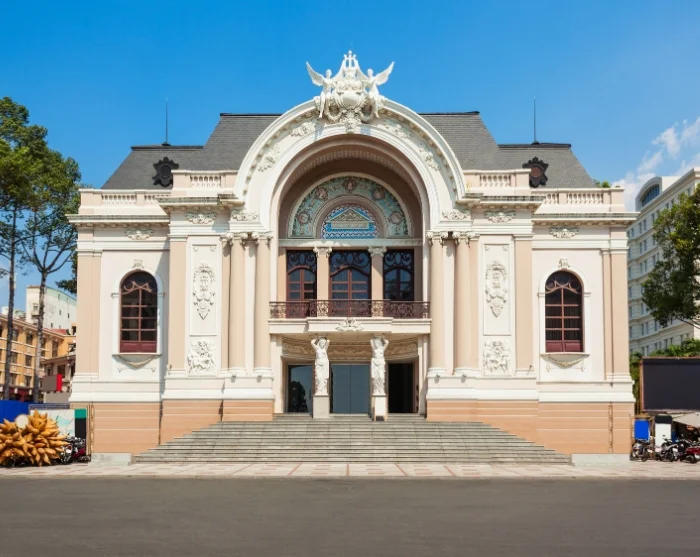
You’ll pass the Saigon Opera House, a striking architectural masterpiece from 1901, which stands as a vibrant symbol of the city’s cultural heritage. Over the years, it has served as everything from an air-raid shelter to the home of South Vietnam’s parliamentary lower house, marking a remarkable history.
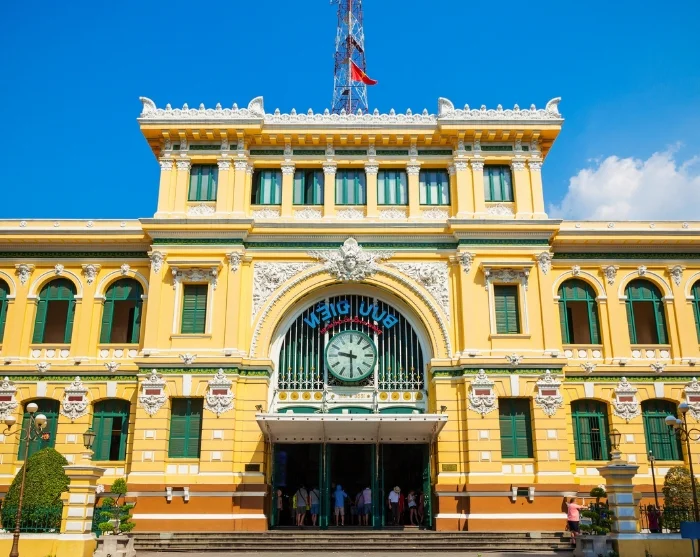
Next, you’ll visit the Central Post Office, designed by the world-renowned French engineer Gustave Eiffel. With its graceful arches, elegant ironwork and historic ambience, the building stands as a testament to the lasting influence of the French in Ho Chi Minh City.
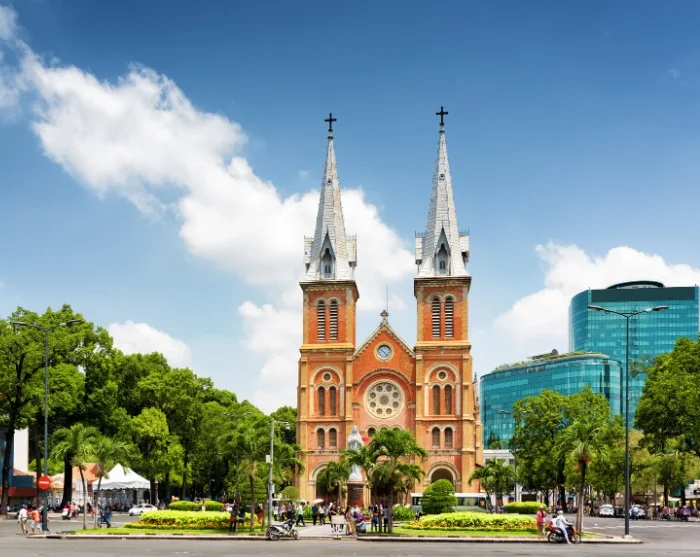
Directly opposite the Central Post Office is the iconic Notre Dame Cathedral, constructed between 1863 and 1880. With its distinctive red brickwork and soaring spires, this cathedral is an impressive legacy from the French colonial era.
Facing the church, you’ll find a grey building behind you that some might recognise as the "Pittman Apartments" at 22 Gia Long Street. This is the setting for the famous photograph taken by Dutch photographer Hubert van Es on April 29th, 1975, during the fall of Saigon. It’s where a helicopter landed on the rooftop—a scene many mistakenly believed took place at the American Embassy. Your guide will share the dramatic story of the evacuation and the hidden role this building played in the war’s final hours.
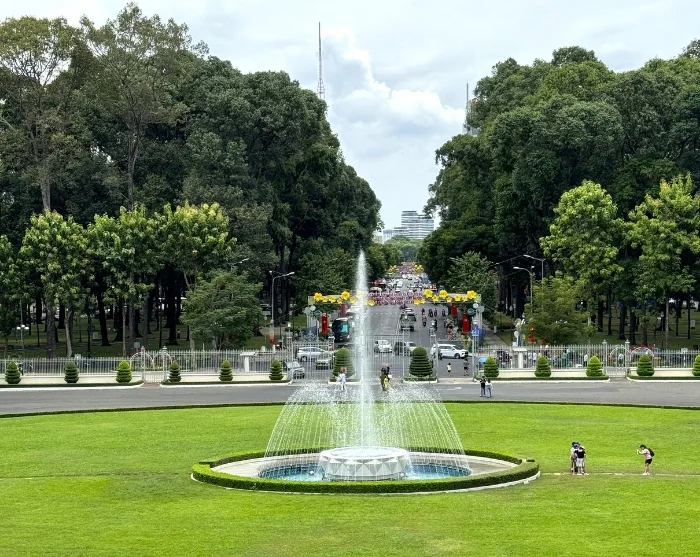
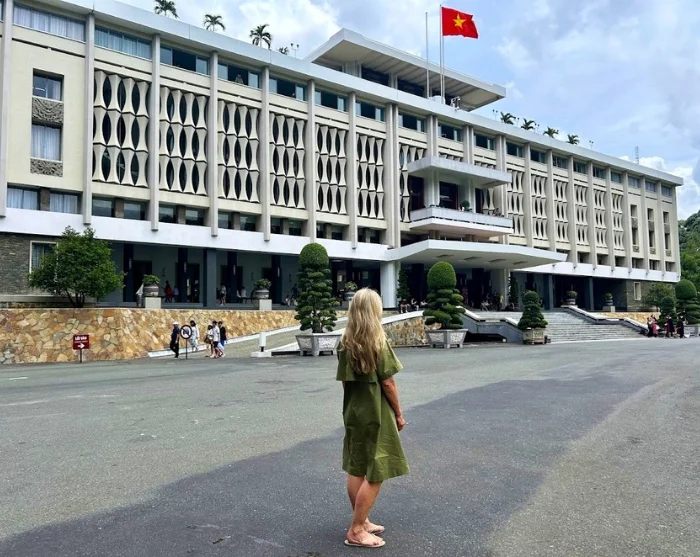
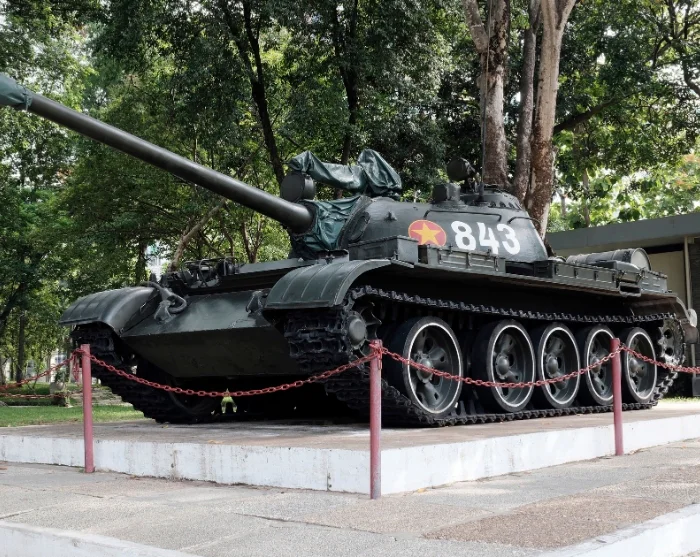
The tour continues with a visit to the historic Reunification Palace, the site where the Vietnam War—or the American War, as the Vietnamese call it—officially ended. On April 30th, 1975, a North Vietnamese tank crashed through the palace gates, bringing a close to a brutal conflict that claimed the lives of around 58,000 Americans and a staggering 3 million Vietnamese people. Here, you can explore the war rooms, grand reception halls, and the president’s office.
Next, you’ll visit the War Remnants Museum, offering a powerful and moving insight into the horrors of war. Its exhibitions depict the stark realities and lasting human cost left in the conflict’s wake.
The following stop is one of Ho Chi Minh City’s lesser-known sites—one rarely discovered by travellers on their own: the Saigon Commandos Museum. Here, a local citizen offers a rare glimpse into daily life during the war. The museum is housed in a modest dwelling from 1963 that, at first glance, appears to be a perfectly ordinary home. Behind its unassuming façade, however, lies a former operations base led by Tran Van Lai, a member of the Vietnamese resistance who lived undercover as a furniture maker while assisting Ho Chi Minh City’s commando units to hide weapons and plan their missions. The exhibits tell the story of these brave commandos, their strategies, covert operations, and survival under extraordinary conditions.
Finally, you can relax with a drink in the museum’s café, where you’ll have the opportunity to try their signature “butter beer”.
You’ll then be driven back to your hotel, where the rest of the day is yours to spend as you wish.