Death is often associated with grief and tears, and in many places, the dead are remembered in silence.
But that isn’t the case everywhere in the world.
In this blog post, we take you on a journey through five traditions and festive events where the dead, ancestors, and the afterlife play a special role.
Halloween, USA
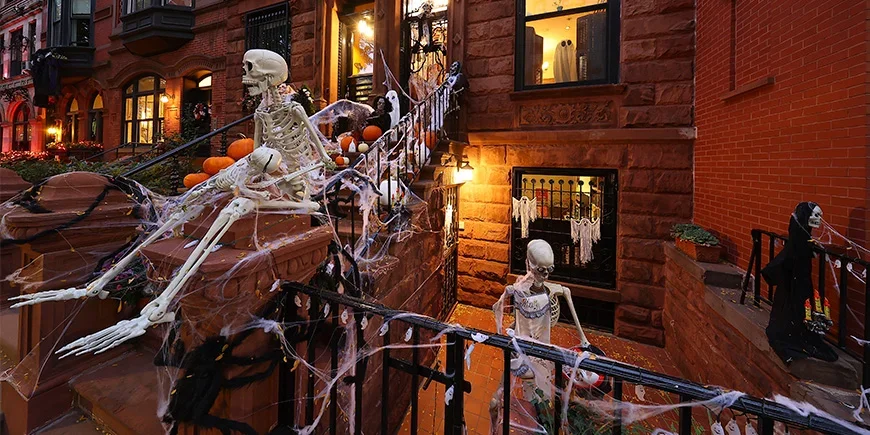
Celebrated on 31 October, Halloween is one of the most popular holidays in the USA – and one of the world’s best-known occasions associated with ghosts, spirits, and the dead.
The tradition was brought to the country by Irish immigrants in the 19th century, who viewed this time as a special period of transition when the dead could briefly return to the world of the living. Fearing that the dead might not be friendly and had returned to cause harm, people dressed up in frightening costumes and made lanterns with spooky faces to scare away evil spirits. In Ireland, the lanterns were traditionally carved from turnips, but after arriving in the USA, pumpkins later became the preferred choice. Although these beliefs have changed over time, they still leave their distinct mark on the occasion today. Houses are decorated with spooky decorations and carved pumpkins, while children and adults in costume go from door to door, with the children shouting “trick or treat” in the hope of getting sweets.
In many parts of the USA, Halloween is also marked by spectacular parades, with colourful processions, enormous puppets, lively musicians, and people in fancy dress filling the streets. For example, you can visit New York and San Francisco, which are known for hosting some of the best parades.
Obon, Japan
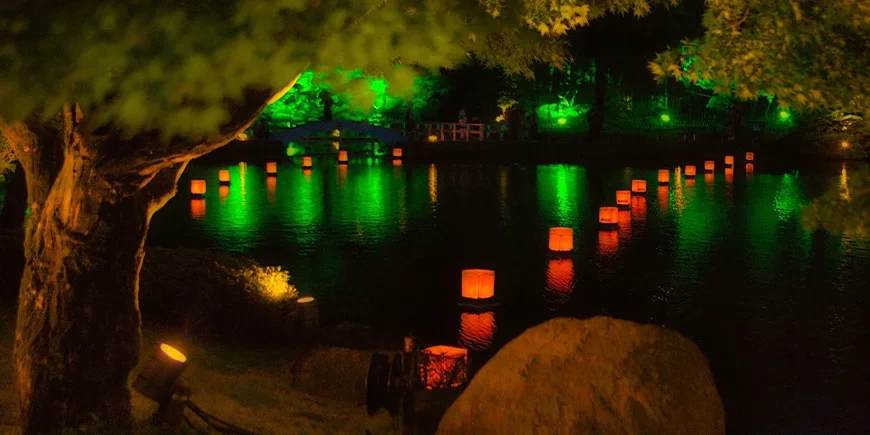
Obon is a Buddhist event in Japan held to honour the deceased. It usually takes place from 13 to 16 August, although in some parts of the country it is celebrated at other times of the year.
At this time of year, the spirits of ancestors are believed to return to visit their relatives. To welcome the returning souls, families visit the graves of their loved ones, cleaning and decorating them with fresh flowers. Relatives also bring food offerings to altars and temples, perform traditional Bon Odori dances, and light small fires or lanterns at the entrances to their homes.
As Obon draws to a close, families help the spirits of their ancestors return safely to the afterlife, either by lighting a bonfire or releasing floating lanterns onto rivers, lakes, and the sea.
The event is celebrated throughout Japan and can, among other places, be experienced in Kyoto, where you can witness the spectacular sight of huge bonfires being lit on five of the surrounding mountains, forming various symbolic shapes.
Festival de Barriletes Gigantes, Guatemala
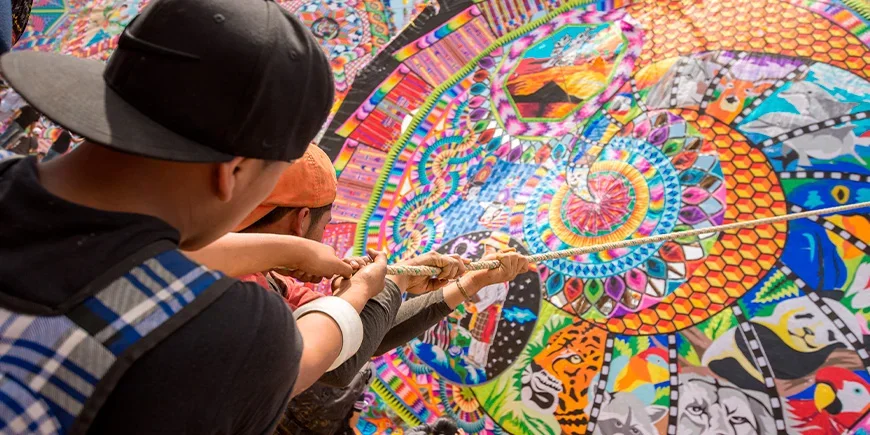
Festival de Barriletes Gigantes, which translates as ‘festival of giant kites’, is a lively event held in Guatemala on 1 November.
On this day, the towns of Santiago Sacatepéquez and Sumpango, a short drive from Antigua, are filled with colourful kites of all shapes and sizes. They are displayed in places such as cemeteries and market squares, while some are also sent soaring into the sky.
The ritual is thought to date back to the late 19th century, when the kites were believed to help the deceased connect with their families on this day. At the same time, people believed that the noise made by the kites when the wind passed through them would scare away evil spirits who had come to disturb the deceased.
The kites, which can measure several metres in diameter, feature the most beautiful details and have an octagonal shape, thought to symbolise the four points of the compass and the outermost layer of the sun, also known as the ‘sun’s crown’. Families also attach messages to the kite’s tail or string for the deceased.
Hungry Ghost Festival, China
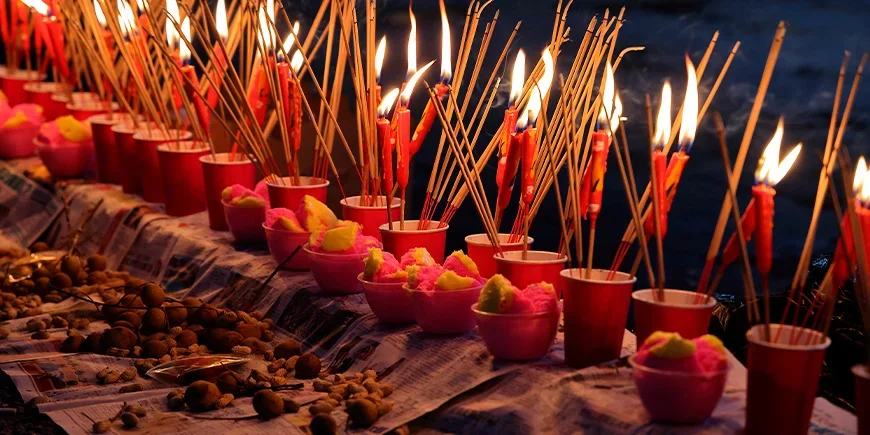
The Hungry Ghost Festival is a traditional Chinese festival held to honour deceased ancestors. The event takes place on the 15th day of the seventh lunar month, known as ‘Ghost Month’. The date varies from year to year but typically falls in August.
In Chinese folklore and Taoist tradition, it is believed that the gates to the underworld open during the seventh lunar month, allowing the souls of the dead to move among the living. These include both ancestors and wandering spirits, who are honoured and appeased with food and other offerings. To placate spirits who may be angry, a series of ceremonies is held during the Hungry Ghost Festival. For example, families place ancestral tablets on a table while burning incense for the dead. Another tradition is to burn so-called ‘ghost money’ – symbolic banknotes offered to the deceased so that they will want for nothing in the afterlife. As the name of the festival suggests, food also plays an important role on this day. It is believed that the wandering spirits may be hungry, so plenty of bowls filled with food are laid out for them to eat. Some families also leave an empty place at the table so that their ancestors can join them during family meals.
The Hungry Ghost Festival is celebrated not only in China, but also in other Chinese communities around the world, for example by people of Chinese heritage in Singapore and Malaysia.
Día de los Muertos, Mexico
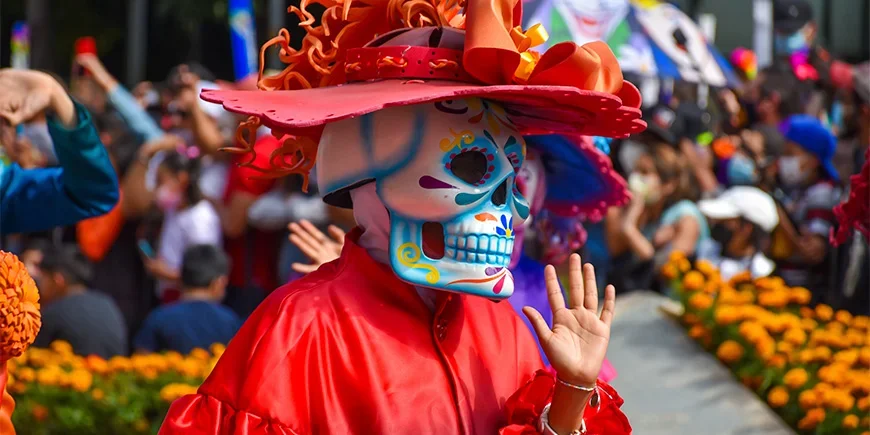
Day of the Dead, also known as Día de los Muertos, is a Mexican holiday during which the dead are remembered and honoured through life-affirming celebrations. The holiday takes place on 2 November, but the festivities begin as early as 31 October.
The event as we know it today is a fusion of the indigenous peoples’ original traditions and Catholicism, which was brought to the country by the Spanish colonists.
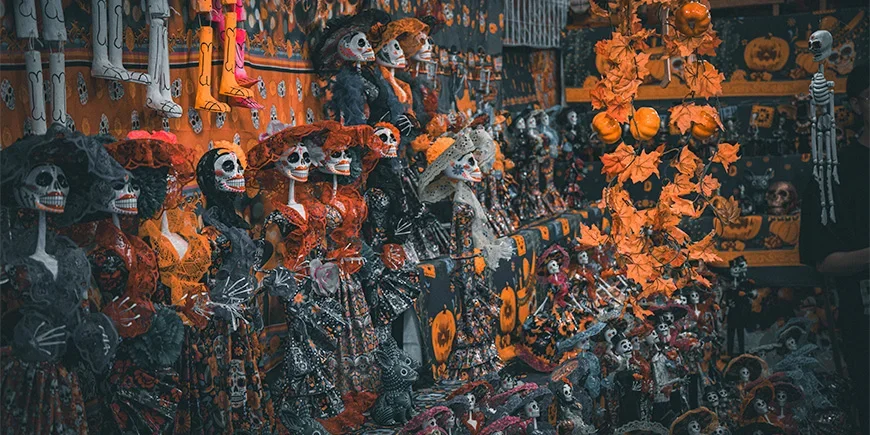
Rather than mourning deceased family members, people remember them with festive parades, colourful decorations, atmospheric music, and striking costumes inspired by death. Many families also set up beautifully decorated altars for the deceased, adorned with flowers, candles, and photographs, and visit the cemetery, where they gather at the graveside to eat, among other things, dishes that the deceased enjoyed.
Although Day of the Dead is celebrated throughout Mexico, there are some places where the festivities feel particularly vibrant. For example, you could visit Oaxaca or Mexico City, where spectacular parades featuring people in costume, music, and dancing fill the streets with energy.
Experience the world with TourCompass
Across cultures, there are many different ways to remember the dead, honour ancestors, and relate to the world beyond our own. Whether through carved pumpkins and spooky costumes, floating lanterns, or a parade in Oaxaca, these traditions show that death is not associated only with grief – it can also be marked with colour, community, and celebration.
These traditions offer us a fascinating insight into some of the many different cultures found around the world.
Do you need help finding your next dream tour so you can experience these traditions up close, or do you have any questions? Please feel free to contact our travel specialists, who are ready and waiting to help you!
TourCompass – From tourist to traveller