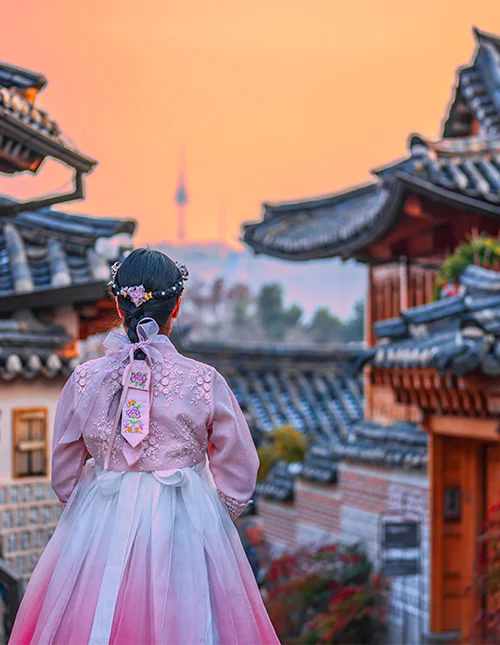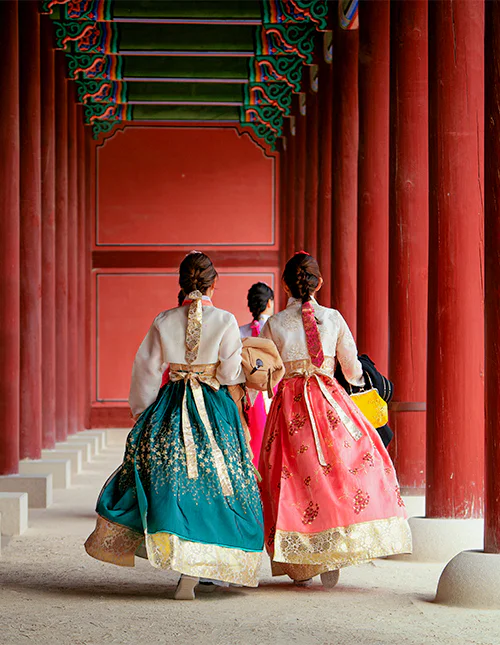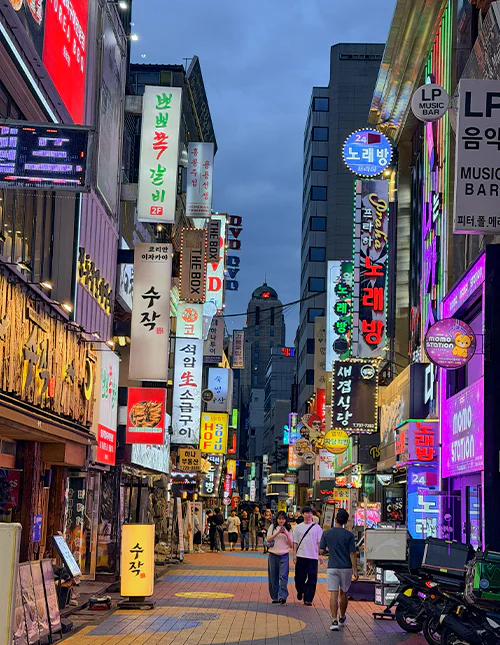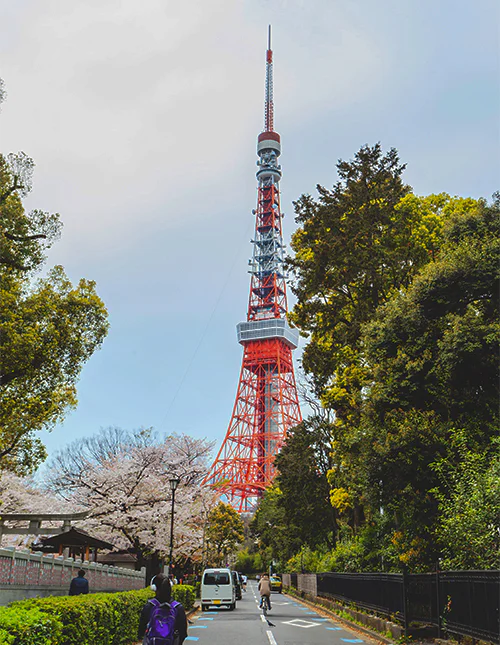
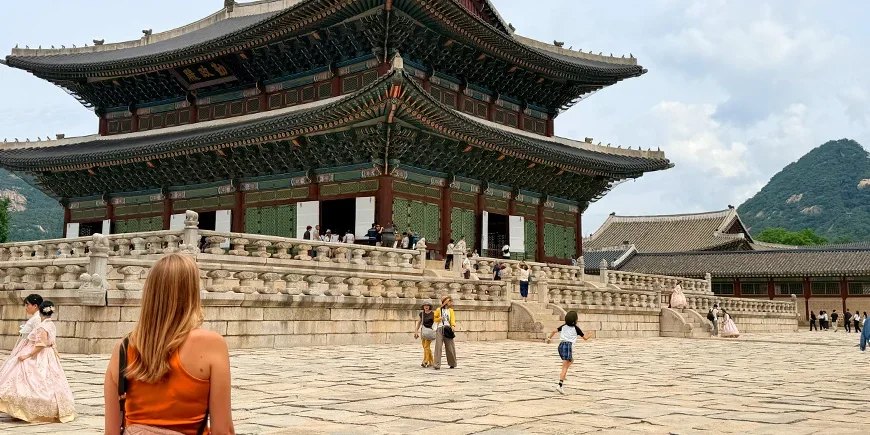
With its futuristic city life, atmospheric culture, and exceptional cuisine, South Korea is a destination offering fantastic experiences all year round.
But when is the best time to visit South Korea?
In short, the spring and autumn months are often considered the best times to travel, as they offer the most pleasant weather. However, the best time also depends on what you dream of experiencing.
In this guide, we explore the weather in South Korea and help you find the perfect time to visit, based on you and your travel dreams.
Please note that this guide is intended as a general indication. It is based on historical weather patterns in South Korea during the different seasons, but in practice, you may experience weather that differs from what is described.
The best time to travel to South Korea
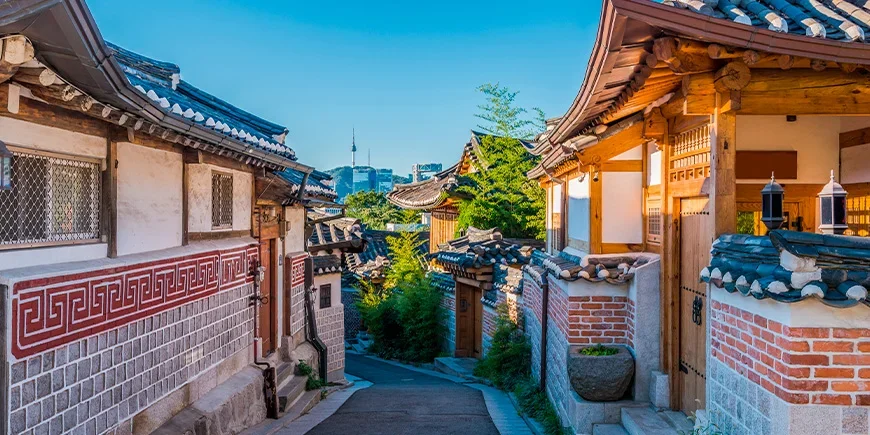
Spring (March–May) and autumn (September–November) are generally considered the best times to travel to South Korea. During these months, temperatures are mild, while humidity and rainfall are also lower than in the summer months, making it a pleasant time of year to explore South Korea.
However, a tour to South Korea is fantastic all year round, with each season offering different experiences. Just be aware that the winter months (December–February) can be very cold, while the summer months (June–August) can be hot and humid.
Climate and weather in South Korea
South Korea lies in the southern part of the Korean Peninsula in East Asia.
Most of the country lies in the temperate climate zone and has a continental climate, bringing four distinct seasons with cold winters and hot, humid summers. The southernmost part of the country, on the other hand, lies in the subtropical climate zone, where summers remain sultry, while winters are considerably milder than elsewhere in the country.
The significant variations in weather between summer and winter are caused by the East Asian monsoon. In winter, cold, dry air flows in from the Asian continent, while summer is characterised by warm, humid air. At the beginning of summer, South Korea also experiences the rainy season known as jangma, which typically occurs between late June and late July.
With the exception of the southernmost part of South Korea, where the weather is generally warmer, temperature differences across the country are relatively modest.
South Korea's seasons
In most parts of South Korea, the weather changes between the familiar four seasons we know from home:
- Spring: March-May
- Summer: June-August
- Autumn: September–November
- Winter: December–February
Below is a quick overview of the weather in South Korea and what you can experience during the four seasons.
|
Season |
Months |
Weather |
Best for |
Note |
|
Spring |
March to May |
Mild and pleasant temperatures |
Cherry blossom and sightseeing |
Popular time to visit There may be days with ‘yellow dust’ |
|
Summer |
June to August |
Hot and humid, with a rainy period in June and July |
Festivals, lusher scenery, and coastal experiences, such as the beach atmosphere at Haeundae Beach |
Risk of heavy rain and typhoons, particularly later in the summer |
|
Autumn |
September to November |
Mild, clear, and often sunny weather |
Autumn colours and cultural events |
A popular time to travel |
|
Winter |
December to February |
Cold and relatively dry, with snow, particularly in mountainous areas |
Fewer visitors |
We do not offer tours in December and January |
Below, you can read more about the weather, unique experiences, and special atmospheres awaiting you in each season.
Spring in South Korea (March–May)
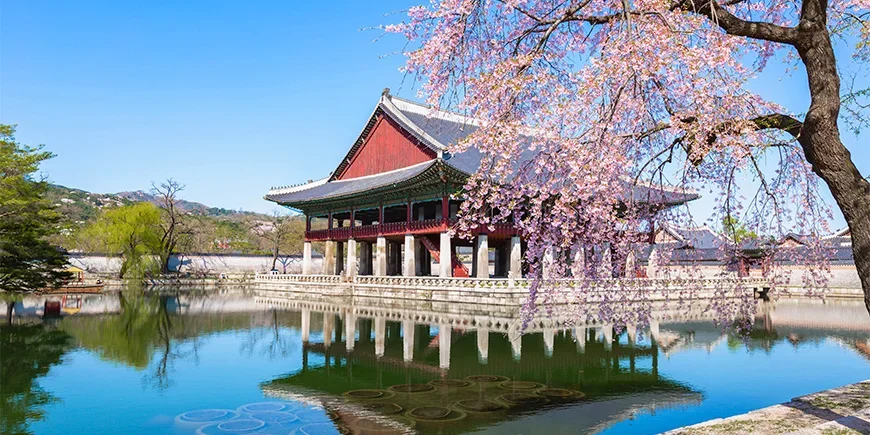
Spring is a wonderful time to visit South Korea, which is why the season attracts so many travellers to the country.
Humidity is low at this time of year, and temperatures typically ranging from 10 to 20 degrees feel pleasantly comfortable. The mild spring weather creates ideal conditions for sightseeing and exploring the country’s many attractions.
Spring is also the perfect time to enjoy the sight of cherry trees in bloom, adorning the country’s parks and streets in the most beautiful shades of pink. The cherry blossom season, known as ‘beotkkot’ in Korean, usually takes place from late March to mid-April and is a magical experience reminiscent of the famous sakura season in Japan.
South Korea also experiences 2–3 weeks of ‘yellow dust’ in spring, blown across the country from the Gobi Desert. On days when there is a lot of dust in the air, it may therefore be a good idea to wear a face mask.
Pros and cons of visiting South Korea in spring:
+ Mild weather, perfect for exploring the country
+ The chance to see the cherry blossoms come into bloom
- There may be days with ‘yellow dust’
Summer in South Korea (June–August)
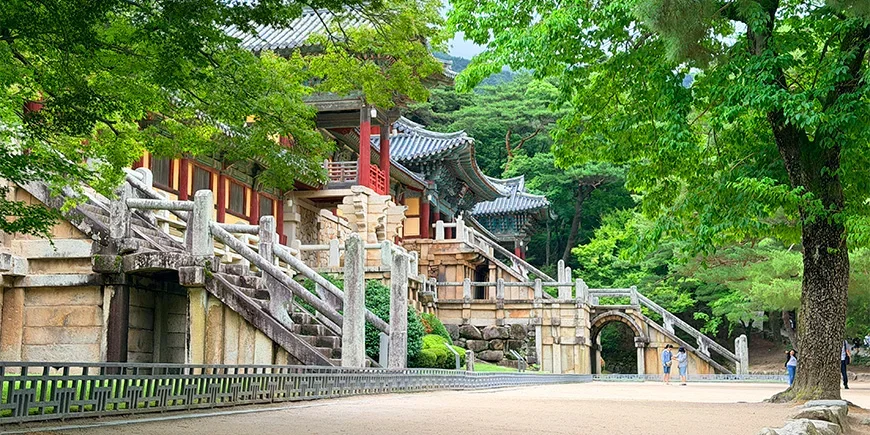
If you visit South Korea in summer, you should be prepared to work up a sweat. Although daytime temperatures average between 25 and 32 degrees in summer, this time of year is characterised by high humidity, which can make the heat feel particularly intense.
As a result of the East Asian monsoon, which brings warm, humid air across South Korea, summer is also characterised by frequent and sometimes heavy rainfall, with July typically being the wettest month of the year. In late summer, the country may also be affected by occasional typhoons, which mainly hit the southern and eastern regions.
On the other hand, the increased rainfall also means that the country is even more lush during the summer months, and you may, for example, experience green spaces contrasting beautifully with old districts in cities such as Seoul.
To escape the oppressive summer heat, it is an obvious choice to head for the coastal areas, such as Busan, where the sea and fresh sea breeze offer a welcome respite and invite you to relax on Haeundae Beach. If you would like to have the beach more or less to yourself before the summer holiday crowds arrive, June is also a preferable time to visit.
Summer also brings a wealth of festivals, such as the Busan Sea Festival, where music, street performances, and fireworks create a festive atmosphere along the coast, or the Waterbomb Festival in Seoul, where you can enjoy spectacular K-pop performances while being drenched with water.
Pros and cons of visiting South Korea in summer:
- High humidity and frequent rain, particularly in July
+ Beautiful green landscapes creating a striking contrast with old districts
+ The chance to experience summer festivals, for example in Busan or Seoul
Autumn in South Korea (September to November)
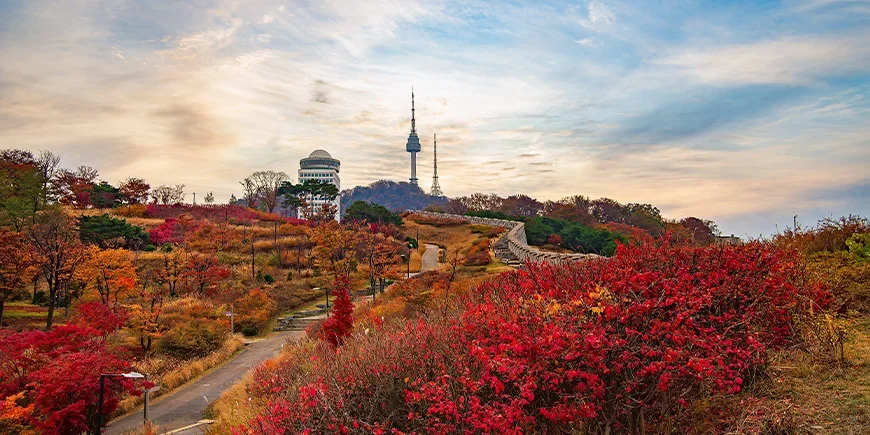
Autumn is one of the best times to visit South Korea, making it a popular season among travellers.
Temperatures typically range from 15 to 25 degrees, while the low humidity helps to make the weather pleasant. The skies are also often clear and sunny, making autumn ideal for outdoor experiences.
However, it is not only the weather that draws visitors to South Korea in autumn, but also the breathtaking scenery. From October onwards, nature gradually begins to transform, putting on a display of red, orange, and golden hues. This makes autumn one of the most beautiful seasons in South Korea.
Autumn also brings a host of celebrations and cultural events. In October, for example, you can experience some of the country’s atmospheric Halloween celebrations, while late October or early November offers a spectacular fireworks display at the Busan Fireworks Festival. In November, you can also attend the Seoul Lantern Festival, when magnificent lanterns illuminate the Cheonggyecheon stream.
Pros and cons of visiting South Korea in autumn:
+ Pleasant temperatures and sunny weather
+ Beautiful autumn scenery and the chance to experience festivities such as Halloween
- A popular time to travel, meaning more fellow travellers
Winter in South Korea (December–February)
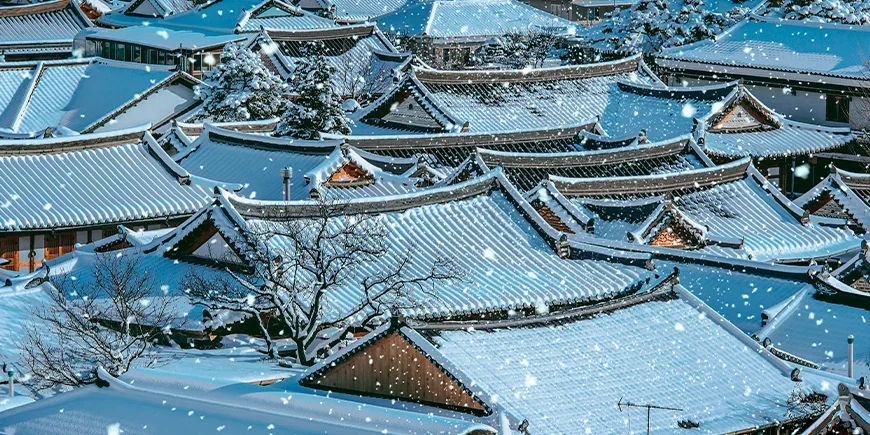
If you’re travelling to South Korea in winter, remember to pack warm clothes. The weather can feel bitterly cold at this time of year.
Temperatures typically do not rise much above freezing in winter and can even drop as low as -20 degrees in the high-altitude areas in the northern part of the country. Snow is therefore a common sight during these months, covering the country like a beautiful white blanket.
As many visitors avoid the colder months, winter is also an ideal time to travel if you want to encounter fewer other visitors and have more room to explore South Korea’s biggest attractions.
December is also a particularly magical month in South Korea, as major cities such as Seoul and Busan decorate themselves for Christmas with colourful strings of lights and festive displays that will really get you into the Christmas spirit.
Please note that we currently do not offer tours in December and January.
Pros and cons of visiting South Korea in winter:
- Cold weather, with temperatures that can drop as low as -20°C in some places
+ Fewer visitors at the attractions
+ The opportunity to experience the Christmas spirit in, for example, Seoul and Busan
Do you know when to travel to South Korea?
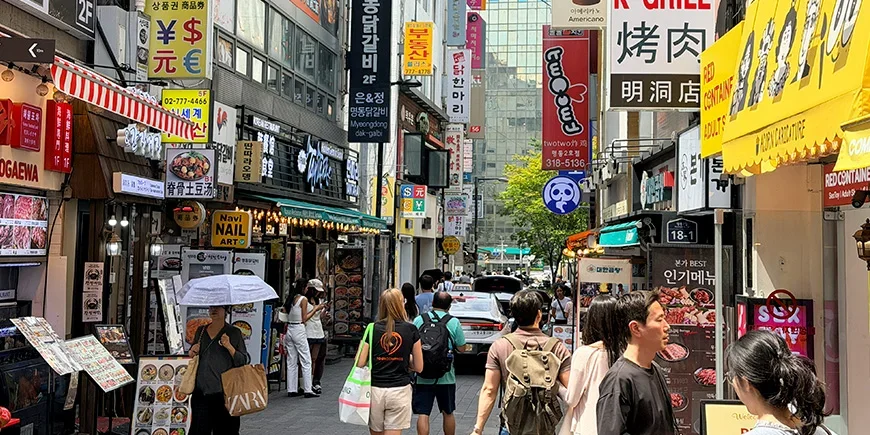
Travel to South Korea and experience a country packed with incredible sights and experiences. Whenever you choose to travel, each season offers its own unique atmosphere and experiences.
Depending on your travel dreams, however, some times of the year may be more suitable than others.
If you’re unsure when is the best time for you to travel to South Korea, our travel specialists are ready to help you find the time that best suits your wishes.
TourCompass – From tourist to traveller