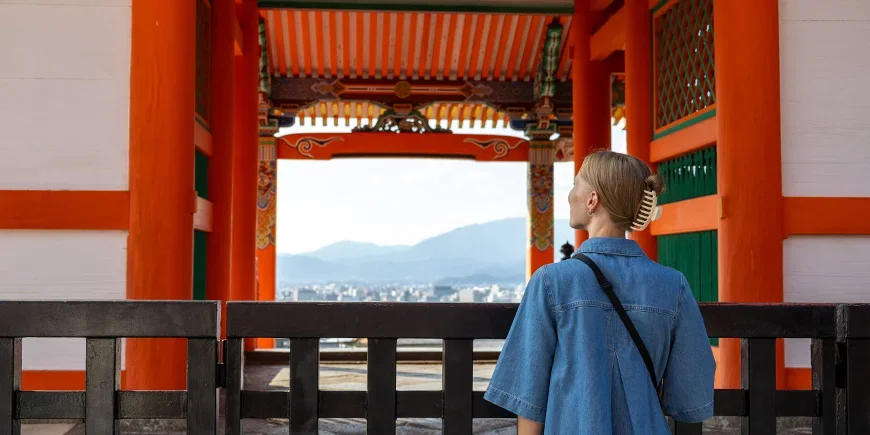
Kyoto is the very essence of the Japan many people dream of experiencing.
Here, ancient temples meet modern city life, geishas make their way through narrow cobbled streets, and peaceful zen gardens sit alongside stylish city cafés.
Kyoto was Japan’s imperial capital for more than 1,000 years, and its historical heritage can be felt throughout the city. Whether you’re visiting Kyoto for the first time or returning to experience more of its unique atmosphere, plenty of exciting experiences await.
Here, we’ve gathered 10 of the best things to do in Kyoto (in our opinion).
Fushimi Inari
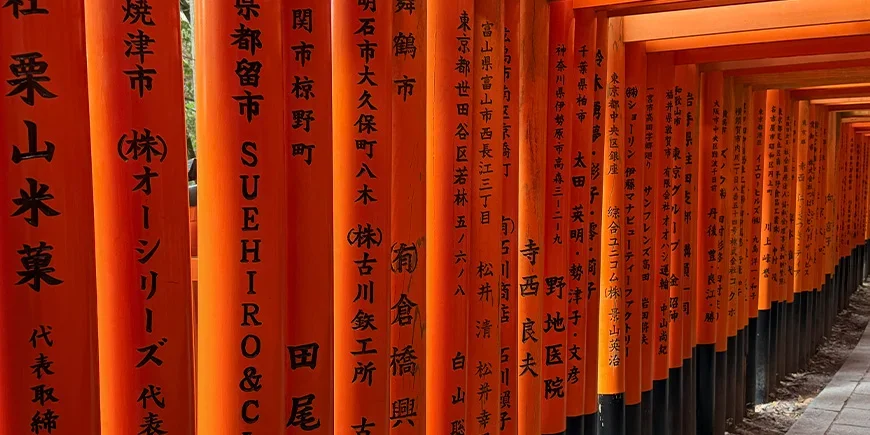
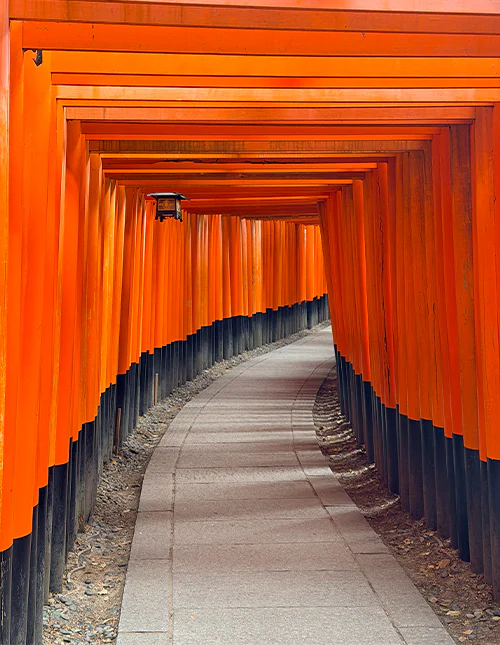
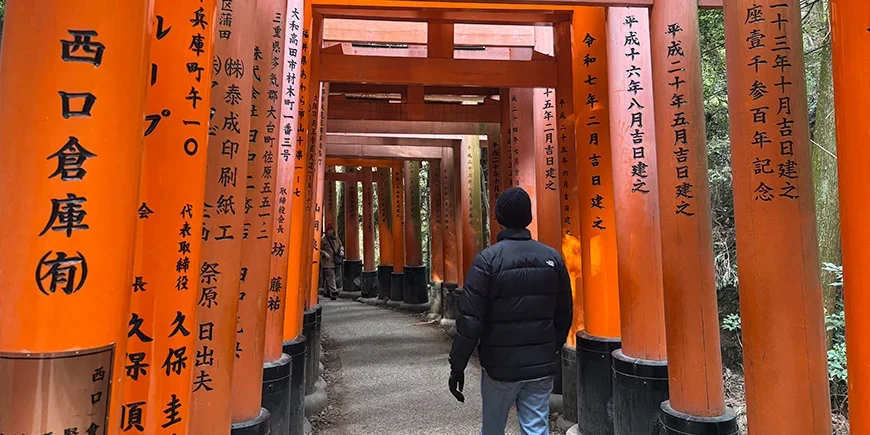
As soon as you start dreaming of Japan, you’re sure to have come across images of Fushimi Inari’s red sea of traditional torii gates, one of Kyoto’s most iconic attractions.
On the way to the summit of Mount Inari, at an elevation of 233 metres, around 10,000 red torii gates stand side by side. Along the forest-clad mountain paths, the gates quite literally frame your walk up the mountain. Every gate has been donated by an individual or a company, and the Japanese characters engraved on each one show the name of the donor and the date of the donation. The larger the donation, the larger the torii gate erected in the donor’s name.
Founded in 711, Fushimi Inari Shrine is dedicated to the Shinto deity Inari, who is known as the protector of harvests and rice cultivation. And if you notice the many fox statues placed around the shrine, this is because foxes are said to be Inari’s messengers.
Fushimi Inari is without a doubt one of the top things to do in Kyoto, and if you’d like to avoid the largest crowds, our two best tips are: 1) come early in the morning or late in the afternoon, and 2) make your way up the mountain. Most people stay near the start of the gates, and the further up the mountain you go, the fewer people you’ll encounter – and the more peaceful the experience becomes.
Kinkaku-ji – The Golden Pavilion
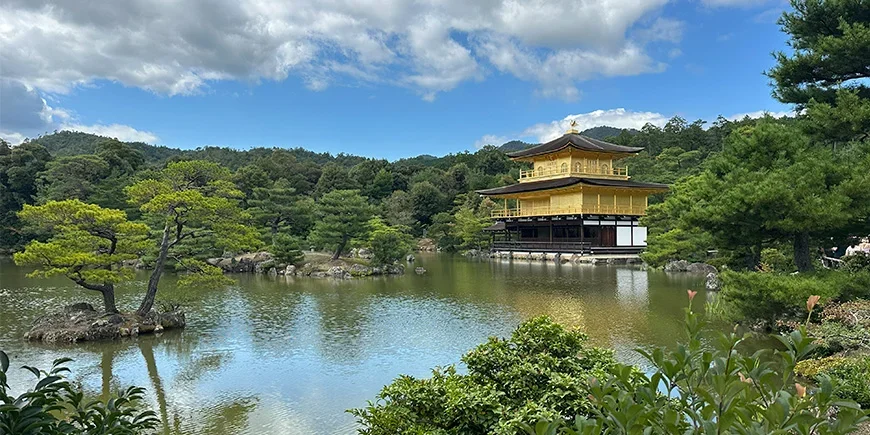
There is a very good reason why the beautiful Kinkaku-ji temple, which is on the UNESCO world heritage list, is known as the Golden Pavilion. What makes the building so special is that it is covered in genuine gold leaf.
The impressive temple is beautifully reflected in the surrounding lake, while the combination of the golden building, the meticulously maintained Japanese garden, and the surrounding trees creates a stunning sight, whether you visit during the cherry blossom season, amid the golden hues of autumn, or on crisp, frosty winter days.
Kinkaku-ji was originally built in 1397 as a retirement villa for the shogun Ashikaga Yoshimitsu. Over the centuries, the pavilion has endured both wars and fires, and the present building is a reconstruction from 1955, after the original pavilion was destroyed in an arson attack in 1950.
The temple is not open to visitors, but you can still experience it from the outside along marked paths.
Kiyomizu-dera
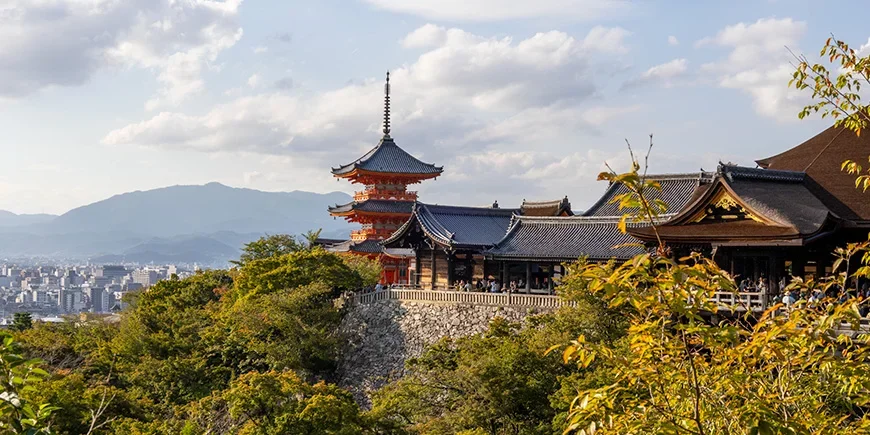
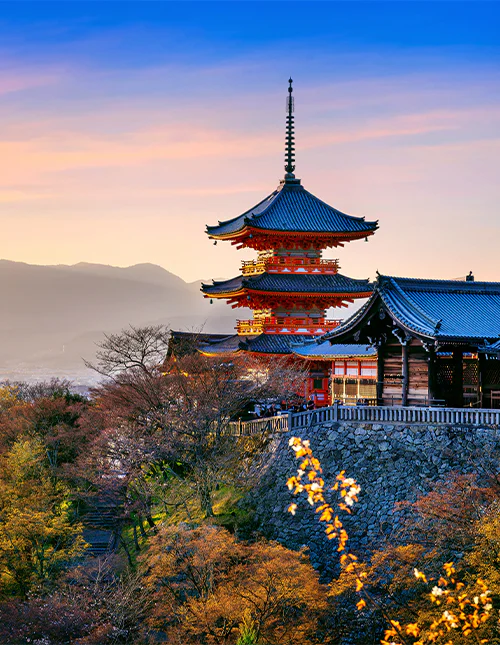
Kiyomizu-dera, one of Kyoto’s most famous temples, is perched on a hillside in the eastern part of the city.
The temple was added to the UNESCO world heritage list in 1994. It was originally built in 778, but has been destroyed by fire several times. As a result, many of the buildings you can see today are reconstructions dating from 1633.
Kiyomizu-dera means ‘temple of pure water’ and refers to the Otowa Waterfall, which flows beneath the temple. Visitors can drink from three different streams, each of which is said to offer a different benefit: a long life, success at school, and a happy love life. However, drinking from all three streams is considered greedy.
The temple is particularly famous for its large wooden terrace, which extends out over the mountainside and offers beautiful views of Kyoto and the many surrounding trees. Depending on the season, these trees create a stunning, ever-changing sea of colour beneath the temple. Supported by 18 massive pillars and built without a single nail, the terrace is a fascinating example of traditional Japanese craftsmanship that has withstood both the forces of nature and millions of visitors over the centuries.
Gion and Higashiyama
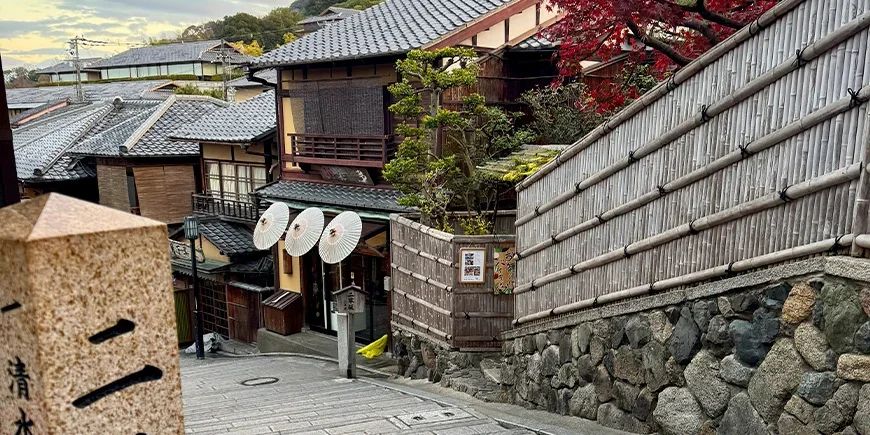
Gion and Higashiyama are two of Kyoto’s most famous neighbourhoods, where you can truly get close to the city’s ancient history and culture.
Gion is the city’s historic geisha district, where traditional wooden houses stand side by side along narrow streets illuminated in the evening by lanterns outside teahouses and restaurants. The area is particularly atmospheric around Hanamikoji Street and along the Shirakawa Canal. If you’re lucky, you may even spot a real geisha dressed in a traditional kimono and distinctive wooden sandals.
Higashiyama is one of Kyoto’s best-preserved historic districts, where you’ll wander along narrow, sloping streets lined with charming little shops and cafés. Sannen-zaka Street is particularly popular with travellers, offering beautiful views of the iconic Yasaka Pagoda.
Visiting these two districts is a wonderful way to experience Japanese culture at a leisurely pace, with plenty of opportunities to stop along the way and sample local specialities – for example, at one of the many small cafés serving matcha lattes.
Arashiyama Bamboo Forest
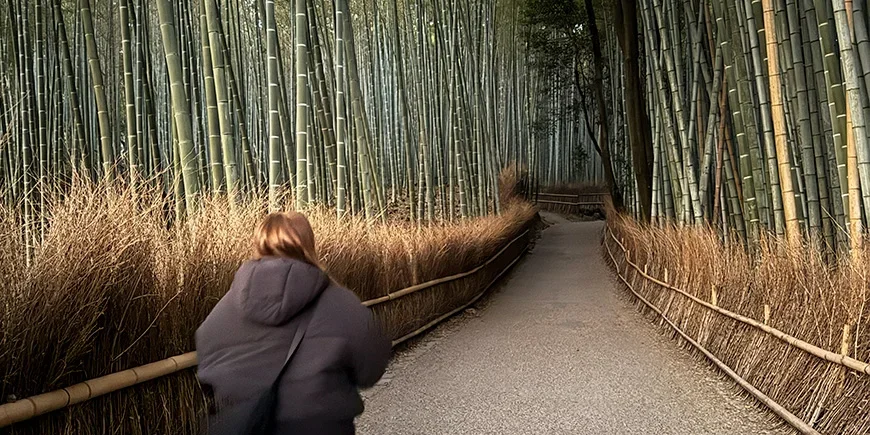
The famous Arashiyama Bamboo Forest lies in western Kyoto.
Along a marked path, towering bamboo stalks rise on either side, filtering the sunlight in a truly unique and almost magical way.
A walk among the beautiful green stalks is an experience in itself. To make it even more special, consider visiting the forest early in the morning for a more intimate experience.
The area around the bamboo forest also offers several exciting experiences, such as the nearby Tenryu-ji Temple or the Togetsukyo Bridge over the Katsura River. If you would like to get even closer to the river, you can take a boat trip in a traditional Japanese boat, travelling through beautiful scenery while the boatmen tell you about the river’s history. It is also popular to hire a rickshaw – a traditional cycle carriage pulled by a person – and explore the area in a different way.
Nijo Castle
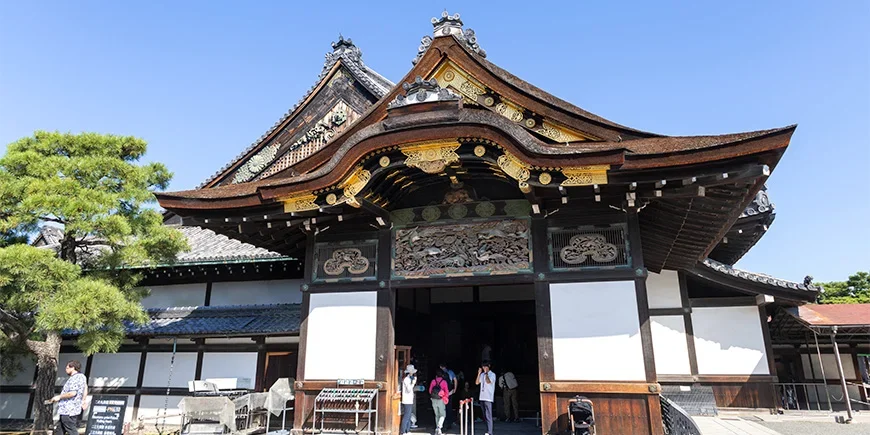
Nijo Castle is one of the most fascinating historical things to do in Kyoto and the perfect place to delve into Japan’s samurai, shoguns, and powerful past.
The castle, which is listed on the UNESCO world heritage list, was built in the early 17th century as a residence for shogun Tokugawa Ieyasu when he visited Kyoto. Behind its solid walls and broad moats lie intricate wood carvings, traditional paintings on folding screens, and many other luxurious details designed to demonstrate the shogun’s power.
One of the castle’s most famous features is its so-called nightingale floors. The floors were designed to squeak when walked on, allowing unwelcome visitors to be detected.
Nishiki Market
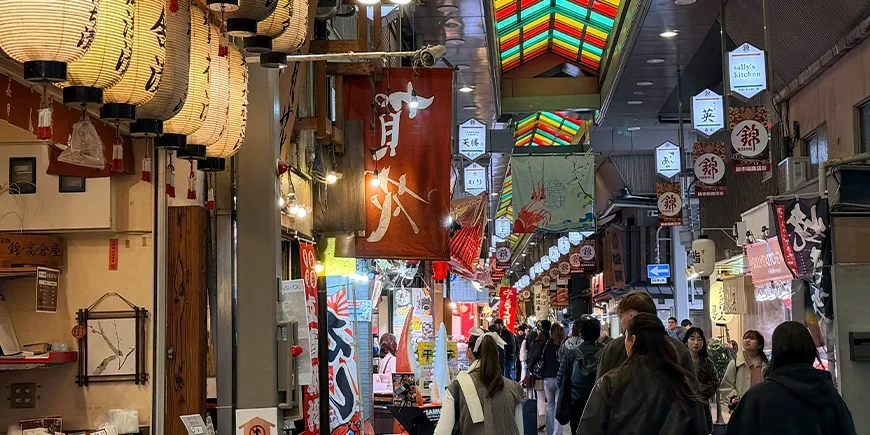
If you want to experience Kyoto through your taste buds, don’t miss a visit to Nishiki Market.
The narrow market stretches for several hundred metres through the centre of Kyoto and is known as ‘Kyoto’s kitchen’. Here, you’ll find small stalls and shops selling everything from fresh fish, pickled vegetables, and Japanese spices to sweets, snacks, and local specialities.
Nishiki Market has been around for several hundred years and remains a popular place for locals and visitors who want to explore Kyoto’s food culture. The market is particularly ideal for a lunchtime stop or a break between Kyoto’s temples, gardens, and historic attractions.
And if you’re looking for an unusual souvenir, we recommend keeping an eye out for the small stall selling the popular Kyo Rayu Furikake seasoning blend. Made with toasted sesame seeds, chilli oil, and fried Kujo spring onions, the blend is used as a topping for rice. If you accept one of the many samples they hand out, you’re sure to want to take a couple of bags home with you.
Ginkaku-ji – The Silver Pavilion
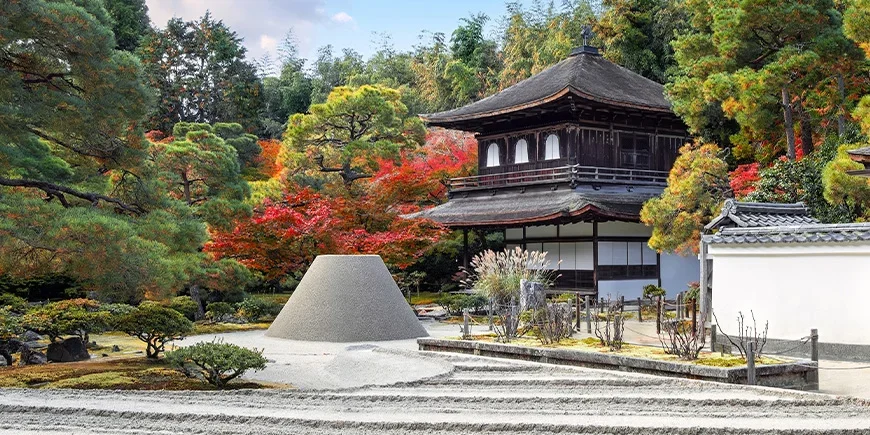
Ginkaku-ji, also known as the Silver Pavilion, is one of Kyoto’s most elegant attractions.
Ginkaku-ji was built in 1482 by the shogun Ashikaga Yoshimasa as a model of the Golden Pavilion, and was converted into a Zen temple after his death in 1490. Surrounding the pavilion, you’ll find a beautiful moss garden with winding paths and ponds.
You might assume that, since the Golden Pavilion is covered in gold leaf, the Silver Pavilion must be covered in silver. However, that isn’t the case. Some believe the name is simply a nickname given to the building in contrast to the Golden Pavilion. Others believe Yoshimasa originally planned to cover the pavilion in silver but never got around to it.
Ginkaku-ji actually consists of several temple buildings, of which the Silver Pavilion is one of only two that are not reconstructions. Although the buildings have undergone several conservation renovations, they have survived numerous earthquakes and fires and remain intact to this day.
Philosopher’s Path
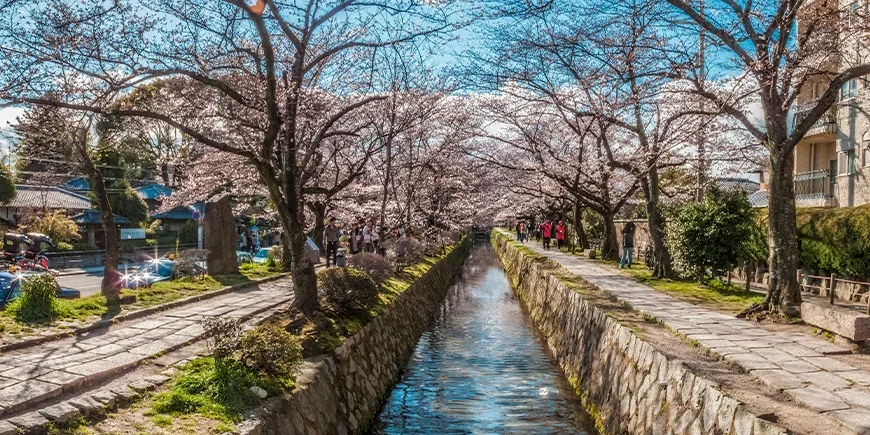
Just a few minutes’ walk from Ginkaku-ji, you’ll find Philosopher’s Path, one of Kyoto’s most beautiful and atmospheric walks.
The approximately two-kilometre-long path follows a canal through the eastern part of the city, linking several temples before ending at Nanzen-ji, one of Kyoto’s most significant Zen temples.
The route takes its name from the Japanese philosopher Nishida Kitaro, who was a professor at Kyoto University. He is said to have used the path for his daily meditation. Today, Philosopher’s Path is a popular place to slow down and experience a more peaceful side of Kyoto.
The path is particularly popular in spring, when the many cherry trees along the canal burst into bloom during sakura season, but it’s well worth visiting all year round. Along the way, you’ll pass small cafés, art shops, and temples, making the walk an experience in its own right.
Imperial Palace
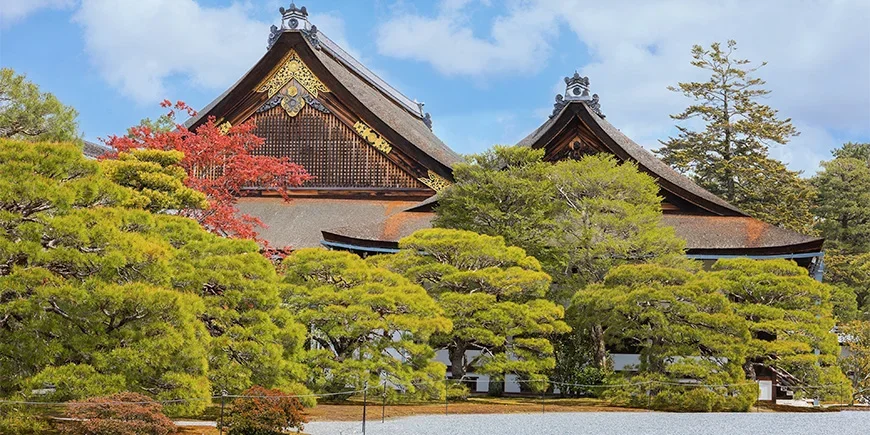
Kyoto’s Imperial Palace tells the story of the time when the city was Japan’s imperial capital.
The grand palace, which served as the residence of the Japanese imperial family until 1868, is surrounded by high walls in the peaceful Kyoto Imperial Palace Park. Within the palace grounds, you can stroll through beautiful Japanese gardens and admire the impressive palace buildings from the outside. In spring, the park is also home to several blossoming cherry trees.
The Imperial Palace was originally built in 1630, but, like many other attractions in Japan, it was destroyed by fire in 1854. The palace you see today is therefore a reconstruction dating from 1855.
The palace and its surrounding gardens are free to visit. Once you step inside the great walls, you can enjoy a peaceful experience that almost makes you forget you are in the heart of one of Japan’s most popular cities.
Getting around Kyoto’s attractions
If you’re also visiting the vibrant city of Tokyo on your tour, you’ll notice a big difference in how you get around between the various things to do.
The infrastructure and public transport in Kyoto differ from those in the largest cities, and although Kyoto is a much smaller city than, for example, Tokyo, it can take longer to get from A to B.
There are plenty of city buses that take you to the main attractions and temples, but as journey times are longer, it can be difficult to see all of Kyoto in a single day.
That’s why we recommend planning your time independently in advance and grouping together attractions that are located in the same area. This way, you can spend more time experiencing the city and less time travelling.
Are you ready to explore Kyoto?
Whether you visit Kyoto for its historic temples, peaceful gardens, or atmospheric streets, unforgettable experiences await, offering a unique insight into Japan’s culture and history.
Most of our tours to Japan include a visit to Kyoto. If you’re unsure which one best suits your travel dreams, our travel specialists are always ready to help you set off on your Japanese adventure.
TourCompass – From tourist to traveller