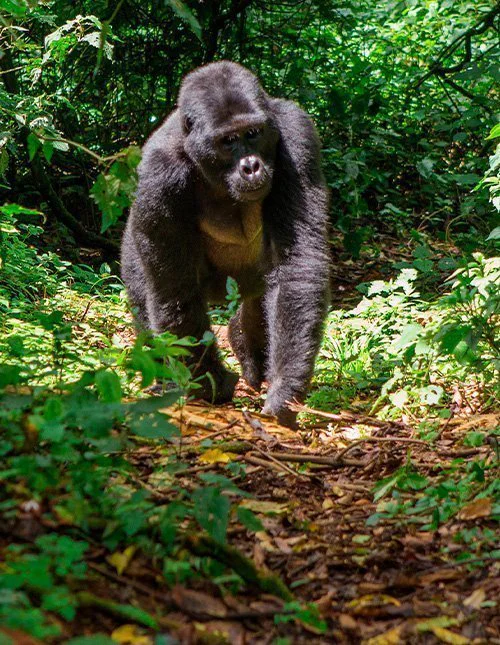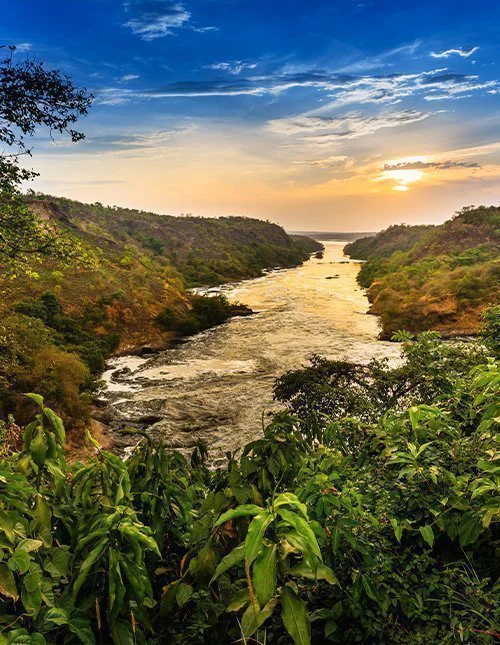
Winnie, our Product Manager for Africa, has travelled extensively throughout East Africa. But it was meeting the porters during a gorilla trek in Uganda that really put her to the test and challenged her stubbornness. Read her travelogue about the incredible porters in Bwindi Impenetrable National Park in Uganda below.
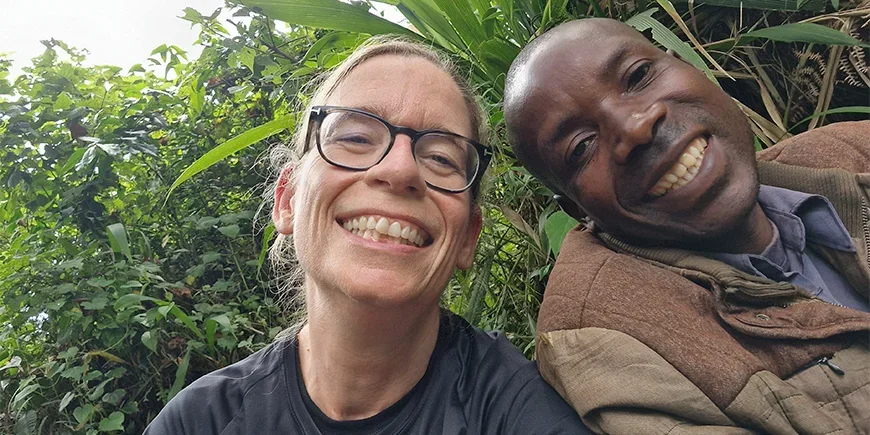
It’s a little embarrassing to admit, but I’ve actually forgotten what his name was. My porter.
What I do remember, however, is that before setting off for Uganda, I was absolutely certain that I wasn’t going to have a porter when I went gorilla trekking in the forests of Bwindi Impenetrable Forest National Park. No way was I going to pay a man to carry my rucksack. I’ve crossed the Alps, if I do say so myself, and I’m perfectly capable of carrying my own rucksack.
As we made our way into Bwindi, our driver-guide told us about the gates.
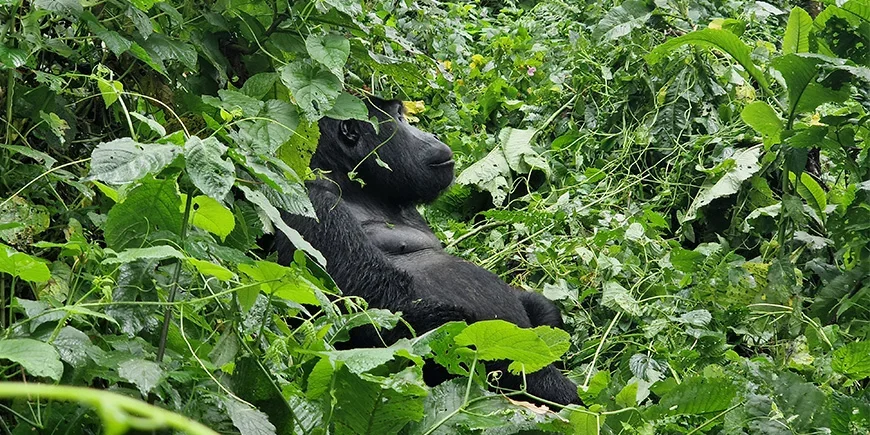
When the National Park was established in 1991, the number of mountain gorillas was critically low. It is estimated that fewer than 300 remained in Uganda’s forests. By contrast, around 6,700 Batwa people lived in the forests – where, incidentally, they had lived for thousands of years.
In 1991, attitudes towards national parks and nature conservation were very different from today. At the time, international organisations advised the Ugandan government to forcibly relocate an entire people and establish a national park. And that is exactly what happened.
In 2021, Uganda’s Constitutional Court ruled that the forced relocation of the Batwa people had been unlawful, and that the Batwa people are the indigenous owners of the forests in Bwindi.
The paradox, of course, is that the number of mountain gorillas in Bwindi has increased since 1991, and today stands at around 450 individuals.
I already knew all this before setting off.
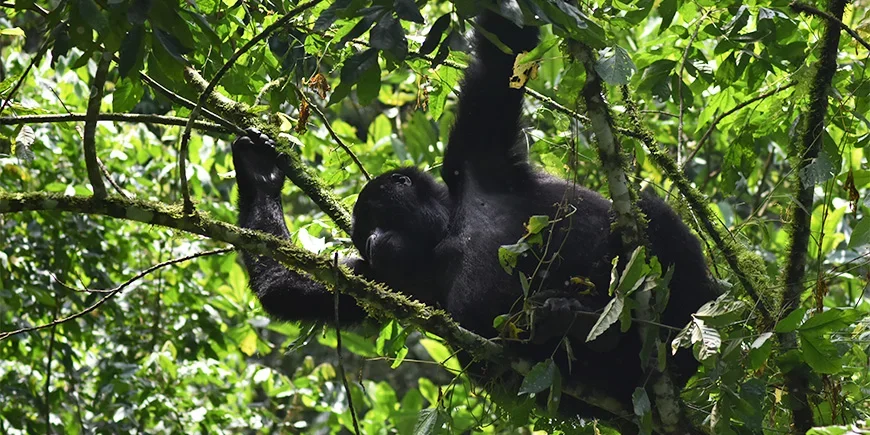
I was also well aware that the considerable cost of a gorilla permit does NOT necessarily benefit everyone in the local community. Admittedly, some of the money goes towards the park’s permanent trackers, anti-poaching teams who protect the gorillas around the clock, and roads, schools, and health clinics in the small local communities. But there isn’t work for everyone. Our driver-guide reminded us of that. He also told us that some of the porters were actually former poachers who now earn a living by carrying backpacks and helping visitors through the sometimes almost impenetrable forest.
Even so, I hired a porter. You are advised to pay 15–20 USD, which is paid at the end and serves as a straightforward tip, meaning that the porter gets ALL the money directly in their own pocket.
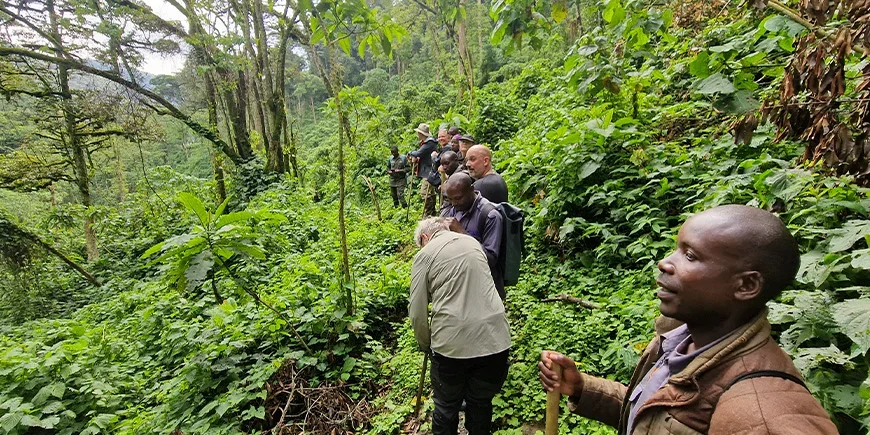
My porter was probably a head shorter than me. He also turned up wearing wellington boots. Have you ever tried walking up a steep, muddy mountainside in wellington boots?
It took a bit of back-and-forth discussion before we agreed that I could probably carry my own rucksack. We also had to go through a couple of ‘exercises’ where I really didn’t need a helping hand to get over a fallen tree trunk. Fortunately, the porters speak reasonably good English, and we had a chat about our families and everyday lives. Then, all of a sudden, there we were on that narrow path along the rather steep and very muddy slope. The ‘proper’ guide pointed to a tree that could serve as something to hold on to and said: ‘Whatever you do, don’t touch that tree over there – it’s covered in spikes. And don’t stand still for too long – there are marching ants’ (a harmless but enormous ant that bites).
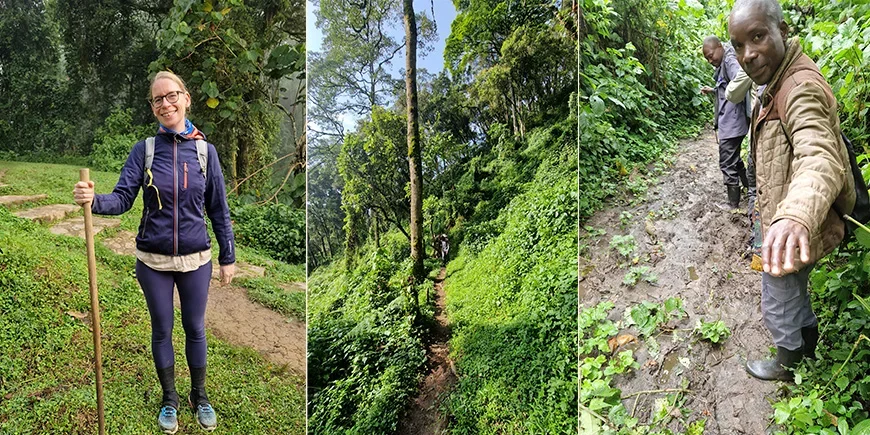
I must have looked completely lost, because my porter (damn it, I can’t remember his name!) sprang forward in his wellies along a path I simply couldn’t see. And there he was, ready to take my hand and guide me across the narrow, muddy stretch – without thorns in my hand or safari ants in my socks.
Do I really need to say that I gave my porter a little more than 20 USD at the end of the tour?
Winnie, Product Manager for Africa
Dreaming of a tour to Uganda, where you can see the beautiful gorillas and meet the exceptional porters?