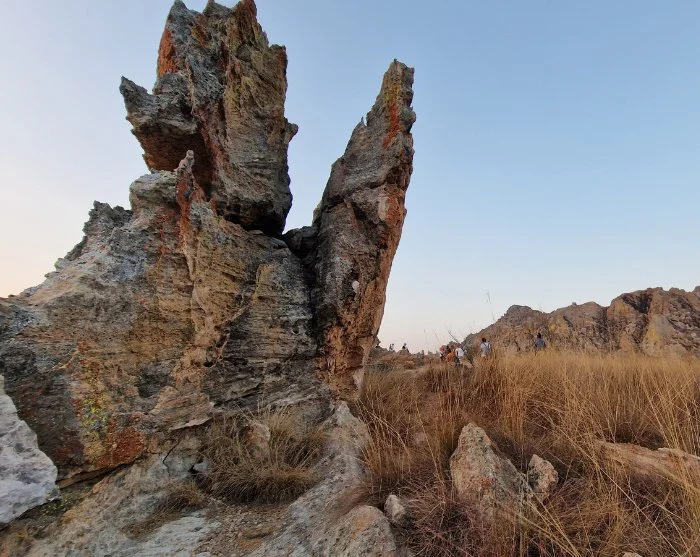
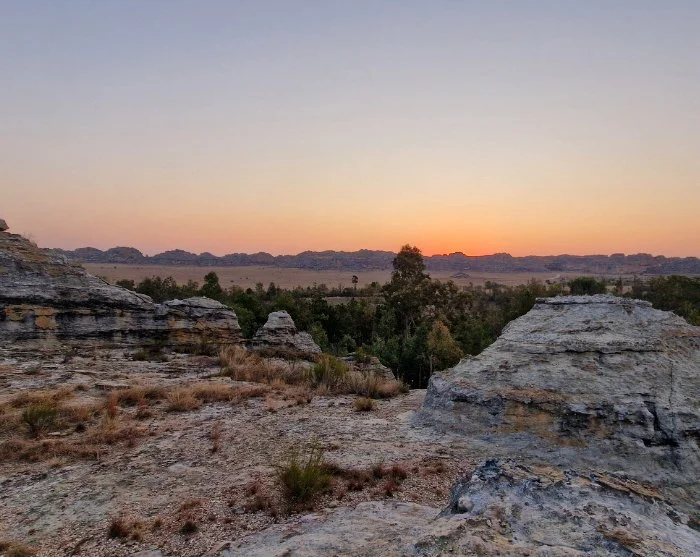
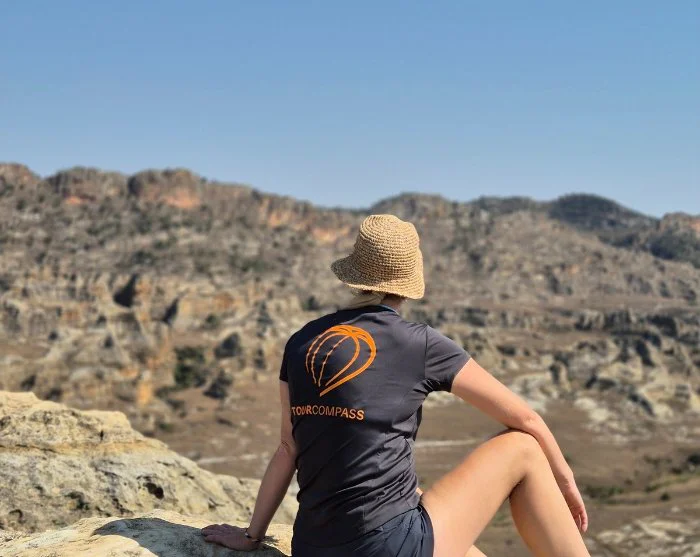
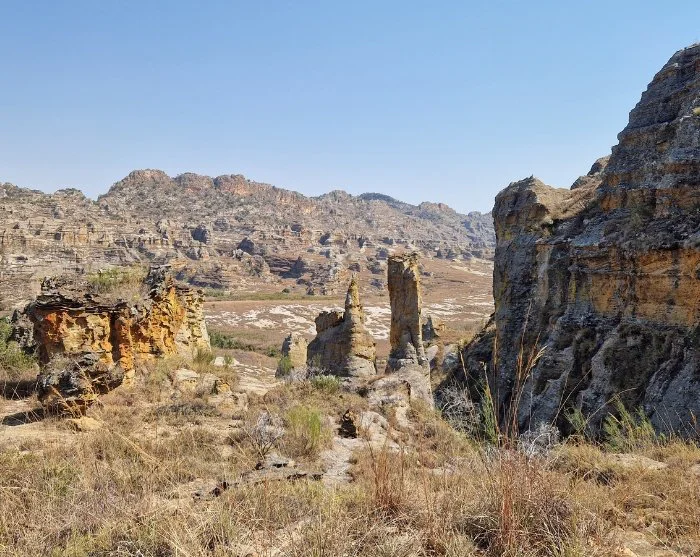
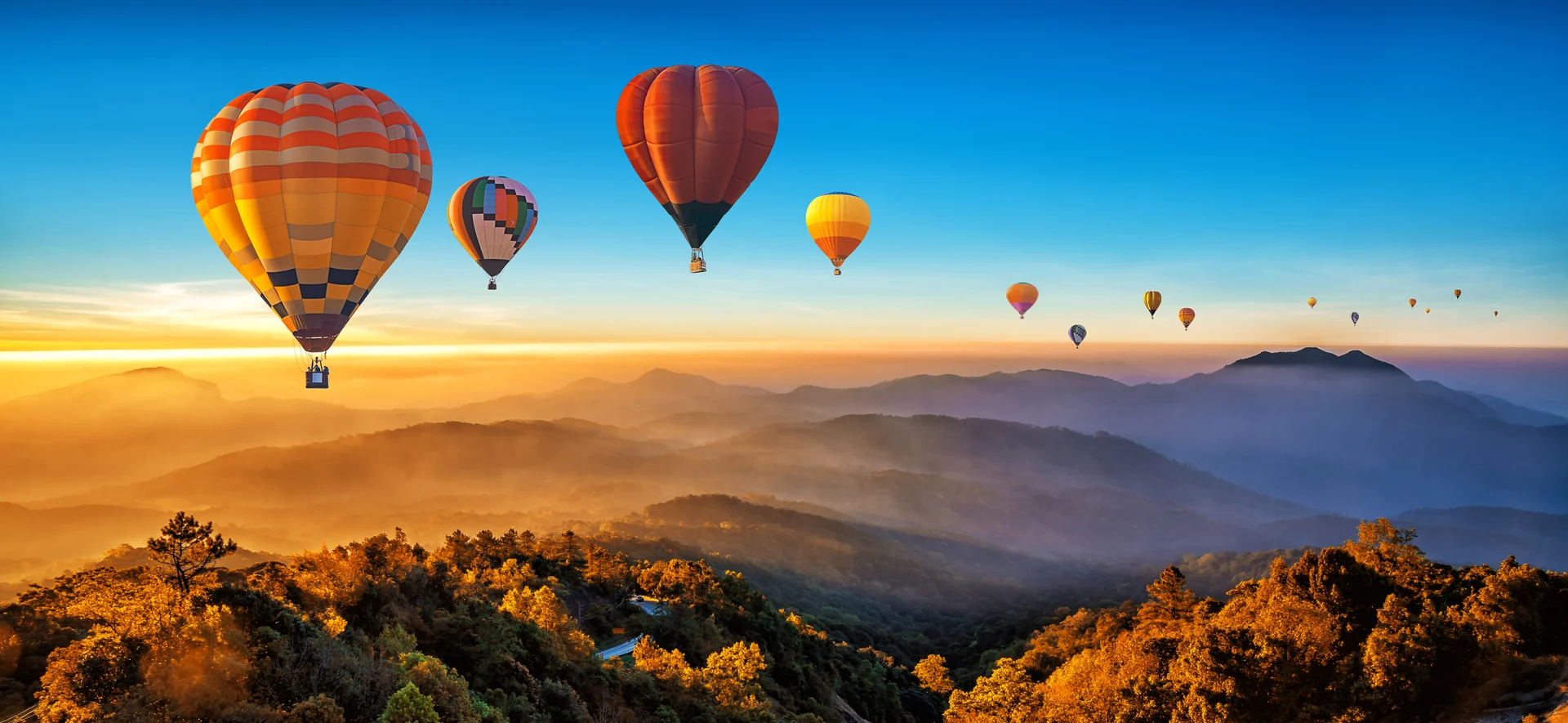
Sunset framed by rocks over the open landscape in Isalo National Park
18 days
From £4449

Nature, culture and lemurs in Madagascar & beach holiday in Mauritius

Are you ready to be blown away? Experience Madagascar’s dramatic landscapes, endemic wildlife and exciting history before rounding it off with a beach holiday in exotic Mauritius.

All prices are in £ per person

Number of adults
2

Children u/12At the time of departure
0

You will receive a detailed, no-obligation quote for this tour.

You will receive a detailed, no-obligation quote for this tour.

What is included in the price?
This package includes the following
  • Flight from chosen airport to Madagascar incl. transfer
  • 12-day tour in a good car/bus with local English-speaking guide/driver
  • Water served on the drives
  • 11 nights in Madagascar incl. full board
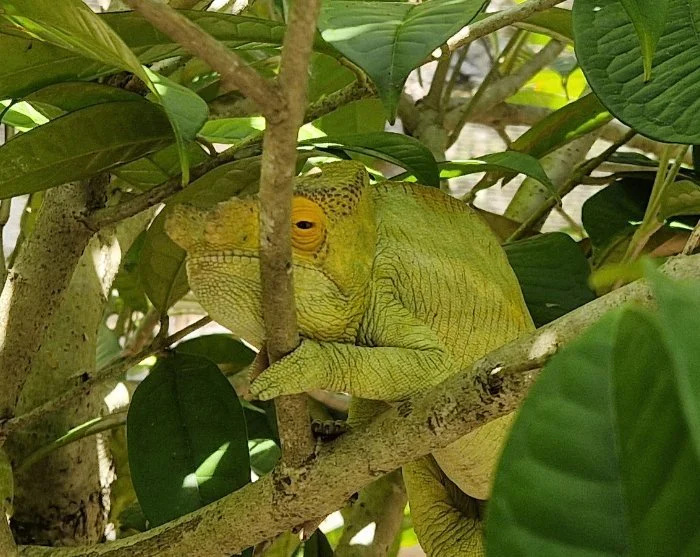
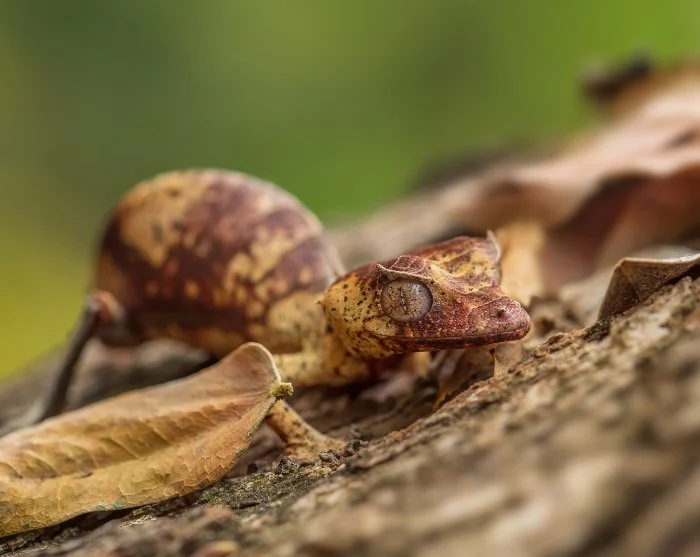
  • Visit to Peyrieras Reptile Reserve with the chance to see chameleons
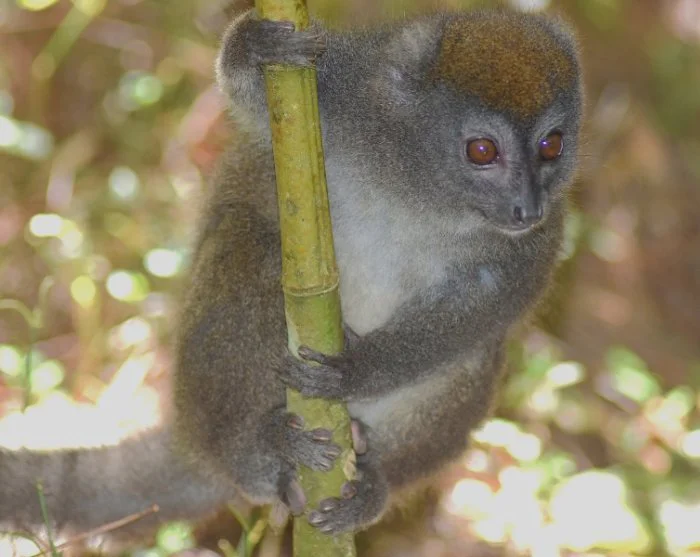
  • Guided morning hike in Andasibe-Mantadia National Park with the chance to see Indriidae lemurs, bamboo lemurs etc.
  • Guided twilight hike in Andasibe-Mantadia National Park with the chance to see chameleons and mouse lemurs
  • Visit and guided tour of the Queen’s Palace in Antananarivo
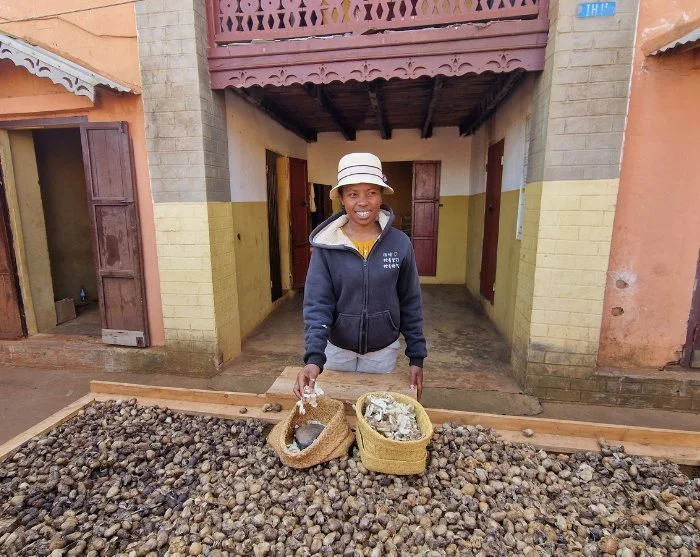
  • Visit to aluminium pot factory
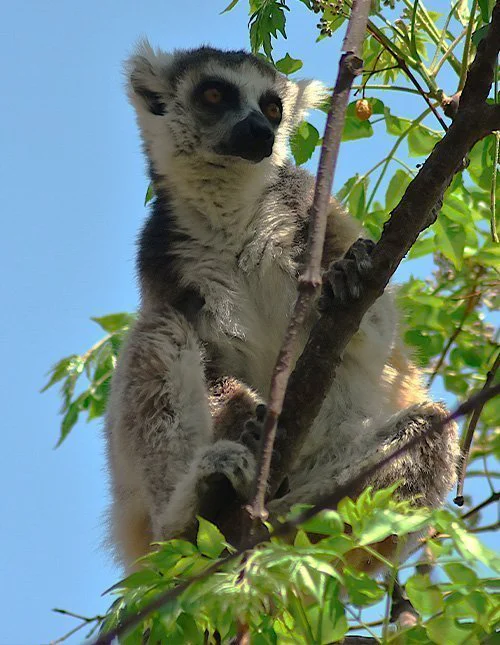
  • Guided hike in Anja Reserve with the chance to see ring-tailed lemurs
  • Sunset drink in Isalo
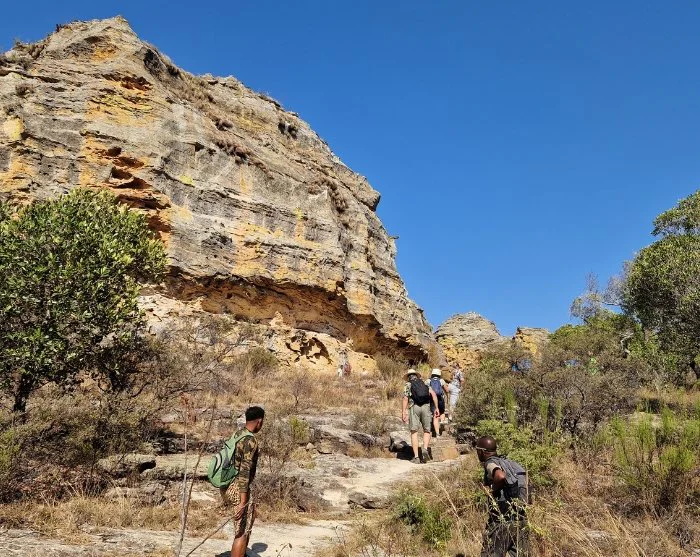
  • Guided hikes in Isalo: short, medium, or longer hikes available. Arranged on the day
  • Visit to silk factory and tea plantation in Fianarantsoa
  • Guided morning hike in Ranomafana National Park
  • Hot spring visit in Ranomafana
  • City tour by rickshaw in Antsirabe, incl. visits to handicraft workshops
  • Entrance fees and fees to the stated national parks and game reserves
  • Flight from Madagascar to Mauritius incl. transfer
  • 4 nights in Mauritius incl. all inclusive
  • Option of beach holiday extension in Mauritius
  • Flight from Mauritius to chosen airport incl. transfer
  • Individual tour, where all excursions take place in small, international groups with local, English-speaking guides and with TourCompass’ own guests only
  • ATOL certificate
  • Emergency hotline staffed 24/7 throughout your tour
  • Departure guarantee – the tour will take place regardless of the number of participants

The tour in short

Imagine finding yourself in a rainforest one early morning surrounded by plants you’ve never seen before in your life.

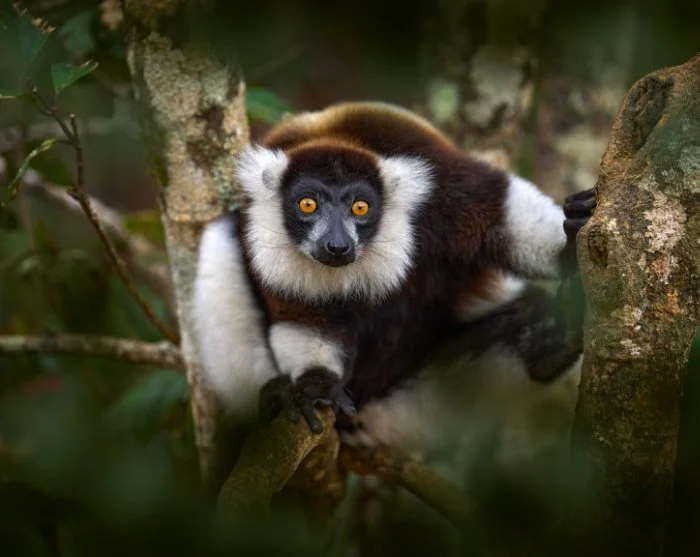
Your guide has disappeared between the trees, and suddenly it starts singing in the treetops around you. The sound first comes from far away. You think that perhaps it’s cicadas. But the sound gets closer, and in the end you are surrounded by loud melodic howls in the treetops that almost sound like intense singing. It is the Indriidae lemur, the world’s largest lemur species, who are waking up, and using song to communicate with each other.

This is what is waiting for you in Madagascar!

Your journey starts in the capital city of Antananarivo, or ‘Tana’ as it is known, where you will visit the palace of the mad Queen Ranavalona. You then embark on an epic road trip, where the landscapes change so dramatically that it can be hard to believe that you are in one and the same country.

You visit rainforests with animals you’ve never seen before, drive across savannah-like grasslands, where semi-nomadic herdsmen drive their herds of cattle, and end up in a national park that resembles a cross between a lunar landscape, a scene from Star Wars – or perhaps somewhere in north-western Australia.

Madagascar is a true adventure!

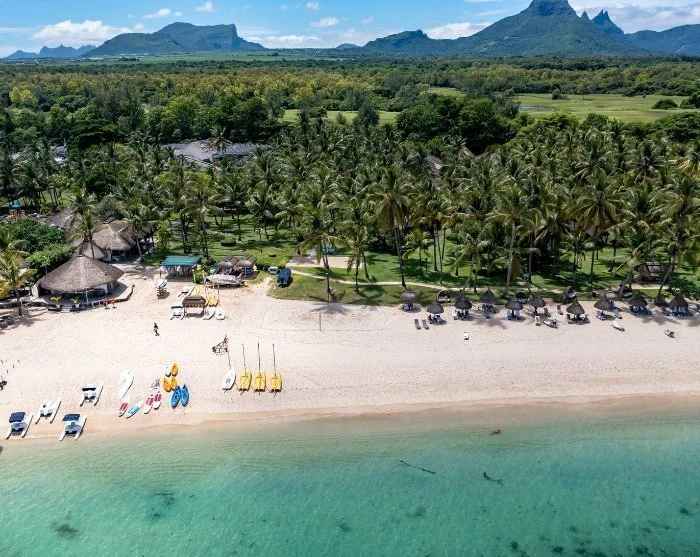
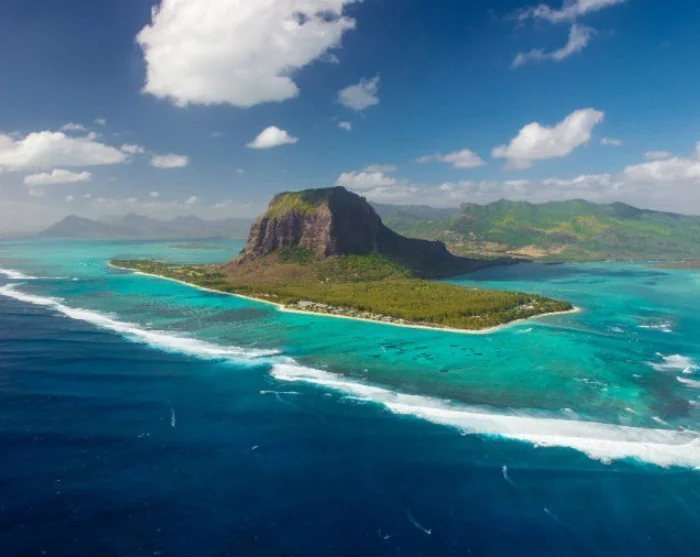
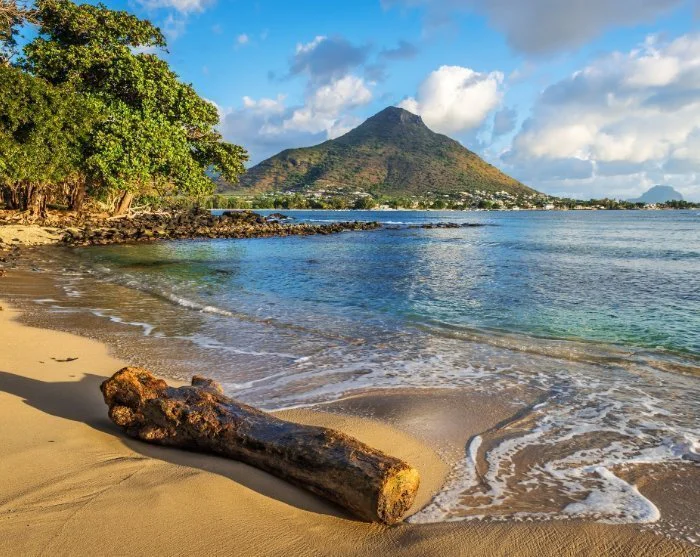
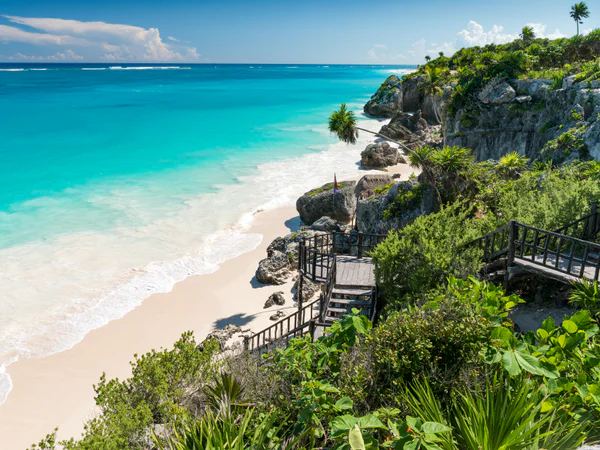
The tour ends with a relaxing beach holiday in Mauritius, where the most beautiful beaches, wild landscapes and time in abundance await.

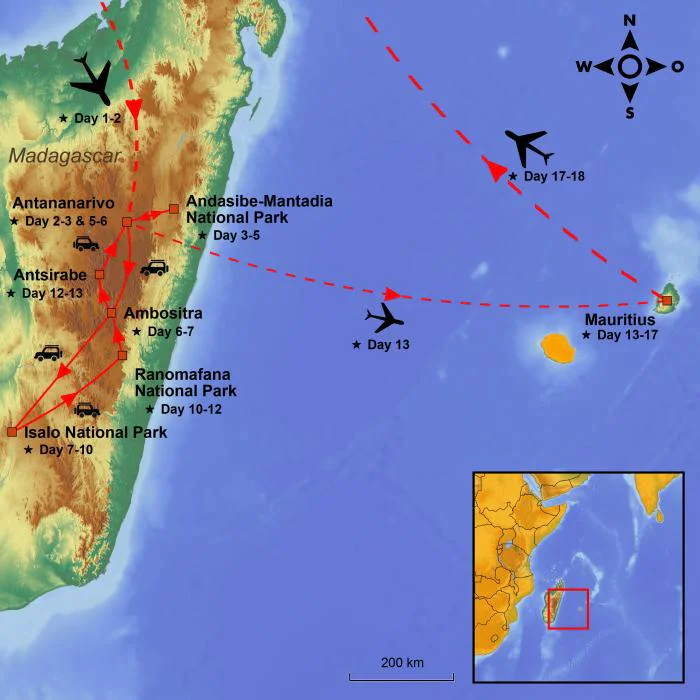
View route map

Why choose this tour

  • Experience Madagascar’s wonderful nature and wildlife with very good chances of seeing several different lemur species.
  • Learn about Madagascar’s intriguing culture and history, which includes ethnic tribes and colonial stories
  • A wonderful and rich tour of the world’s fourth-largest island
  • End your tour with a beach holiday in beautiful Mauritius, with its impressively beautiful beaches and wild nature

Our tours always include

All international and domestic flights
All accommodations
All specified excursions and activities
24/7 telephone – We’re with you all the way
Detailed Itinerary
Your day-by-day itinerary
Day 1
Departure from chosen airport

Today, you depart from your chosen airport with connecting flight(s) along the way. The tour goes to Madagascar, the big red island in the Indian Ocean and the world’s fourth-largest island

Where you’ll stay
Antananarivo
Nosy Manga
Accommodation included in the price
Day 2
Arrival in Madagascar

On arrival in Madagascar’s capital, Antananarivo, you will be greeted by our local partner at the airport and driven to your hotel. Our partner can help you exchange money at the airport, where it is also possible to buy a local SIM card.

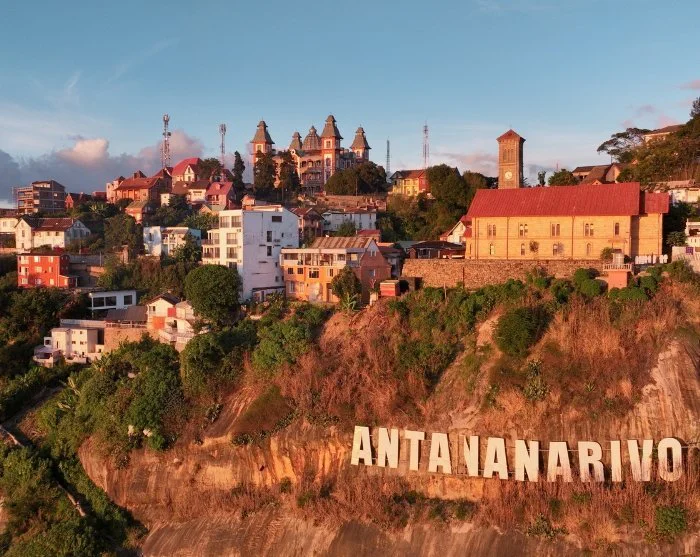
Antananarivo, which is often just called ‘Tana’, has a long history.

The city is located in Madagascar’s central highlands, which are home to the country’s largest ethnic group, the Merina people. Tana was founded in the early 17th century by the local Merina king, King Andrianjaka, and back then was called Analamanga. King Andrianjaka threw out a rival ethnic group, and slowly began to build his kingdom. At the end of the 17th century, the city was renamed Antananarivo, which means ‘the city of the thousands’ in honour of King Andrianjaka’s soldiers.

You have one night in the City of the Thousands before the tour really takes off the following day.

Where you’ll stay
Antananarivo
Nosy Manga
Accommodation included in the price
Where you’ll stay
Andasibe-Mantadia National Park
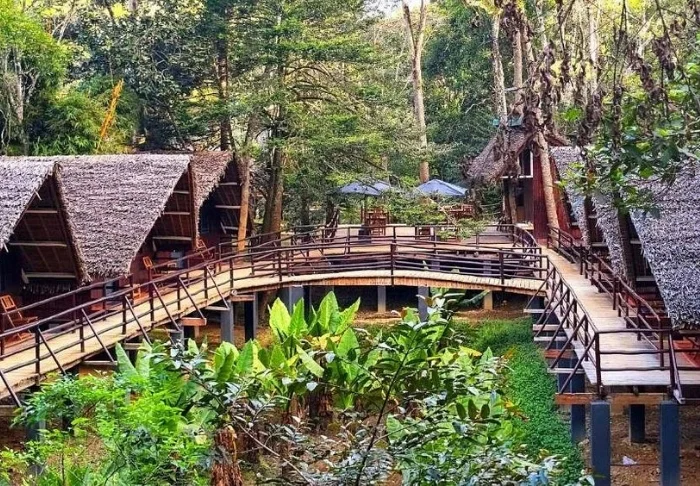
Longoza Ecolodge
Accommodation included in the price
Day 3
Antananarivo – Andasibe-Mantadia National Park

After a quiet morning at the hotel with plenty of time to enjoy breakfast, you will be collected. It’s time to leave the capital.

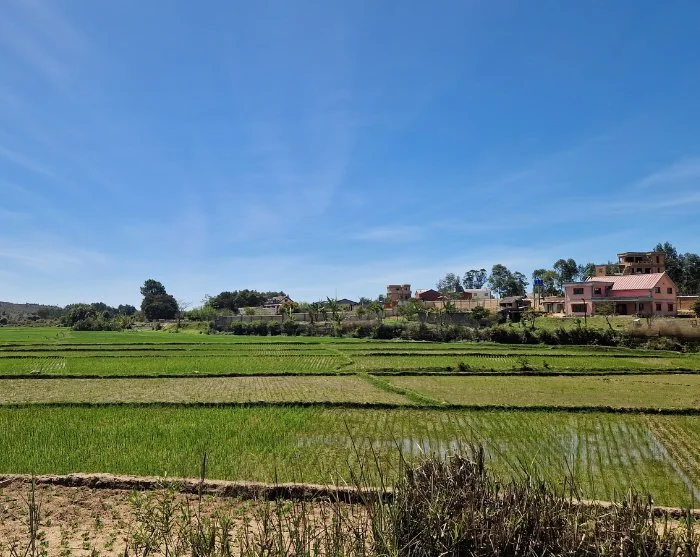
The central highlands are the bread basket of Madagascar, and you will see this for yourself today.

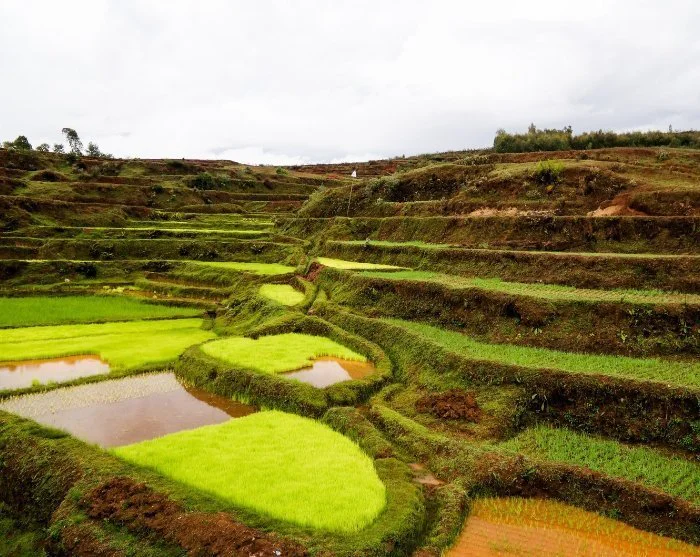
There are rice fields everywhere. It is sometimes said that the Malagasy are among those who consume the most rice worldwide on a daily basis. In fact, they are so fond of it that the rice which always burns to the bottom of the pot is allowed to burn a little more before they boil tea on it. The tea, which is called ‘ranovola’, is then drunk with a rice-based meal. It tastes a bit funny, like a cross between burnt rice and popcorn, but in the form of tea. So, now you’re suitably warned if you are offered ‘ranovola’.

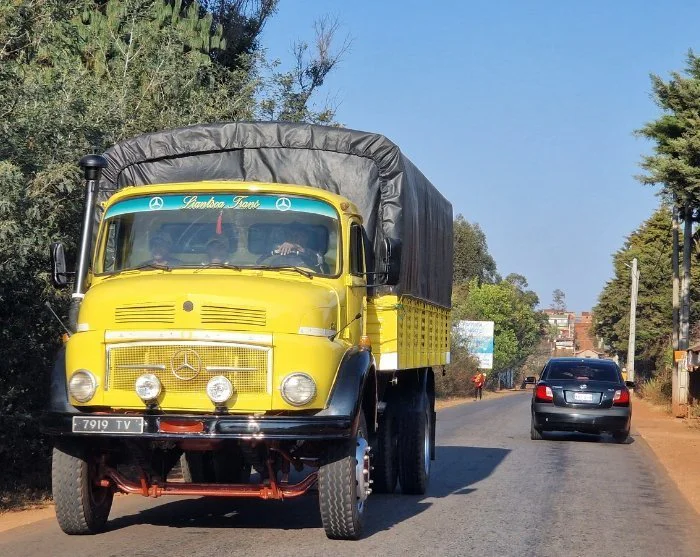
After a couple of hours of driving through the slightly hilly plateau landscape with all the rice fields, the scenery changes. The hills become higher, and the forests denser. The driver navigates expertly through the hairpin bends, and here and there you can glimpse the river at the bottom of the valleys. The traffic is fine – until it isn’t. Old Mercedes-Benz trucks from the French colonial era are carelessly parked on the side of the road and sometimes slow down the traffic. Or a small roadside stall is so popular that the traffic comes to a complete standstill. “Mura mura” as they say in Madagascar – just take it easy.

You arrive at Andasibe-Mantadia National Park during the afternoon, where you check into your hotel for the next two nights.

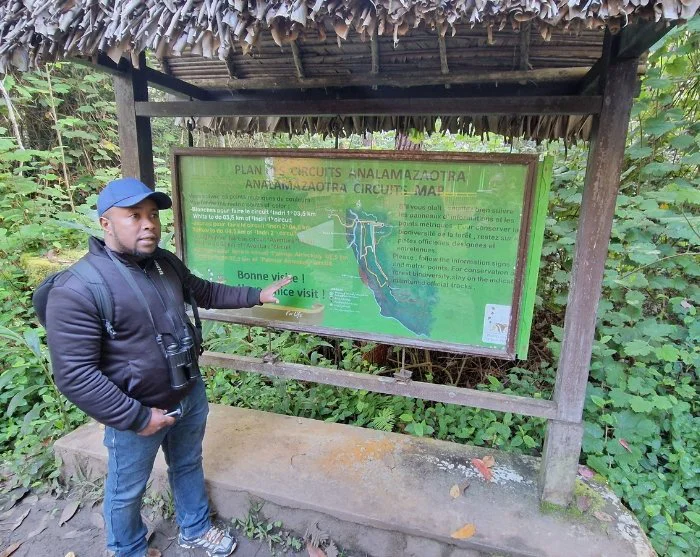
The seeds of the national park were sown in 1970 by the French. They created a nature area, the Analamazoatra Special Reserve, with the aim of preserving the forest and the area’s unique biodiversity. In 1989, Mantadia National Park was established next to the reserve, and together the two areas are now called Andasibe-Mantadia National Park.

The rest of the day is at your leisure so you can settle in.

Where you’ll stay
Andasibe-Mantadia National Park
Longoza Ecolodge
Accommodation included in the price
Where you’ll stay
Andasibe-Mantadia National Park
Longoza Ecolodge
Accommodation included in the price
Day 4
Experiences in Andasibe-Mantadia National Park

Breakfast is served early today because you’re setting off on an adventure just after sunrise.

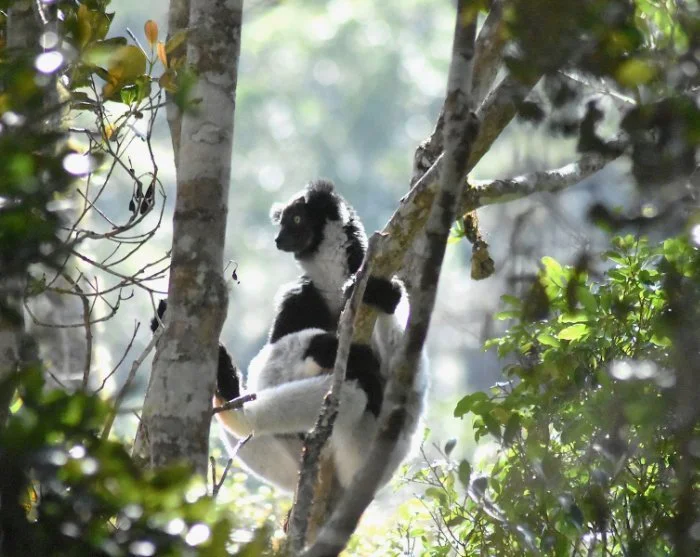
Andasibe-Mantadia National Park is one of the best places in Madagascar to see the largest of the lemur species, the Indriidae. And that is exactly what you are going to do today. Together with a local guide, you will go hiking in the national park in search of the Indriidae lemurs.

Indriidae lemurs cannot survive in captivity, and the only way to ensure their survival is to protect their habitat. Fortunately, the Indriidae lemur is also sacred in Madagascar, and it is considered auspicious to see or be close to the Indriidae.

In fact, you will probably hear them before you see them. Their call can be heard up to 5 km away, and the sound is very penetrating and absolutely magical. It’s hard not to get goosepimples when they start singing. It’s almost as if, immediately after sunrise, with their piercing singing voices, they are checking to see how each of them is – whether everything has gone as it should throughout the night.

In addition to your guide, a ‘spotter’ often accompanies the morning tour. The spotter runs ahead and locates the Indriidae families, and you then move through the forest to see them. They usually sit high up in the trees where they have spent the night, so it’s a good idea to bring binoculars so you can see their furry arms grasping the branches with almost human-like hands.

There is (as always with wild animals) no guarantee that you will see the Indriidae lemur – but the chances in this particular spot are very good.

Of course, there are lots of other animals in the national park apart from the Indriidae lemur. You might be lucky enough to see bamboo lemurs, sifaka lemurs, brown lemurs, chameleons and there is also a rich bird life.

Around noon, you will return to the lodge, where lunch is served. In the afternoon, you can relax and enjoy the pool and the beautiful surrounding nature.

At sunset, you will return to the national park – again with a local guide. Now, it’s time to spot the nocturnal animals, in particular the mouse lemurs. These are tiny creatures – the size of a small mouse – and they jump quickly and elegantly between the branches of the trees as if they were squirrels. It is no wonder that one of the species, Goodman’s mouse lemur, was only discovered in 2005! Keep an eye out too for stick insects, frogs and chameleons.

Back at the lodge, dinner is served before a good night’s sleep awaits.

Where you’ll stay
Andasibe-Mantadia National Park
Longoza Ecolodge
Accommodation included in the price
Where you’ll stay
Antananarivo
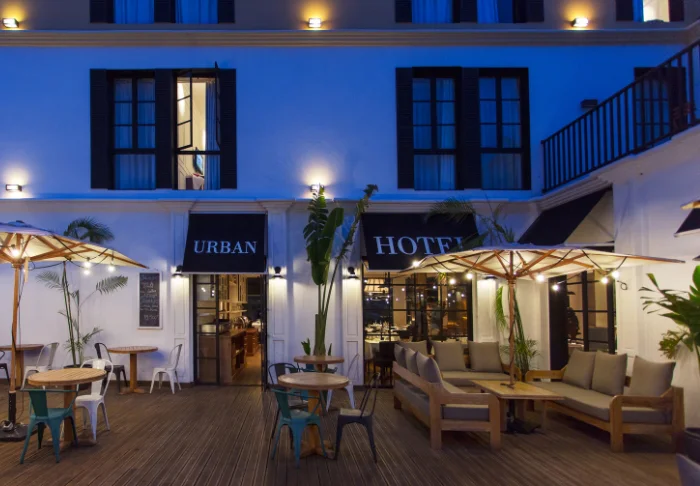
Grand Hotel Urban
Accommodation included in the price
Day 5
Andasibe – Antananarivo

It’s time to say goodbye to Andasibe and head back to the capital Tana again.

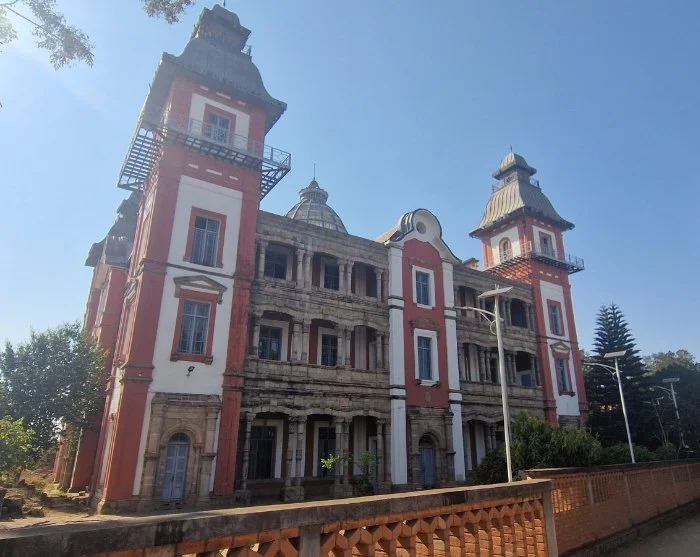
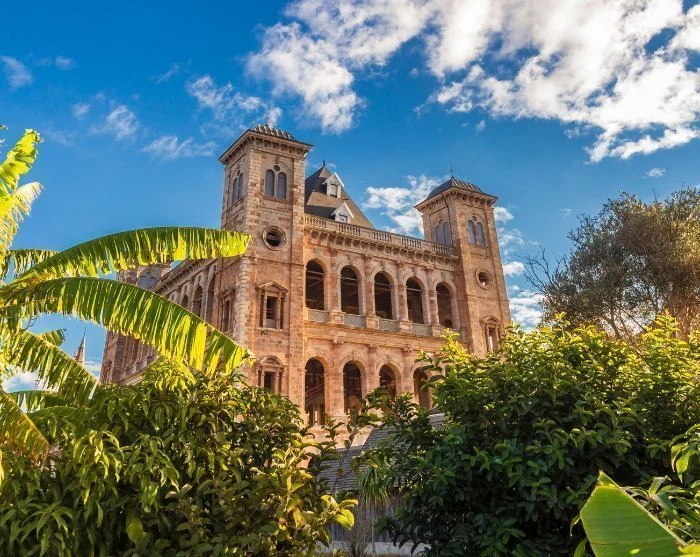
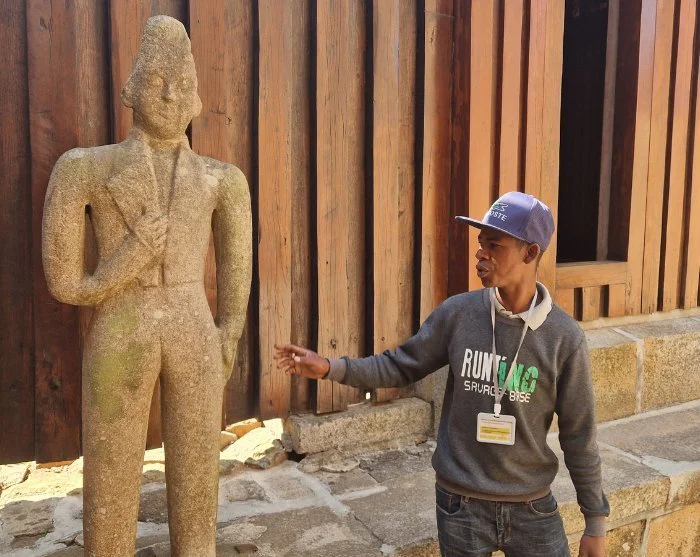
Once there, you will have lunch at the hotel where you will be staying, followed by a visit to the Queen’s Palace in the afternoon.

Although Madagascar is now a republic, the country has a long history of kings and queens.

In 1787, through cunning alliances and shrewd political moves, the Merina king, Andrianampoinimerina, succeeded in uniting the country under him and becoming the first king of all of Madagascar.

When it is called the Queen’s Palace rather than the King’s Palace, it is because, even though King Andrianampoinimerina united the country, Madagascar has to a much greater extent been shaped by its queens.

The most famous of them all is Queen Ranavalona I, who ruled from 1828 to 1861. She was also called the mad queen, and you can look forward to hearing more about her today! You will also meet the country’s last queen: Queen Ranavalona III, who was sent into exile when the French invaded and colonised Madagascar in the late 19th century

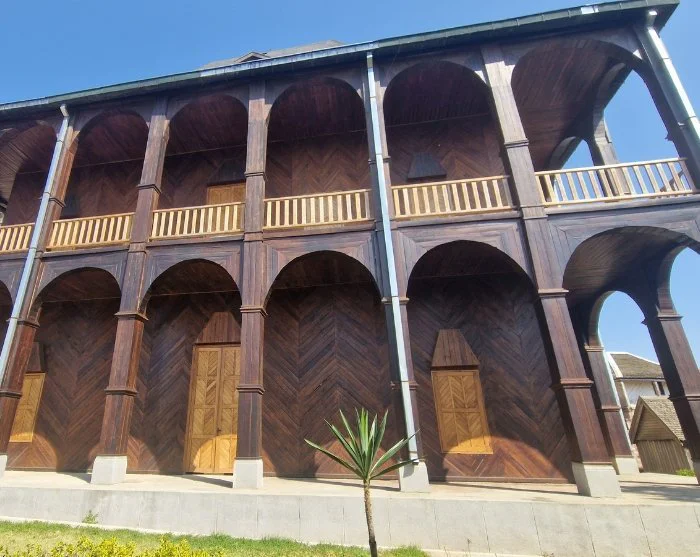
The palace burned down some years ago, but has now been rebuilt, and the guided tour is very interesting and provides a good insight into Madagascar’s history.

The view from the palace, which is located on top of the largest hill in the city, is phenomenal, and gives a very good overview of Tana.

Where you’ll stay
Antananarivo
Grand Hotel Urban
Accommodation included in the price
Where you’ll stay
Ambositra
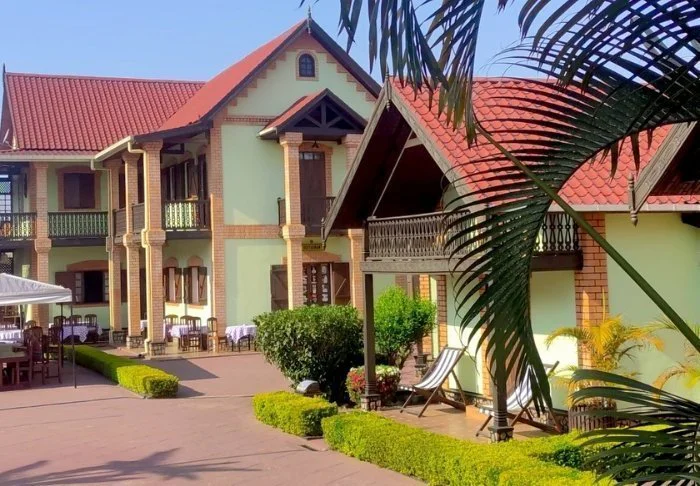
Artisan Hotel
Accommodation included in the price
Day 6
Antananarivo – Ambositra

After breakfast, the legendary RN7 (Route Nationale 7) road awaits, which goes all the way from Tana to the town of Toliara on Madagascar’s south-west coast.

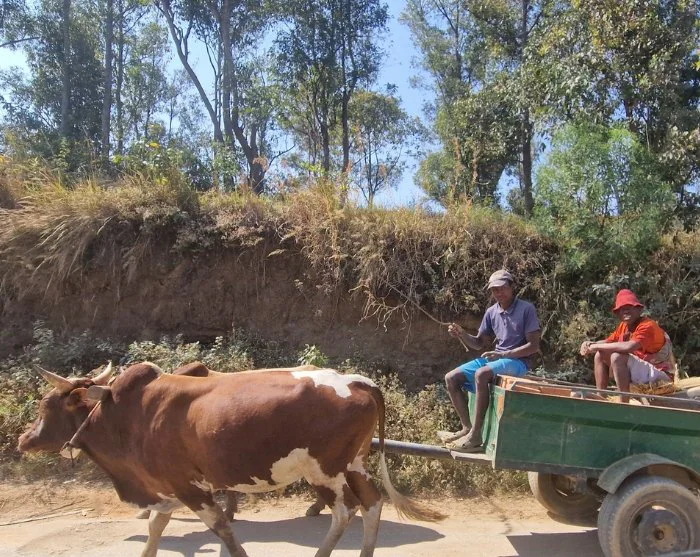
The next few days offer a real road trip. It is a good idea to arm yourself with a certain amount of patience, and to always keep “mura mura” in mind on the trip. Most roads in Madagascar are quite good – except for those that are not. And even though the roads are good, you will often find trucks breaking down or an ox cart holding up the traffic. But that’s all part of the experience!

You have a driver-guide at your disposal, and you will travel in a good and comfortable car (or bus – depending on the number of people) with air conditioning and good suspension, so you can just sit back and soak up the impressions as you travel through what many people refer to as the world’s eighth continent.

RN7 is epic. The almost 1,000 km long road is one of the most varied road trips in the world.

It’s as if India or Bali meet Africa – until you encounter rainforest that is reminiscent of the cloud rainforest in Costa Rica. Soon, however, you’ll be making your way across the plains of the Serengeti to end up in north-west Australia. It feels as if all the other continents in the world have somehow left their mark on Madagascar – the difference being that 90% of the wildlife in Madagascar is not found anywhere else in the world.

Hold on tight – you’ll be blown away!

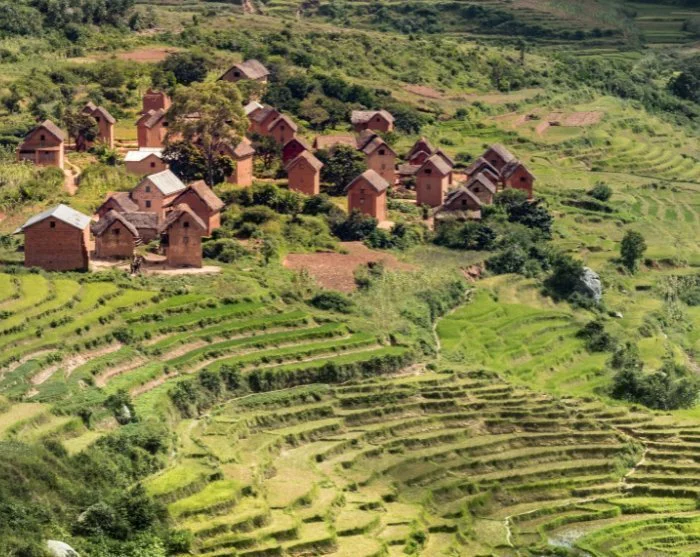
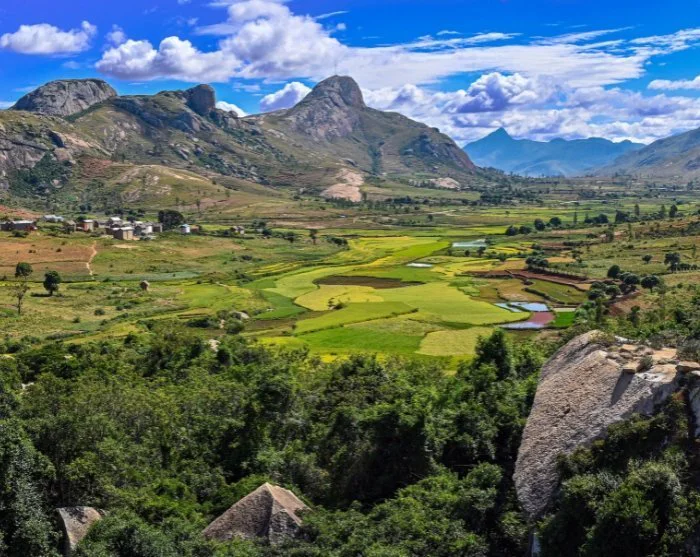
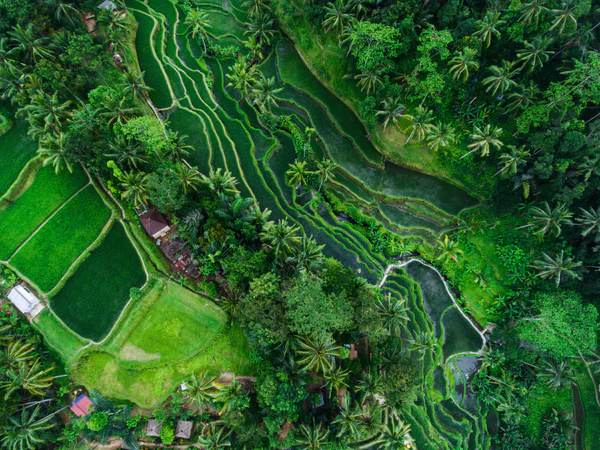
Today, you will mainly be driving through the central highlands. There are numerous rice fields, and the terraces, which are cut into the sometimes steep hills, look like something from Vietnam or Bali. Look down into the valley bottoms – even the smallest patch has been turned into a paddy field, with ingeniously excavated irrigation channels providing the necessary water.

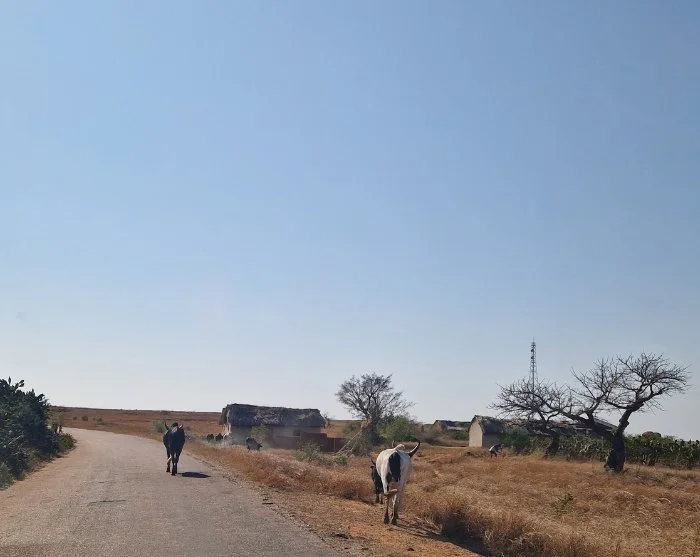
You will undoubtedly also notice the cows, the zebu. They are everywhere: on the road, in the fields, in the driveways and in the gardens. They resemble the characteristic Indian cow with a fatty hump on the neck, but the zebu is not sacred in the same way as in India. In Madagascar, you are allowed to eat the zebu, and this is something you should definitely do because it tastes excellent. In particular when cooked with lots of tomatoes, onions, garlic and ginger. Ask for ‘romazava’, which is, of course, eaten with rice.

The final destination today is Ambositra. Along the way, you will make a few stops, including a lunch stop in the city of Antsirabe, which you will be returning to later on the tour.

The journey to Ambositra takes 7-8 hours depending on how often you stop and the traffic.

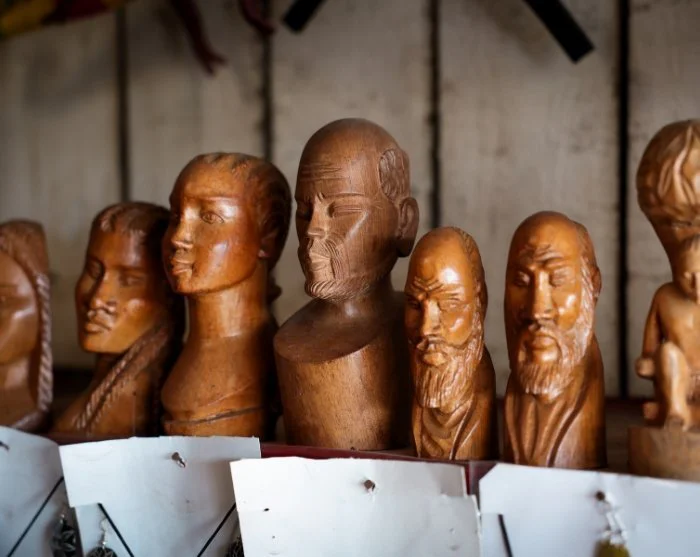
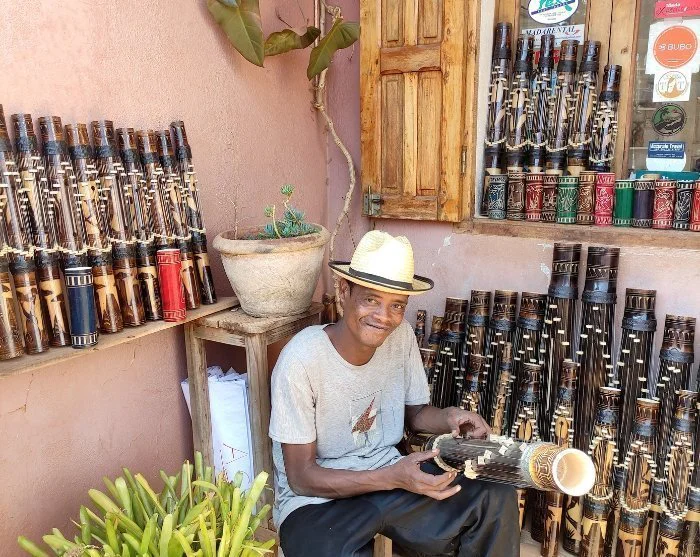
If you arrive on time, you should grab the chance to go for a walk in the town. Ambositra is very well known for its woodcarving, and small workshops and shops line the main street, where you can see demonstrations and buy the goods on sale.

You spend one night in Ambositra.

Where you’ll stay
Ambositra
Artisan Hotel
Accommodation included in the price
Where you’ll stay
Isalo National Park
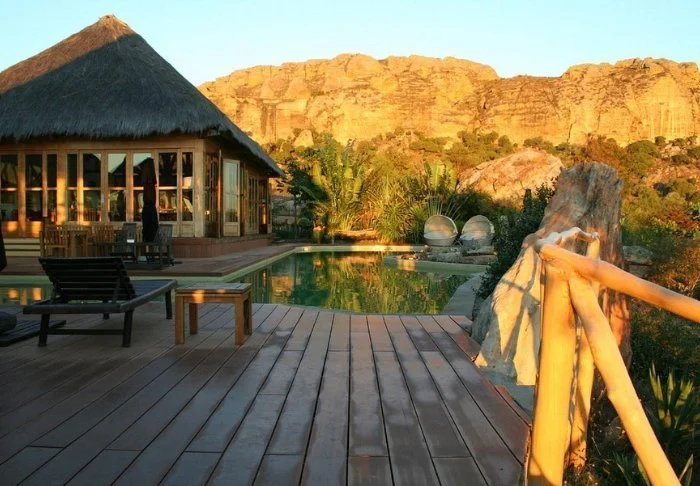
Satrana Tented Lodge
Accommodation included in the price
Day 7
Ambositra – Isalo National Park / Ranohira

You'll have a long day ahead of you, so you’ll be setting off early from the hotel.

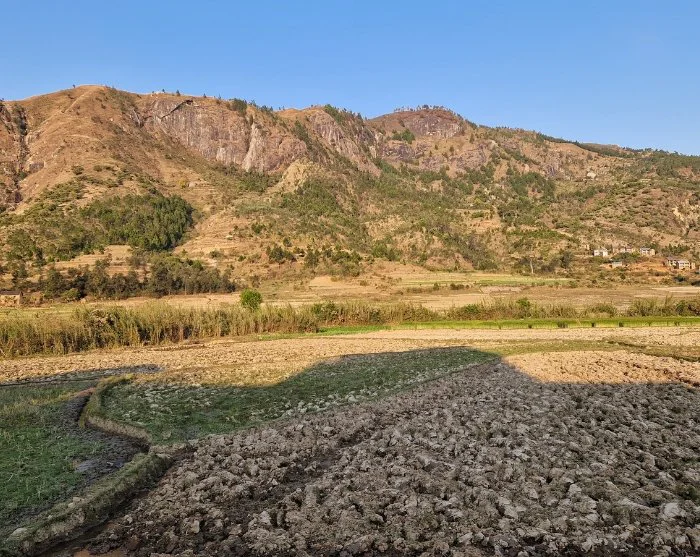
After a drive of just over five hours, you’ll reach the town of Fianarantsoa, also known as the ‘gateway to the south’. It’s only a little over an hour and a half from Fianarantsoa to Ambalavao, but the landscape changes dramatically, from neatly maintained rice terraces to higher, grass-covered hills, before you reach the granite landscapes around Ambalavao. These dramatic changes in scenery over relatively short distances are one of the things that make Madagascar such a fantastic country to explore! Looking out of the window simply never gets boring.

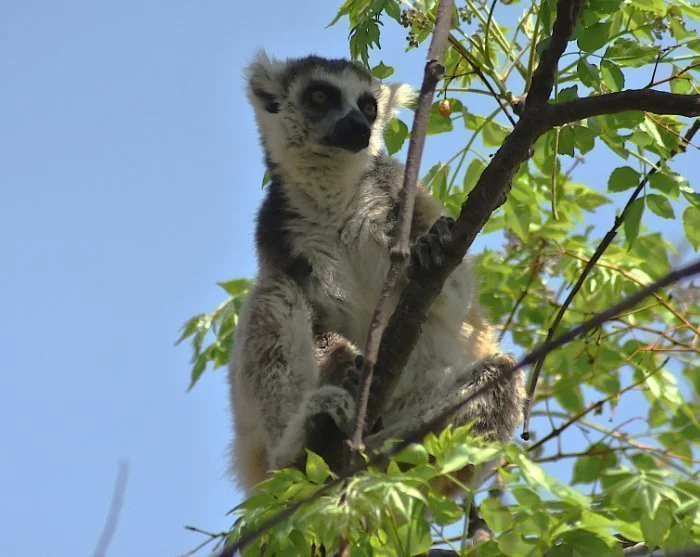
Just outside Ambalavao, you’ll visit Anja Reserve, where you’ll have an excellent chance of seeing ring-tailed lemurs.

Anja Reserve is a small reserve, but it’s a truly fascinating project. Several local villages have joined forces to protect the reserve, and visitors may only explore it with a local guide. Revenue from visits goes to the villages involved and helps provide, among other things, schooling, mosquito nets, and tree planting – as well as ensuring the preservation and expansion of the reserve.

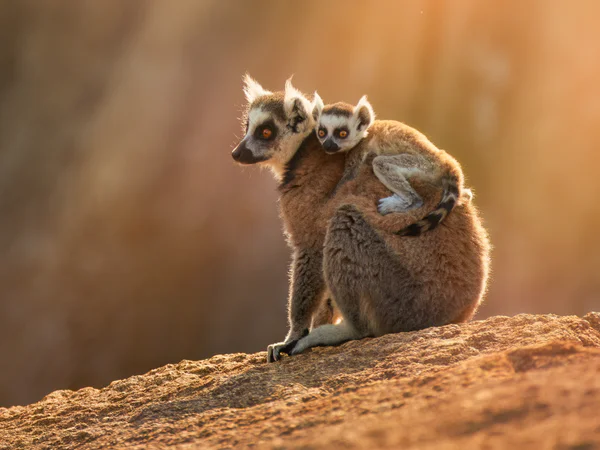
It used to be possible to feed the lemurs, but fortunately that has now been stopped. This does mean, however, that the older lemurs are not particularly shy around people, so you can get relatively close before they run off. The reserve has the largest concentration of ring-tailed lemurs in Madagascar, so you have an excellent chance of seeing their beautiful striped tails!

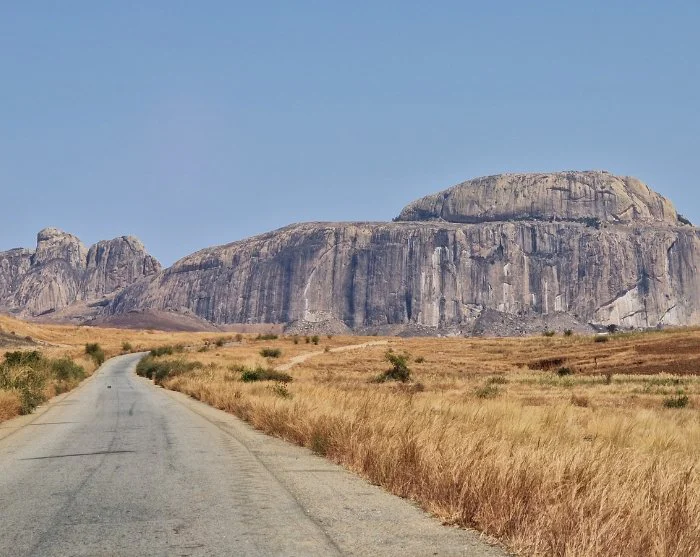
In addition to its lemurs, the reserve is home to a spectacular rocky landscape, which you can admire on a short walk. Along the way, you will also have the opportunity to see a traditional burial site high up on the rocks.

From the Anja Reserve, you'll continue in a more south-westerly direction, and the landscape changes once again. You'll drive through the mountains and uphill to the town of Ihosy – a journey of approximately two hours. You are now on a highland plateau, the Horombe Plateau, and have arrived in the homeland of the Bara people.

The Bara people are semi-nomadic and, like the Maasai of East Africa, are cattle herders. In fact, they are so fond of their zebu cattle that, if a young man is to have any hope of being allowed to marry, he must first steal a zebu and present it to his future in-laws.

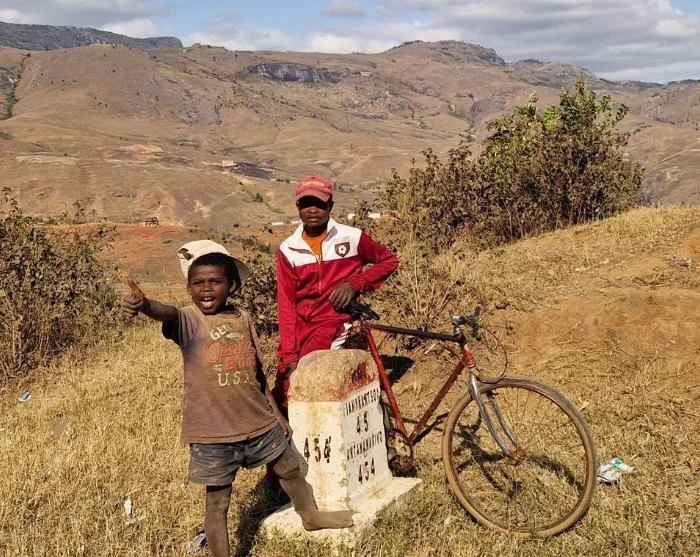
From Ihosy, it’s just over an hour’s drive to today’s final destination, Ranohira. The road stretches across the plains, and it’s easy to understand why the Bara people herd their cattle here. Long, empty expanses of knee-high grass stretch as far as the eye can see – it almost looks like an East African savannah. Every now and then, a young man passes by on a bicycle. Where he has come from and where on earth he is heading in the middle of nowhere isn’t always easy to tell.

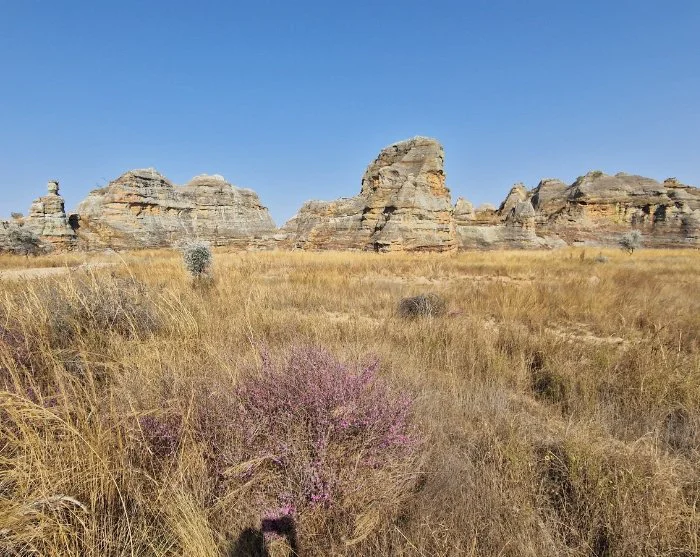
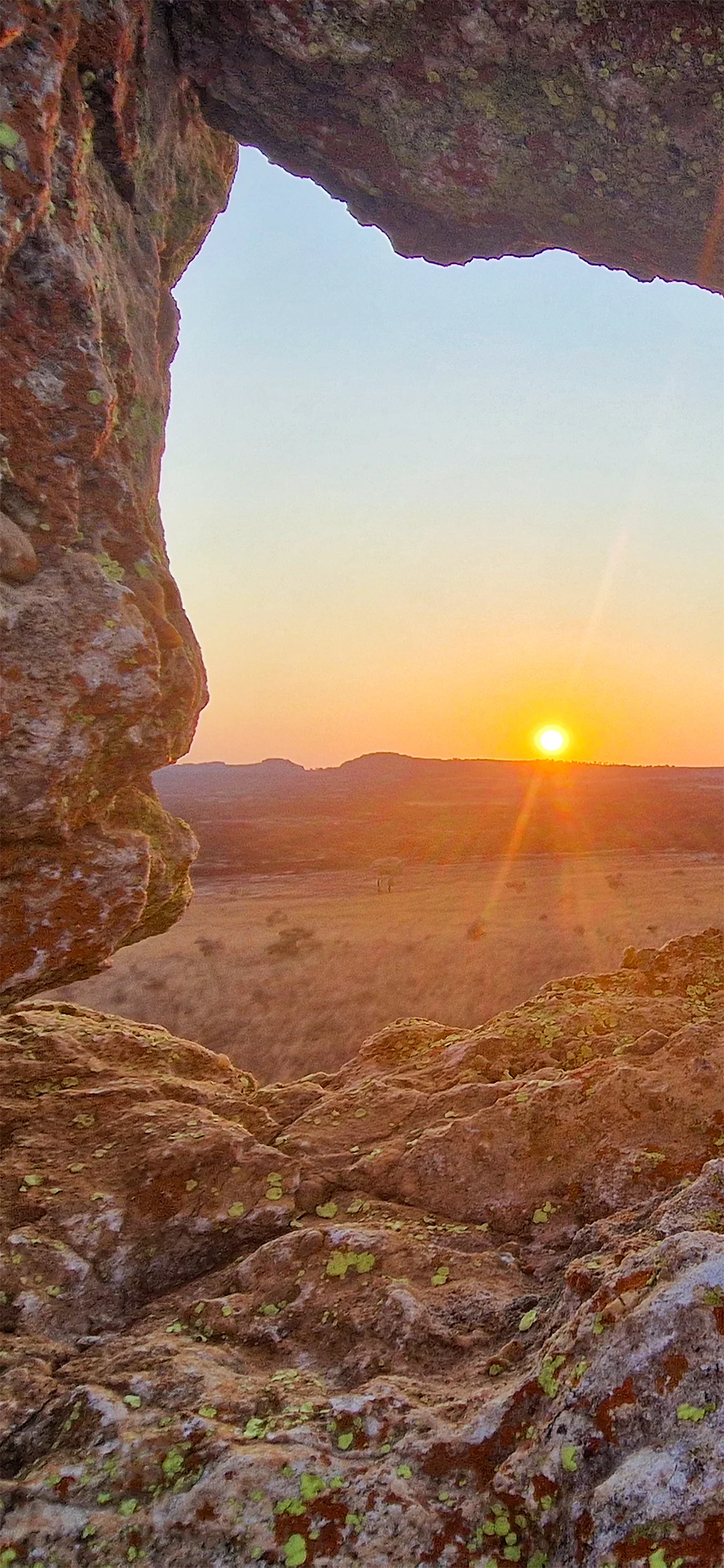
When the sandstone cliffs replace the savannah, you know you’ve arrived in Isalo.

You’ll spend three nights here, and this evening – weather permitting – you’ll experience a magical sunset over Isalo.

Where you’ll stay
Isalo National Park
Satrana Tented Lodge
Accommodation included in the price
Where you’ll stay
Isalo National Park
Satrana Tented Lodge
Accommodation included in the price
Day 8–9
Experiences in Isalo

Isalo is wonderful and breathtakingly beautiful!

It’s rugged, wild, and utterly awe-inspiring.

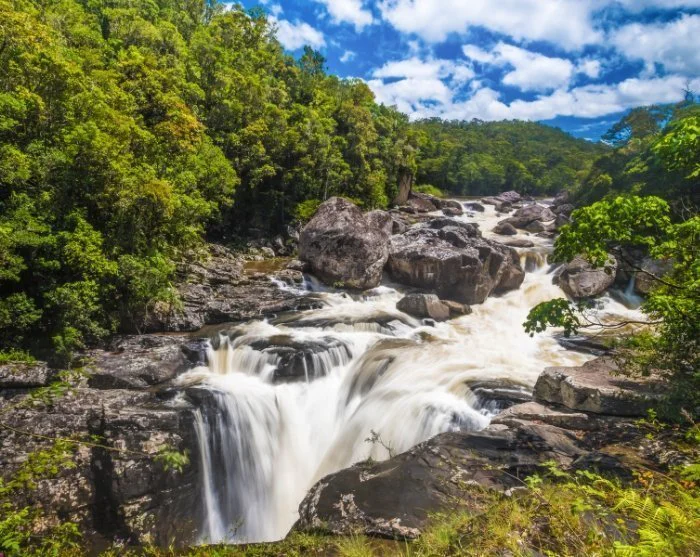
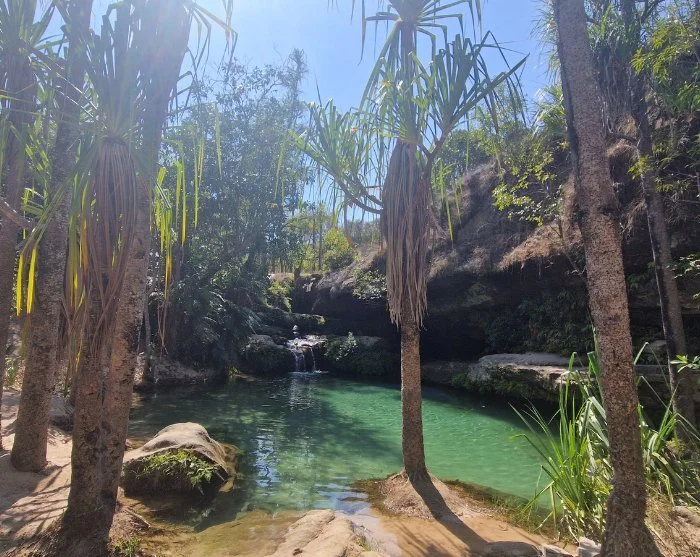
Jagged sandstone formations, deep gorges, oases with bright green, palm-fringed lakes, and vast, flat plateau-like areas. Isalo has it all, which is why it is also Madagascar’s best-known National Park.

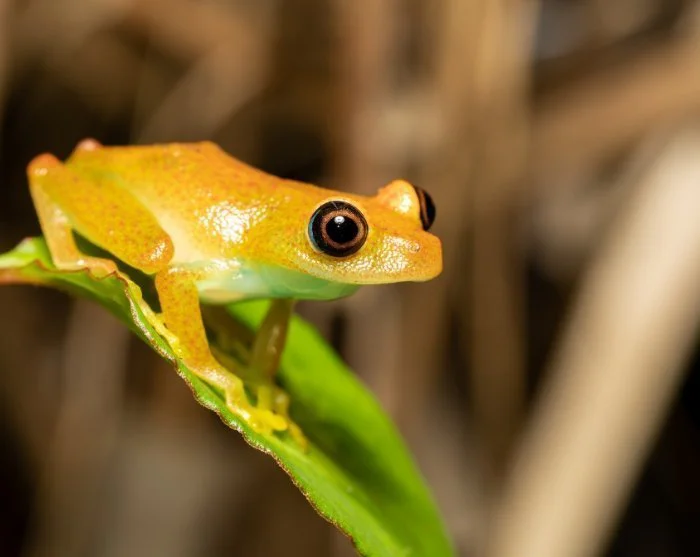
The 800 km² covered by the park is home to unique flora and fauna. As well as six different lemur species, including ring-tailed and sifaka lemurs, you’ll also find more than 100 different bird species and a wide variety of reptiles and amphibians, such as lizards and frogs.

Several plant and animal species are found only here in the park, including the beautiful elephant’s foot plant, which looks rather like a miniature baobab tree with bright yellow flowers.

And to complete Isalo’s magic, the area is also of great cultural significance to the Bara people. They bury their dead in caves high up in the cliffs.

There are a number of walks of varying lengths, and you can decide with your guide which ones to do. You need to be reasonably fit to walk in Isalo. The trails are fairly well maintained, but they wind up and down and can be narrow in places. On the other hand, you can cool off in one of the beautiful natural pools found in the park – and you’ll be rewarded with the most wonderful scenery.
Where you’ll stay
Isalo National Park
Satrana Tented Lodge
Accommodation included in the price
Where you’ll stay
Ranomafana National Park
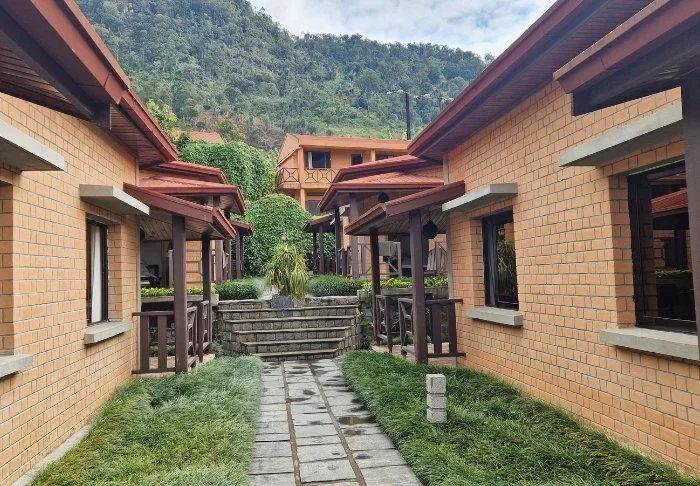
Centrest Hotel
Accommodation included in the price
Hotel upgrade
Day 10
Isalo National Park – Ranomafana National Park

It’s time to say goodbye to beautiful Isalo and begin the tour back to central Madagascar.

This time you stop off in Fianarantsoa after about a 5-hour drive from Isalo, and which you also drove through en route to Isalo. Here, you will visit a small local silk factory, where you will watch a demonstration of the incredibly slow and labour-intensive process of making silk. You will also visit Madagascar’s only tea plantation and eat lunch before the tour continues to Ranomafana. It is just over a 1½-hour drive from Fianarantsoa to your hotel in Ranomafana National Park.
You spend two nights in the park and the rest of the afternoon is at your leisure to rest after the drive or perhaps to stretch your legs.

Where you’ll stay
Ranomafana National Park
Centrest Hotel
Accommodation included in the price
Hotel upgrade
Where you’ll stay
Ranomafana National Park
Centrest Hotel
Accommodation included in the price
Day 11
Experiences in Ranomafana National Park

It will undoubtedly feel like a big contrast moving from the plateau landscape of Isalo to the rainforest climate of Ranomafana.

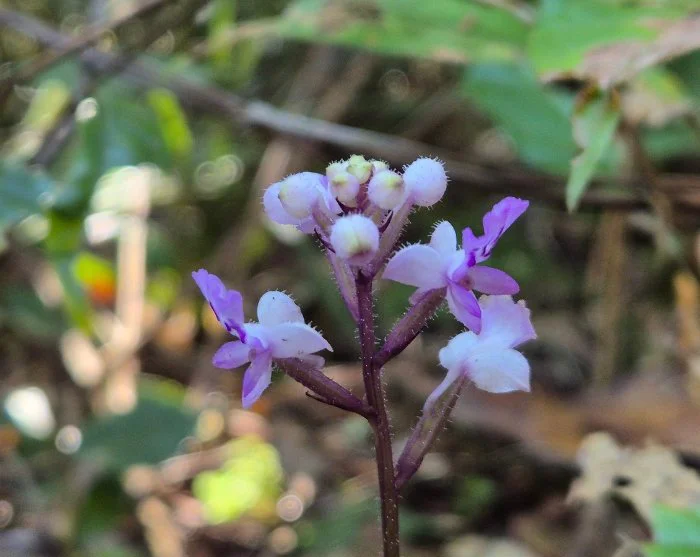
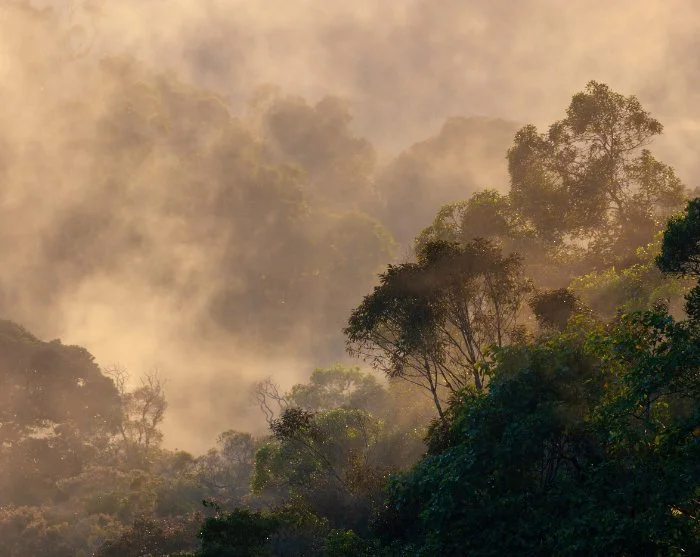
The steep slopes are covered with dense rainforest, the ferns are as tall as a man, moss grows on the trees, and in many places water trickles down over the path, turning the dust into mud. The biodiversity of Ranomafana is unmatched. Here, you will find 12 species of lemurs, more than 100 species of birds, chameleons, frogs, butterflies and rare orchids.

Ranomafana is part of the Rainforests of the Atsinanana, which are on the UNESCO World Heritage List of natural sites.

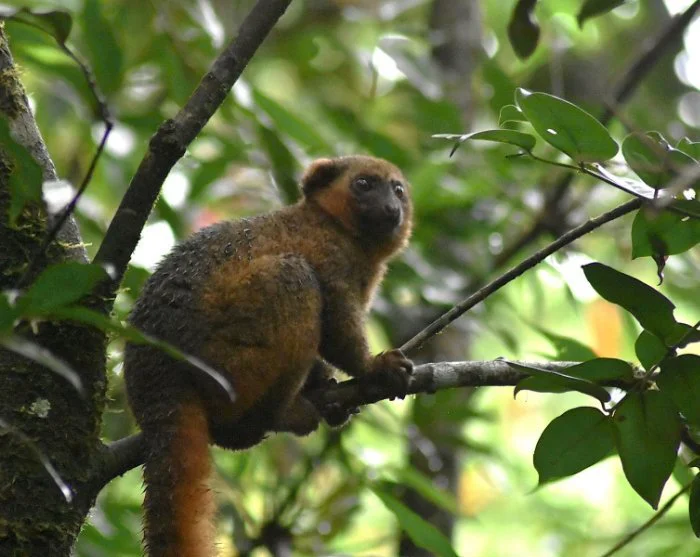
The morning is spent on a guided hike in the park. As in Andasibe, there is both a ‘spotter’ and a guide, and here too, the spotter runs ahead in advance to look for the lemurs. The golden bamboo lemur is the main attraction here. It is rare, and is one of the world’s most endangered lemur species. It was first discovered in 1986, which is quite incredible when you consider that it is just over half a metre tall! The discovery directly led to Ranomafana becoming a national park – it simply became clear that something had to be done if the golden bamboo lemur was to be saved. ’You have to be a fairly practised walker to go on the morning’s walk. It is not strenuous as such, but the paths can be quite muddy, and you sometimes have to force your way through the dense undergrowth to get to the trees where the lemurs are sitting. On the other hand, the reward is enormous when you see the little furry animal sitting and munching on its bamboo stick.

Also, you are almost guaranteed to see more chameleons, frogs, birds and fascinating nature in general.

Towards late morning, you head back to the hotel, where lunch is served and you can relax.

Ranomafana means ‘hot water’, and refers to all the hot springs which can be found in the area. You are going to experience them this afternoon. They are said to have healing powers – if nothing else, the warm water is relaxing.

Afterwards, dinner awaits back at the hotel.

Where you’ll stay
Ranomafana National Park
Centrest Hotel
Accommodation included in the price
Where you’ll stay
Antsirabe
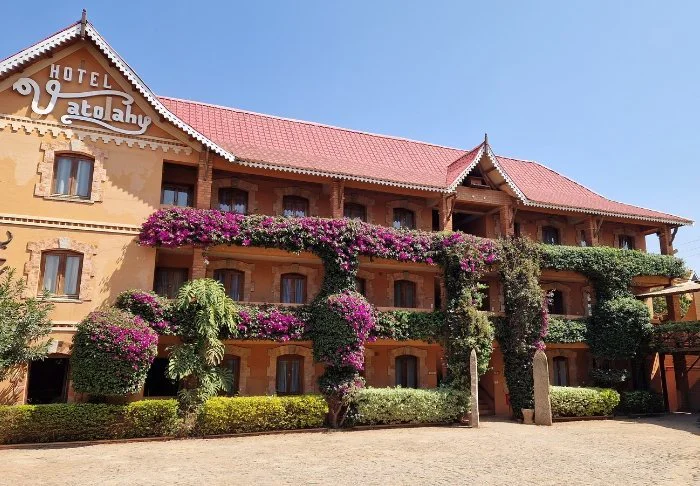
Hotel Vatola
Accommodation included in the price
Hotel upgrade
Day 12
Ranomafana National Park – Antsirabe

You may remember that a few days ago you drove through Antsirabe on the road from Tana towards Ambositra. As promised, today you will return to Antsirabe and take a closer look at this very charming city. The drive here takes just over 3 hours, and again it is a pleasure to see how the landscape changes dramatically within even a relatively short distance – from rainforest to highlands with the distinctive rice fields.

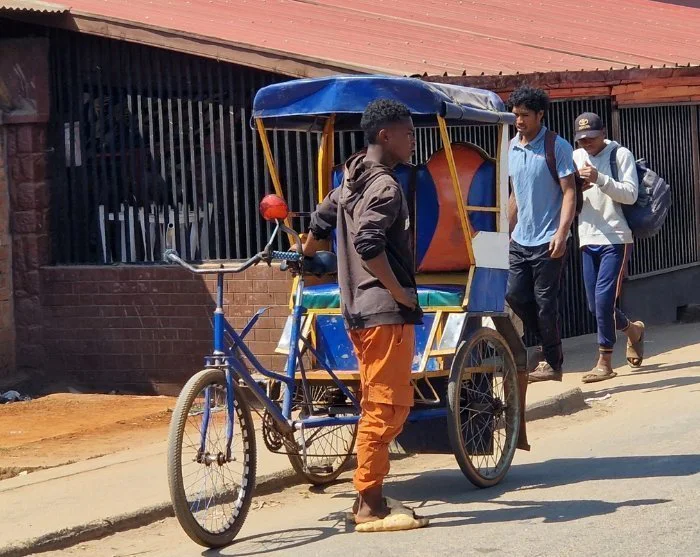
Once in Madagascar’s third-largest city, Antsirabe, you will have lunch before embarking on a rickshaw ride. The local name for a pulled rickshaw is a ‘pousse pousse’.

There is an almost tangible sense of history in the city.

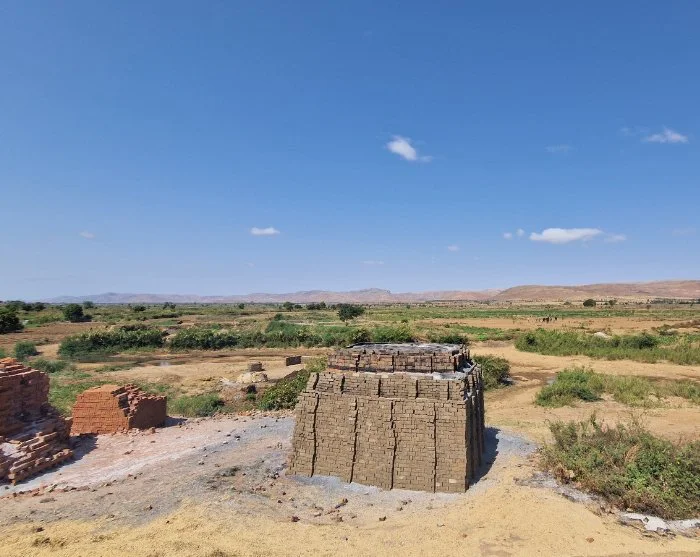
Antsirabe was founded by Norwegian missionaries in the late 19th century. They taught the local inhabitants how to make bricks. This benefited the French during the colonial period, and several prominent buildings were built; hotels, a post office, a cathedral and the most beautiful railway station building.

Like all other cities in Madagascar where the French were present, there is a long, wide boulevard in the city centre – and it is at the end of the boulevard that you will find the railway station, which is no longer in use.

The pousse-pousse rickshaw tour passes some of the city’s distinguished colonial buildings, and you will also visit a few of the local handicraft workshops and shops. You will see a demonstration, for example, of how an old washing machine motor is converted into a polishing instrument for making spoons and jewellery out of zebu horn. It’s circular economy at its best!

You have a single night in Antsirabe.

Where you’ll stay
Antsirabe
Hotel Vatola
Accommodation included in the price
Hotel upgrade
Day 13
Antsirabe – Antananarivo – Mauritius

You depart Antsirabe early, and head back to Antanarivo. Your Madagascar adventure ends at the airport, from where you fly to Mauritius.
You have four nights in Mauritius, but you can choose to extend your stay if you want more days on the exotic island.
Where you’ll stay
Palmar
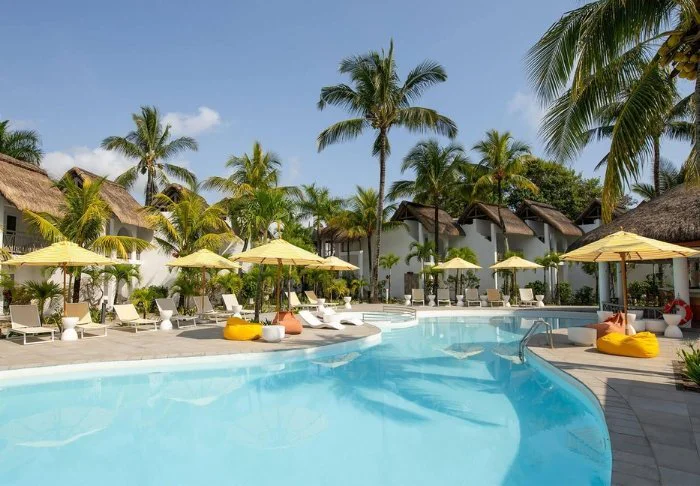
Veranda Belle Mare
Accommodation included in the price
Day 14–16
Mauritius

The days are for relaxation.

With its lovely climate and friendly locals, the small paradise island is the perfect place for an exotic end to your tour.

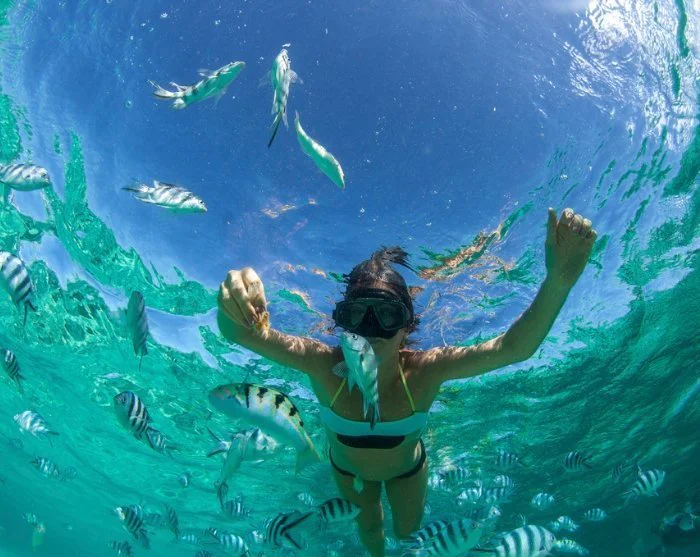
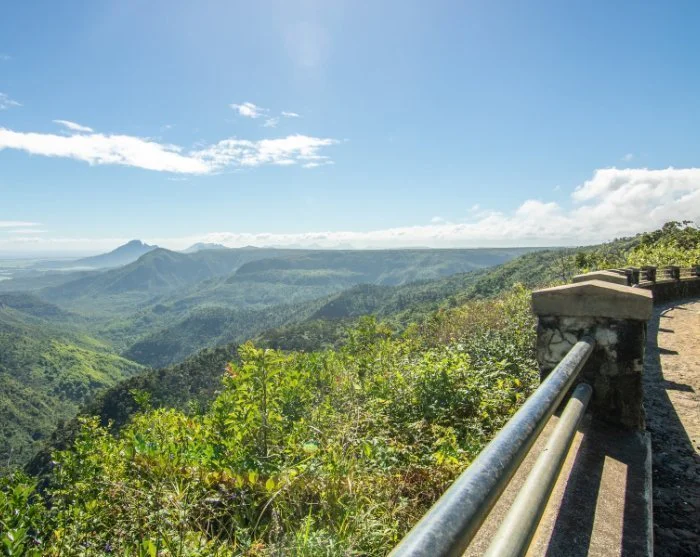
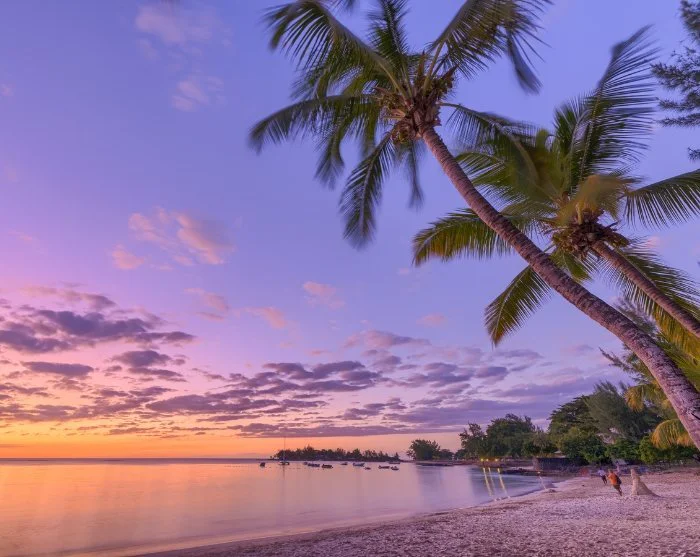
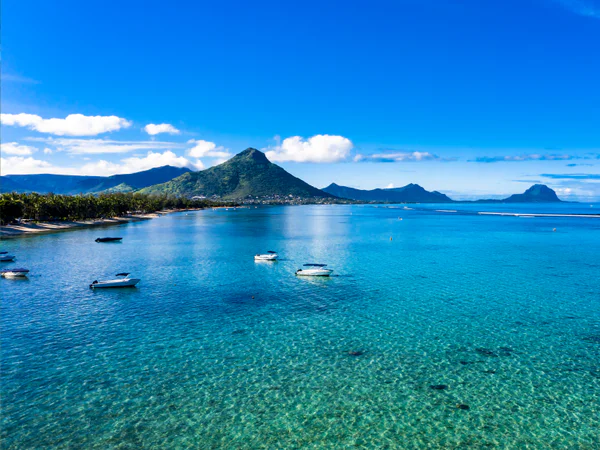
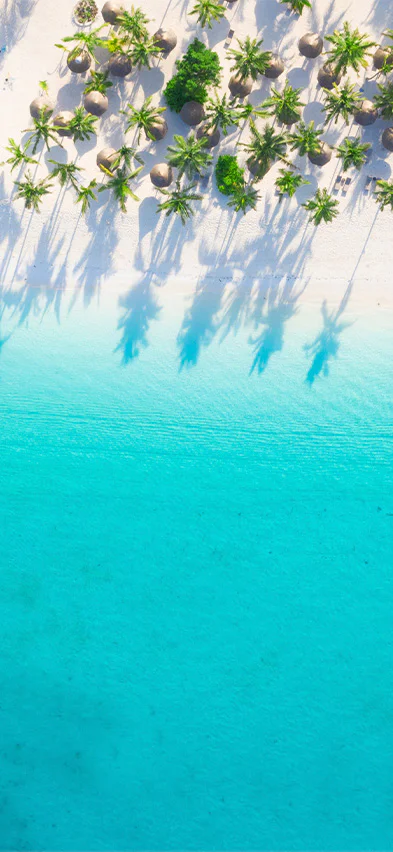
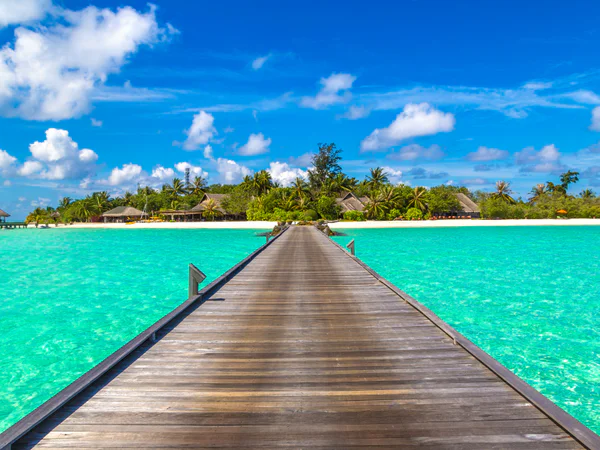
Mauritius is most often associated with relaxation and romance, but it is also ideal for those who are into gastronomy, water sports and beautiful nature. The island is surrounded by stunning beaches with swaying palm trees, crystal-clear waters and brightly coloured coral reefs. Here, you will find lush forests, fields of sugar cane, mountains, cascading waterfalls and dramatic coastlines with small lagoons. The capital, Port Louis, has a wide range of shops and exciting museums.

Where you’ll stay
Palmar
Veranda Belle Mare
Accommodation included in the price
Day 17
Departure day

You will be picked up at your hotel and driven to the airport, from where your return journey starts.

Day 18
Arrival back home

You land at your chosen airport after an adventurous tour.

When would you like to travel?
Departure dates
All prices are in £ per person
MonTueWedThuFriSatSun
26
27
28
29
30
31
1
2
3
4
5
6
7
8£5359
9
10
11
12
13
14
15£5069
16
17
18
19
20
21
22£4689
23
24
25
26
27
28
29£4709
30
1
2
3
4
5
6£5259

From £4449 pp including flights

Children under 12 years from £3149

Single room supplement from £919

Unique advantages for groups of six people and more – ask for a quote today for more information.
BEFORE YOU TRAVEL
Good to know
Reviews from Trustpilot
Our guests’ experiences in Africa
Our destinations
Explore our exciting destinations
Catriona Hodge
Africa
Contact our travel specialist

Catriona is passionate about helping other people fulfill their travel dreams, as she knows how much travel has only improved her life for the better!