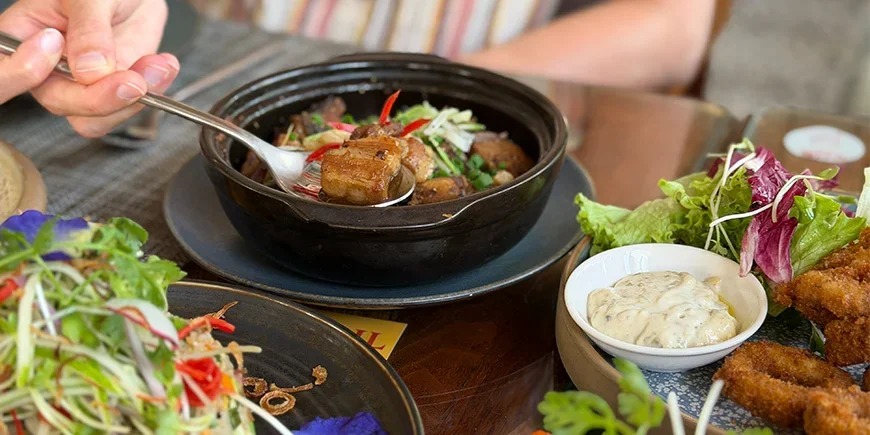
Would you like to treat your taste buds to steaming soups, fresh spring rolls, and seafood dishes in which fresh herbs play a key role?
One of Vietnam's greatest attractions is its food culture, and culinary delights await you everywhere – from bustling street kitchens and aromatic food stalls to atmospheric restaurants and cosy cafés.
Get ready to work up an appetite as, in this blog post, we explore Vietnamese cuisine and introduce you to 10 Vietnamese dishes you shouldn't miss when visiting Vietnam.
1. Phở (noodle soup) – Vietnam's national dish
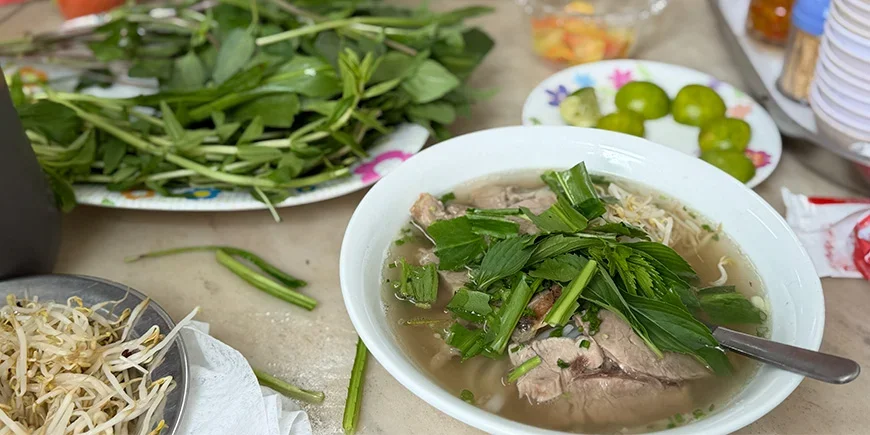
Vietnam’s national dish is phở, which is an integral part of Vietnamese culture.
Phở is a noodle soup made with flat rice noodles served in a rich broth, typically topped with thinly sliced beef, chicken, or tofu, along with spring onions and fresh herbs. However, the national dish comes in many varieties, which can differ considerably from region to region. In northern Vietnam, for example, phở is simpler and milder, while versions in the south are sweeter, spicier, and often served with fresh bean sprouts, lime, and Thai basil.
The iconic noodle soup is thought to have originated in northern Vietnam in the 20th century, when the dish was developed with inspiration from the French beef stew pot-au-feu and Chinese noodle soups. Today, it is served throughout the country and is a popular street food that you’re sure to come across when travelling through Vietnam.
2. Bánh mì (Vietnamese sandwich)
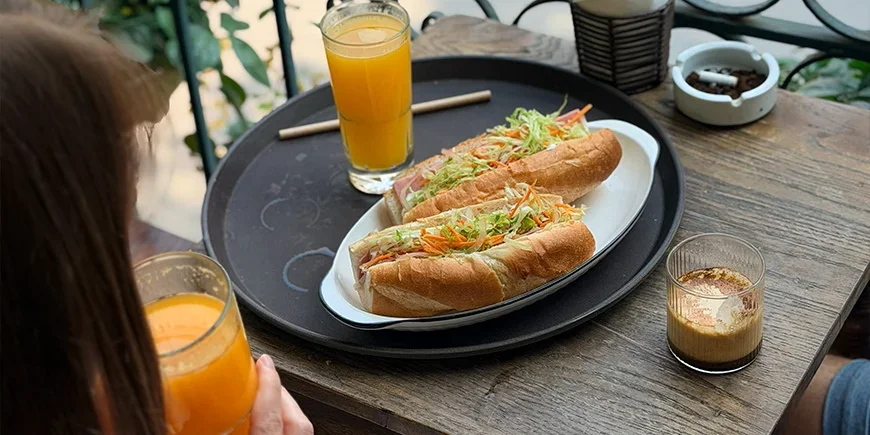
Few dishes capture the fusion spirit of Vietnamese cuisine quite like Bánh mì. This iconic sandwich is the result of French influence in Vietnam, where the crispy baguette was filled with local ingredients and, over time, transformed into one of Vietnam’s most beloved classics.
Originally, Bánh mì was enjoyed with simple accompaniments such as butter and pâté, but over time, the sandwich was adapted to Vietnamese cuisine and is now served with meat, pickled vegetables, fresh herbs, and chilli.
3. Gỏi cuốn (spring rolls/summer rolls)
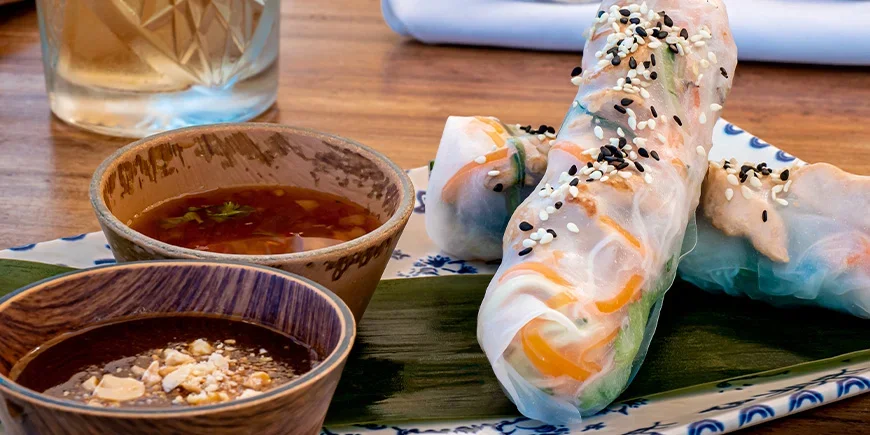
Gỏi cuốn, also known as fresh spring rolls or summer rolls, are rice-paper rolls made with prawns, pork, vegetables, herbs, and rice. They are typically served with hoisin, peanut, or fish sauce, which gives this light dish extra depth and flavour.
Like phở and bánh mì, gỏi cuốn is considered one of Vietnam’s most famous dishes, so you can find these fresh rice-paper rolls all over the country – not least at the many street markets, where gỏi cuốn is a true street-food classic.
4. Bún Chả (pork soup)
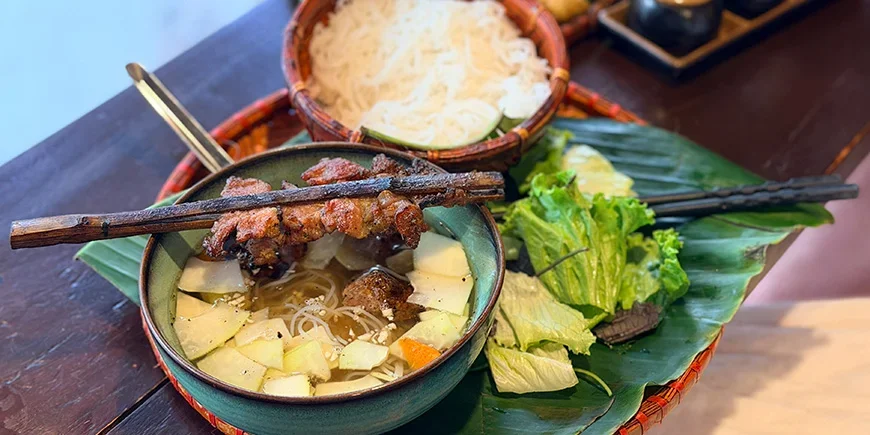
Originating in Hanoi, Bún Chả is an aromatic soup topped with marinated pork meatballs and slices of pork grilled over glowing charcoal, giving it a deliciously smoky flavour. The dish is served with rice noodles and fresh herbs.
The dish is primarily found in Hanoi, where it is considered one of the city’s most iconic classics, but it can also be found elsewhere in Vietnam, where it comes in a variety of versions. Traditionally, Bún Chả is a lunchtime dish, but with a bit of luck, you may also find places that serve it all day.
5. Bánh xèo (savoury pancake)
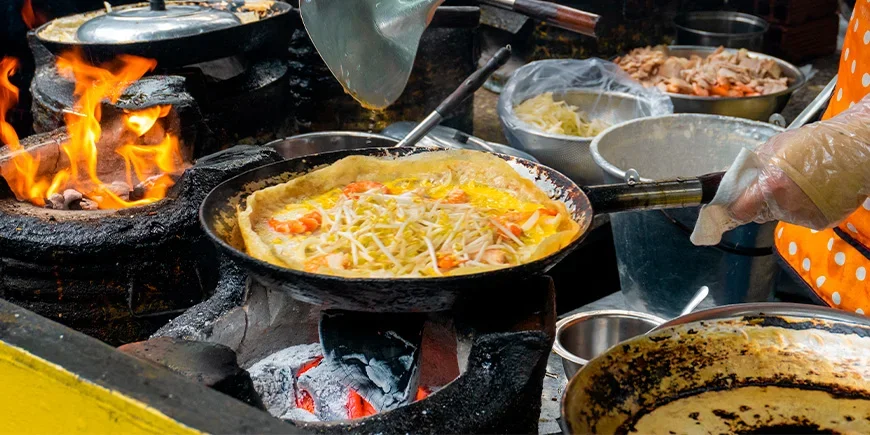
Bánh xèo is a crispy pancake typically filled with prawns, pork, and bean sprouts, then dipped in nước chấm sauce, which gives the dish a sweet and tangy flavour. Translated, bánh xèo means ‘sizzling cake’, referring to the characteristic sizzling sound made when the batter hits the hot frying pan.
There are several regional variations of bánh xèo. In southern Vietnam, the pancakes are often large and ideal for sharing, while in central Vietnam, they are typically smaller, as they are cooked in small clay moulds. The filling can also vary from region to region, reflecting local ingredients and culinary traditions.
6. Ca Tai Tuong Chien (fried elephant ear fish)
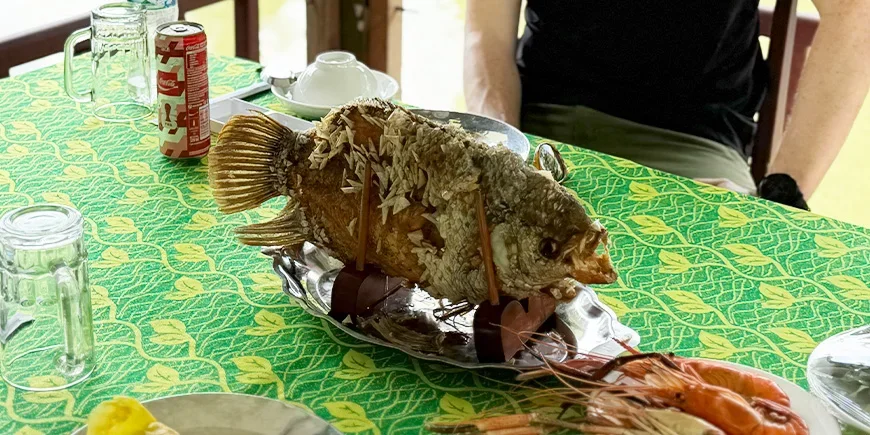
Ca Tai Tuong Chien is a famous speciality from southern Vietnam, around the Mekong Delta. Here, the elephant ear fish is served ‘standing’ in a rack, with its head, fins, and skin still on.
The elephant ear fish supposedly got its peculiar name because it is said to look a little like an elephant’s ear.
The fish is served fried, making the meat deliciously tender, alongside various accompaniments. For example, you can wrap pieces of fish in rice paper, add fresh herbs, and dip the ‘spring roll’ in fish sauce.
7. Cao lầu (Hoi An noodle speciality)
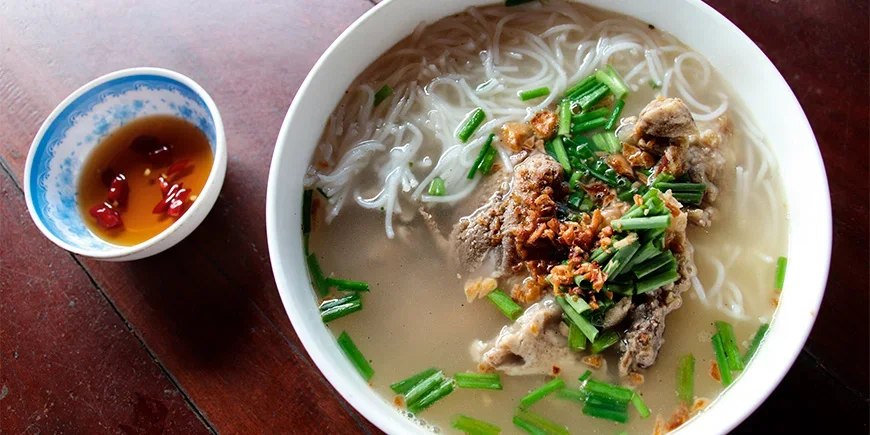
One of Hoi An’s most famous specialities, Cao lầu is a noodle dish that differs markedly from those found elsewhere in Vietnam. The noodles are soaked in ash water, which gives them a springy texture and a subtly smoky flavour, and are typically served with marinated pork, fresh herbs, and crispy toppings.
As the flavour of Cao lầu resembles neither traditional Vietnamese aromas nor any distinct Chinese or Japanese culinary traditions, the dish’s origins remain a mystery. Its name, which can be translated as ‘high floor’, is said to have originated with wealthy merchants who ate the dish on the upper floors of their shops, where they could enjoy the view while keeping an eye on their goods.
8. Mì Quảng (central Vietnamese turmeric noodles)
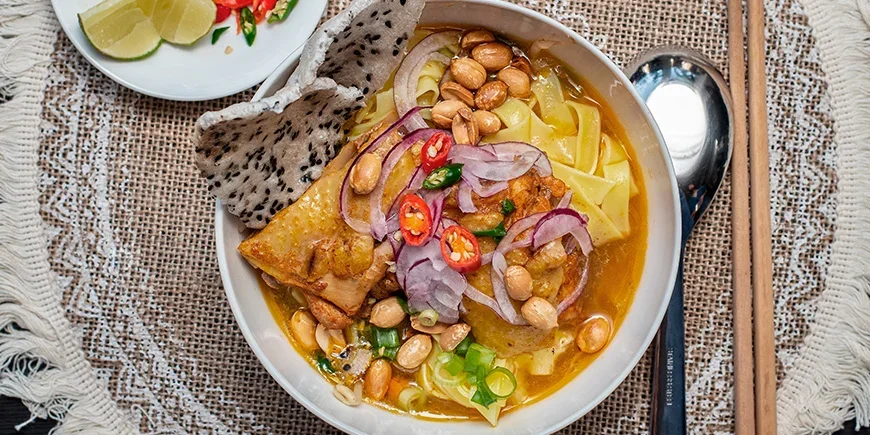
Mì Quảng is a noodle dish originating from central Vietnam. The noodles are served with prawns, pork, quail eggs, and fresh herbs in a flavoursome broth, typically seasoned with turmeric, which gives Mì Quảng its distinctive yellow colour.
In Vietnamese, ‘mì’ technically means wheat noodles, but don’t let that fool you. Although the noodles were originally made from wheat flour when they were introduced by traders, they have always been made from rice flour in Vietnam, as rice was the country’s staple ingredient.
Mì Quảng is an absolute must-try when travelling through central Vietnam. The dish is particularly popular in Hoi An, so you won’t have to look far before finding somewhere serving it.
9. Cơm Tấm (broken rice)
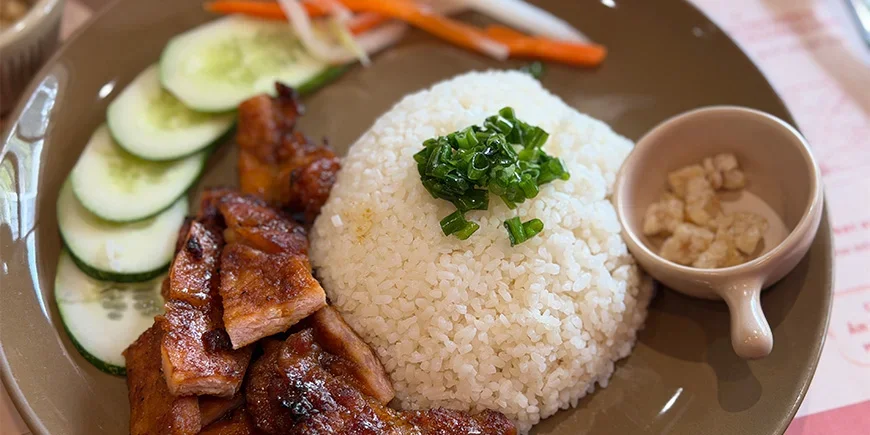
Cơm Tấm is a flavoursome southern Vietnamese dish made with broken rice and served with a variety of accompaniments, such as fried eggs, shredded pork skin, grilled pork chops, or deep-fried fish cakes, along with fresh herbs and vegetables.
Broken rice was a cheaper alternative to whole grains of rice, so Cơm Tấm was originally regarded as a simple peasant dish. Today, Cơm Tấm is a staple of southern Vietnamese cuisine and is particularly popular in Ho Chi Minh City, where it is often served as street food at food markets and street kitchens.
10. Bún Bò Huế (spicy noodle soup from Hué)
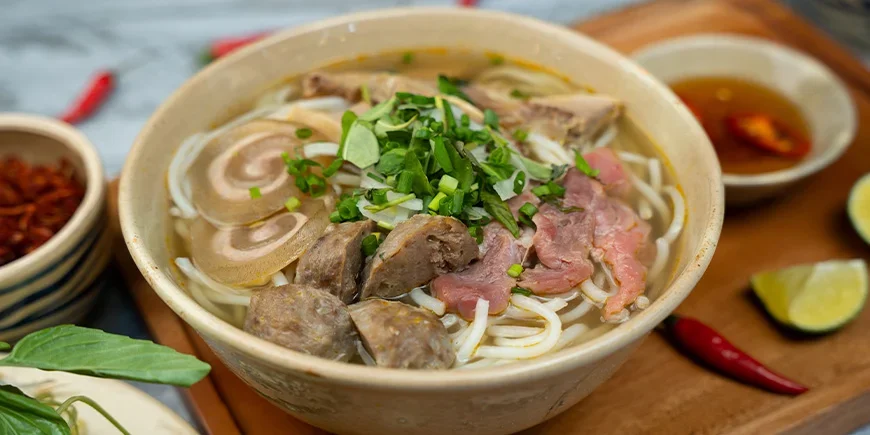
Bún Bò Huế is a popular Vietnamese spicy noodle soup which, as you have probably already guessed, originates from the imperial city of Hué in central Vietnam.
Bún Bò Huế typically consists of vermicelli noodles, sliced beef, and an aromatic broth made from beef and pork bones, lemongrass, and shrimp paste. The dish therefore shares several similarities with its famous cousin, phở, and is every bit as delicious.
Traditionally, Vietnamese people eat Bún Bò Huế for breakfast, but you can just as easily enjoy it for lunch or dinner at one of Hué’s many food stalls.
Food culture in Vietnam
You’ve now had a taste of the delicious dishes awaiting you in Vietnam. But is there anything else you should know before diving into the country’s flavourful culinary world?
Below, we answer some of the most frequently asked questions about Vietnam’s food culture, so you’ll be well prepared to eat your way through the country’s many specialities.
What characterises Vietnamese food culture?
Vietnamese food culture is known for its aromatic flavours, where sour, sweet, salty, spicy, and umami notes come together in perfect harmony. Dishes are almost always served with rice, for example as steamed rice, rice noodles, or rice paper, and accompanied by vegetables and herbs that add freshness, crunch, and vibrant colour.
When you tuck into Vietnamese dishes, you’re also getting a taste of the country’s history. Vietnamese cuisine has been shaped by centuries of cultural exchange, as global influences have blended with local culinary traditions to create a food culture that is entirely its own. For example, it was the Chinese who introduced noodles, while the French colonial period left a lasting mark in the form of baguettes and coffee.
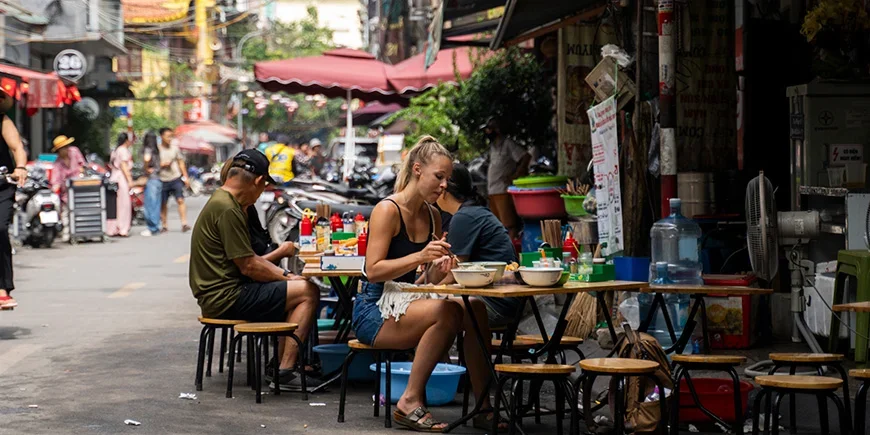
In Vietnam, street food is an integral part of the country’s food culture. Street food in Vietnam is affordable, delicious, and readily available, as you can easily find Vietnamese street food at markets, street kitchens, and food stalls throughout the country.
Are there regional differences in Vietnam’s food culture?
Yes, there are regional differences in Vietnam’s food culture, so the flavours can vary considerably depending on which part of Vietnam you visit.
In northern Vietnam, the food is often milder and simpler in flavour, while central Vietnam is known for spicy dishes and rich broths. In southern Vietnam, you’ll typically encounter sweeter flavours, as sugar and coconut milk are often used in the dishes.
How much does food cost in Vietnam?
The price of food in Vietnam generally varies depending on where in the country you are and what type of place you choose to eat at.
You’ll typically find the lowest prices at street food stalls and local restaurants, where a meal costs around VND 20,000–70,000. At mid-range and tourist restaurants, prices are often higher, usually ranging from VND 100,000–250,000.
Food in Vietnam is therefore generally inexpensive and costs considerably less than in the UK.
Do you tip in Vietnam when eating out?
Yes, tipping has become more common in Vietnam, at least when eating at international restaurants. This is particularly true in major cities such as Hanoi and Ho Chi Minh City, where tipping has gradually become the norm.
At international restaurants, tipping will often be included in the price, shown on the bill as a “service charge”. If this is not the case, you can add 5–10% to the bill, depending on how good the service and food have been.
Tipping is not expected at local restaurants or street food stalls, but if you would like to make an extra gesture, you can leave some small change when you leave – it will certainly be appreciated.
Is Vietnamese food spicy?
No, Vietnamese food is generally not spicy, so there is no need to worry about burning your taste buds when you visit Vietnam.
If you’re not a fan of spicy food or are travelling to Vietnam with children, Vietnamese cuisine is likely to be a safe bet.
That said, not all regions are equally reserved when it comes to spice. Food in central Vietnam is often more heavily spiced than in northern and southern Vietnam.
Is Vietnam suitable for vegetarians?
Yes, Vietnam is an ideal destination for vegetarians. As Vietnam has a large Buddhist population that follows a vegetarian lifestyle, you’ll find a wide range of vegetarian dishes both in restaurants and at local food stalls.
Want to taste your way through Vietnam?
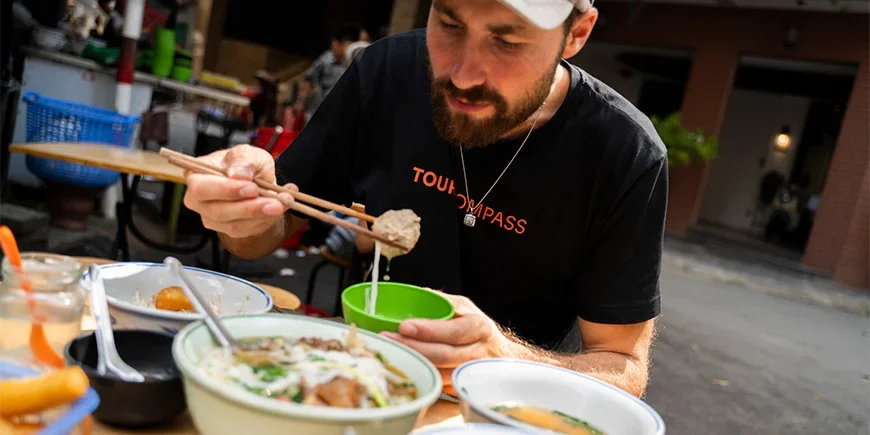
Vietnam is a paradise for food lovers, so wherever you are in the country, you’re never far from a culinary experience that will get your mouth watering.
Are you ready to set off on a journey through Vietnam’s world of flavours? Contact our travel specialists for help finding the tour to Vietnam that matches your (culinary) dreams.
TourCompass – From tourist to traveller